
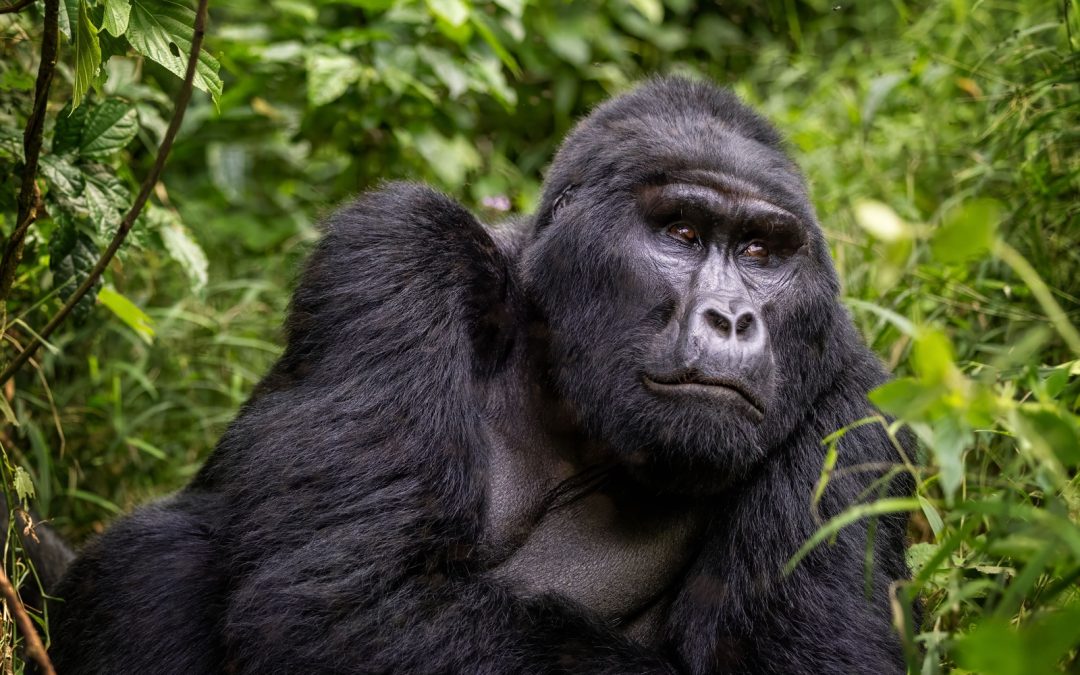
Seeing gorillas in Uganda is one of those experiences that’s hard to imagine until you’re right there with them. Venturing into the tropical forest, walking for hours in search of a mountain gorilla family, and coming face-to-face with these impressive primates is an unforgettable experience.
In our case, we did the trek in Bwindi Impenetrable National Park, entering through the Buhoma sector. It was a five-hour journey through the forest, with over three of those hours spent searching for gorillas with the help of rangers and trackers.
But what surprised us most wasn’t just finding them. During the encounter, two silverback males approached our group to mark their territory. This was an unexpected situation that made that day an even more special experience.
In this article, we tell you about our gorilla trekking experience in Uganda, how much the permit costs, what you should consider before traveling, and why it’s also worth learning about the history of the Batwa, the indigenous inhabitants historically linked to the Bwindi forests.
Where to see gorillas in Uganda: Bwindi National Park
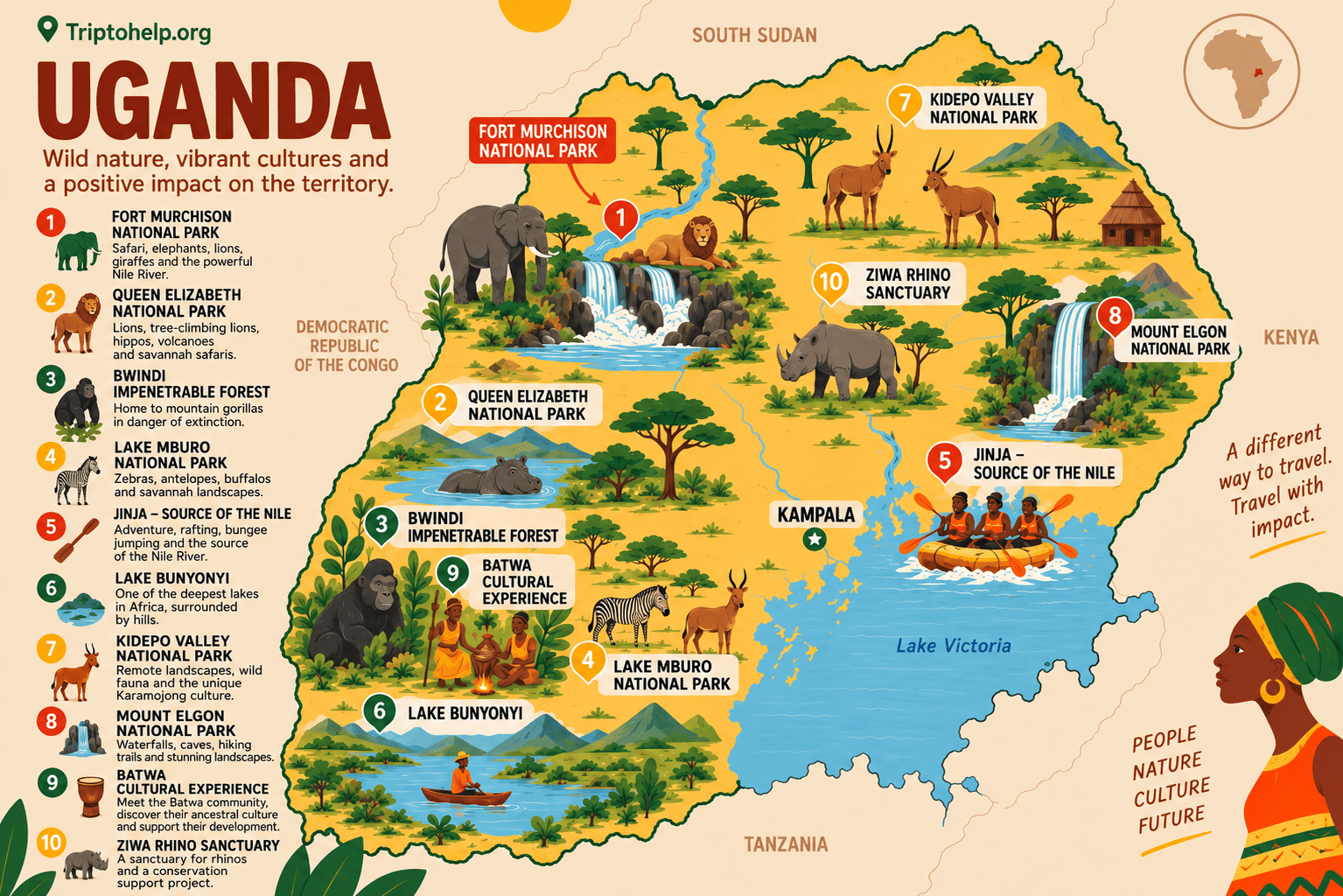
Uganda is one of the few countries in the world where you can observe mountain gorillas in the wild. The main area for this is Bwindi Impenetrable National Park, located in the southwest of the country, near the borders with Rwanda and the Democratic Republic of Congo.
This tropical mountain forest is known for its extraordinary biodiversity and for harboring a very significant portion of the world’s mountain gorilla population.
The vegetation is dense, the terrain is uneven, and conditions can change rapidly. Precisely for this reason, the trek doesn’t involve following a conventional tourist trail, but rather venturing into the forest with professionals who know the territory and help locate the animals.
What makes Bwindi Impenetrable Forest special
Bwindi is a mountain forest with lush vegetation, steep slopes, and a great diversity of species.
Its ecological importance goes far beyond gorillas. It is a highly valuable ecosystem for the conservation of numerous animal and plant species.
Visits are regulated to minimize disturbance to the gorillas and limit the impact of tourism. Visitor groups are small, and excursions are accompanied by authorized personnel.
The goal is to allow observation of gorillas in their natural habitat without turning the encounter into an activity that unnecessarily alters their behavior.
Buhoma, the sector from which we trekked
Bwindi has different sectors from which gorilla visits are organized. We did our trek from Buhoma, one of the park’s access areas.
Choosing where to stay is important, as you should consider the sector from which the activity will take place and the time needed to reach the meeting point.
Before booking accommodation, we recommend confirming where your assigned trek begins. This will help you avoid unnecessary travel on the day of the excursion.
Mountain gorillas and their natural habitat
Mountain gorillas live in family groups whose structure and behavior can vary.
Observing them in the wild allows you to discover how they interact with each other, how they feed, and how they move through the forest.
During our visit, we observed different behaviors, including one we didn’t expect: two silverback males approached our group to mark their territory.
It was one of the most surprising moments of the entire experience.
How much does it cost to see gorillas in Uganda?
Gorilla trekking in Uganda is an activity that requires planning and a specific budget. The most significant expense is usually the permit to visit a gorilla family, to which accommodation, transport, and other travel services must be added.
How much does a gorilla permit in Bwindi cost?
On our trip, the gorilla permit cost $800 USD per person.
We arranged it through our travel agency; our local contact took care of organizing this part of the experience.
This amount corresponds to the price we paid. Before organizing your trip, it’s advisable to check the current official rate, as prices and conditions can change.
The permit is essential to participate in the trek. As the number of visitors is limited, we recommend organizing your booking well in advance, especially if you plan to travel on specific dates.
What other expenses should you consider?
The permit is not the only expense you should include in your budget.
To calculate the total cost of the experience, consider:
- Gorilla permit: This is the main specific expense for the activity.
- Accommodation: Depends on the category of the establishment and its location.
- Transport to Bwindi: You need to calculate travel from the previous point on your itinerary.
- Local transport: May be necessary to reach the trekking starting point.
- Porters: You might consider hiring one to help you with your backpack and on certain sections of the route, if this service is available (around $20 USD per porter).
- Rest of the trip: International flights, meals, other activities, insurance, and transfers, according to the contracted itinerary.
Therefore, if you want to know how much it really costs to see gorillas in Uganda, the most useful approach is to calculate the full trip budget and not just focus on the permit price.
How to get the trekking permit
You can organize your booking through Triptohelp, by contacting us directly via email or WhatsApp.
If you are planning a trip on your own, check directly with the park authority for booking conditions, availability, and current requirements.
In any case, we recommend not leaving this arrangement until the last minute. Permit availability is limited, and your travel dates may depend on it.
Who cannot see the gorillas
Children under 15 years old cannot enter the forest to see gorillas in the wild. But there are some exceptions.
If your child is 13 or 14 years old and traveling with you, a special permit can be requested so you can see the gorillas as a family.
Elderly people with physical limitations, as the trek can be very demanding.
How to organize your gorilla trekking in Uganda
The experience begins before you even enter the forest. Choosing the right accommodation, organizing transport, and preparing your gear will help you approach the day with greater peace of mind.
How to get to Bwindi National Park
Bwindi is located in southwestern Uganda. Travel to the park is usually part of a country-wide itinerary and requires careful planning of distances and driving times.
The journey duration will depend on your starting point and the sector of Bwindi you are heading to.
If you are organizing an itinerary that includes other national parks, it’s advisable to distribute your travel so that you arrive in the gorilla area with enough time to rest before the trek. Your Uganda travel agency will handle this for you.
Where to stay for gorilla visits
The best location will depend on the sector from which your activity is assigned.
We did our trek from Buhoma, so choosing suitable accommodation in that area is an important consideration for organizing your day.
We stayed at an accommodation that belongs to a social project led by a woman: Ride 4 a Woman. It’s one of those places you fall in love with, not for its luxury, but for its people. Being a social project, you can see the work they do there for the local community. They also have a fair trade shop at the same accommodation where you can buy souvenirs. As I write these lines, it makes me want to go back to that place.
If you’re on a multi-day trip through Uganda, it’s also worth considering how Bwindi fits into the subsequent stages of your route.
What to prepare before the excursion
The trek takes place in a natural environment that can be demanding. The vegetation is dense, and the terrain can be steep, wet, and slippery.
Therefore, it’s advisable to wear hiking boots with good grip, comfortable clothing that covers your arms and legs, and waterproof gear. In my case, my guide lent me typical PVC boots that almost reached my knees, which are what most rangers use.
These Decathlon boots are ideal for seeing gorillas in Uganda.

It’s also a good idea to bring enough water, some food for before or after the activity, and a manageable backpack. Sturdy gloves can be useful if you need to hold onto vegetation during the trek.
The specific conditions will depend on the route and the weather that day. Follow the park staff’s recommendations on the most suitable gear.
Our experience trekking to see gorillas in Bwindi
Gorilla trekking in Uganda was one of the most special moments of our trip through the country, along with the safari in Queen Elizabeth.
Around 8 AM, we gathered at the entrance where we watched a dance performed by the women of the Ride 4 a Woman NGO. Every day, a community group performs a dance for tourists. Afterwards, the Rangers gave an explanation, which lasted about 20 minutes, and then we formed groups. Groups consist of a maximum of 8 adults, and each group will go in search of a gorilla family.
Once there, you realize the importance of preserving the place and why it cannot be overcrowded. It is a very fragile ecosystem and cannot be overpopulated. Setting a high price helps preserve the park, protect the gorillas, and allocate a portion of the price to the community (in the form of social services).
Additionally, there is a daily limit on permits; no more than about 150 permits can be sold daily, divided among the 4 access points:
- Rushaga
- Nkuringo
- Ruhija
- Buhoma
The adventure begins in Buhoma
We started the excursion from the Buhoma sector, with our group of 6 people, in Bwindi Impenetrable National Park. There were 5 adults and a 13-year-old girl traveling with her parents, who, although legally not allowed to go, were able to obtain a special permit.
The anticipation of finding the gorillas was present from the start. We knew we were entering their natural habitat and would have to follow the instructions of the professionals accompanying us.
Once the trek began, it became clear that this was not just a simple walk in the forest. The vegetation and terrain characteristics made progress require careful attention.
Over three hours searching for gorillas in the forest
Our trek lasted five hours in total. We spent over three hours searching for gorillas with the help of rangers and trackers (the people who follow the gorillas from early morning to make them easier for us to find).
The animals move through the forest, so they are not always in an easily accessible location. The search is part of the experience and makes the final encounter even more valuable.
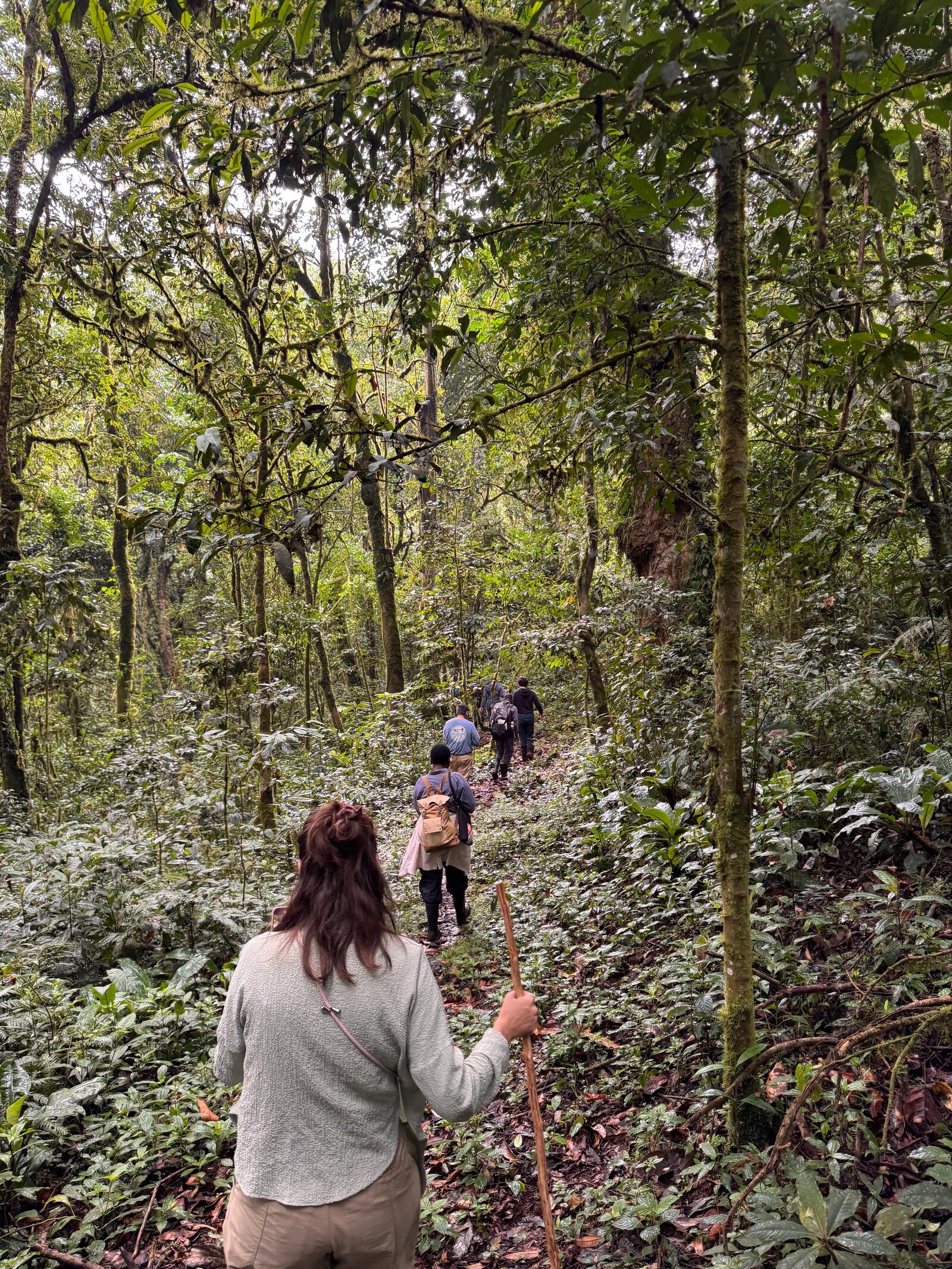
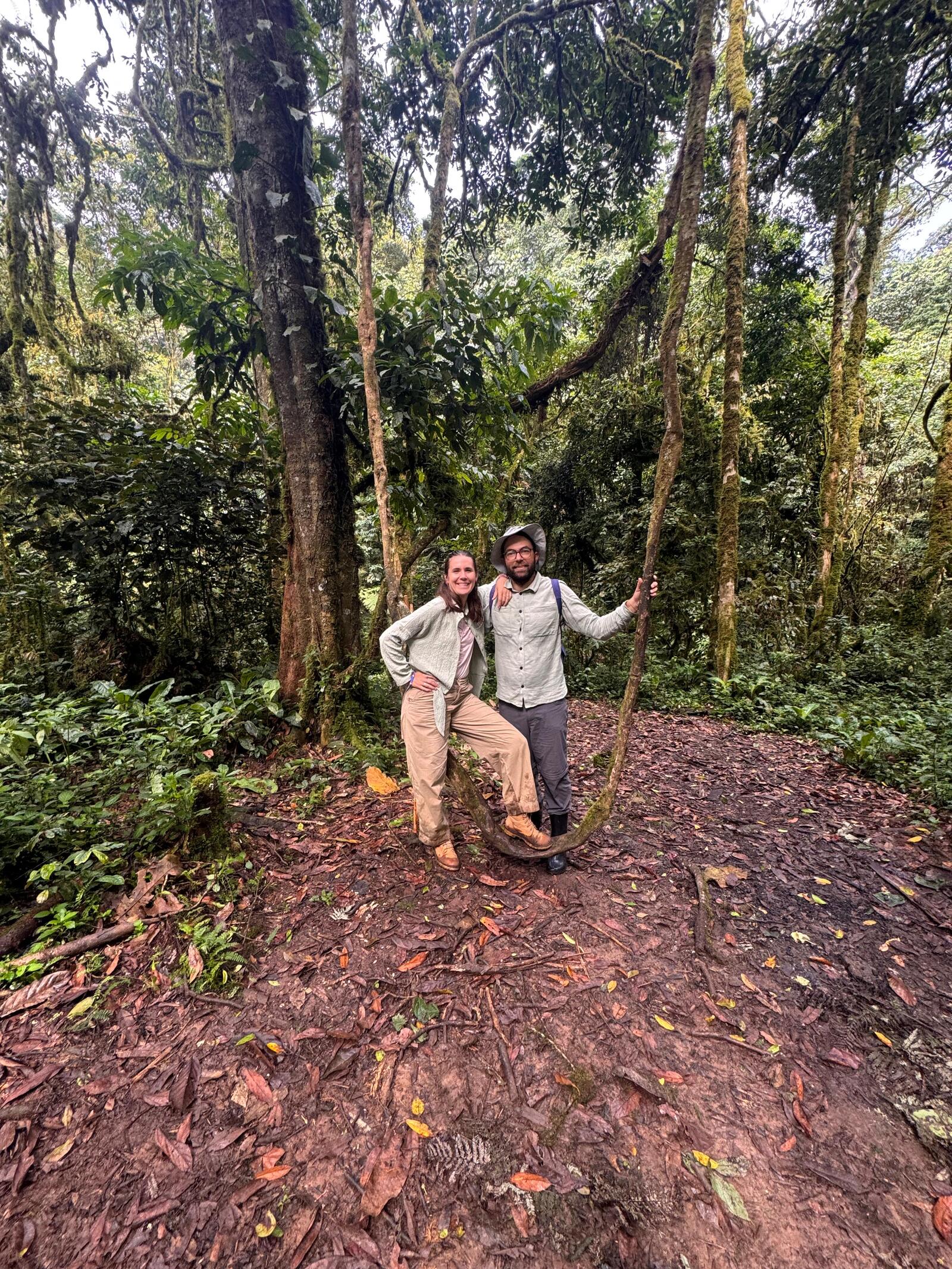
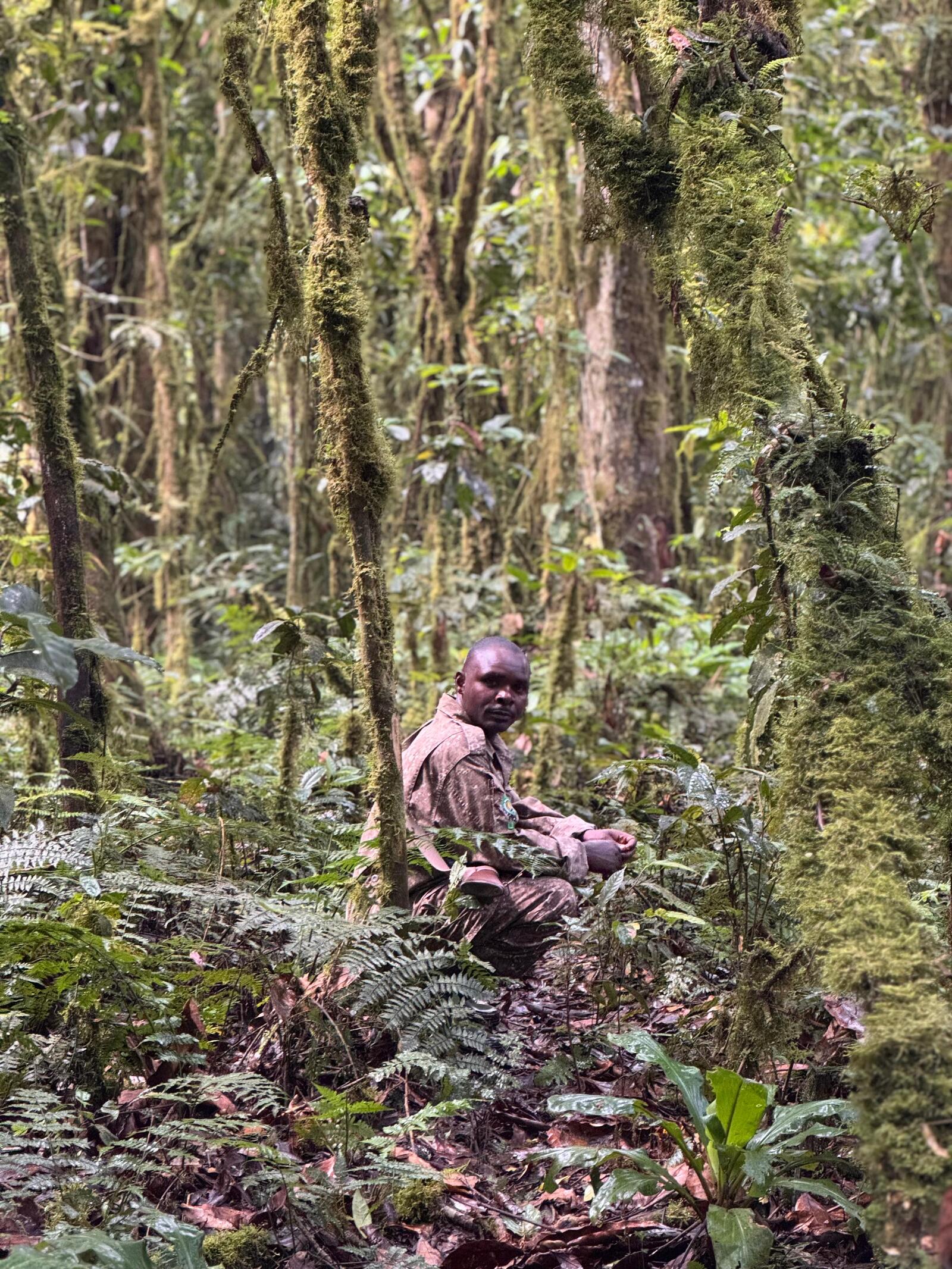
During those hours, we had to stop for almost 1 hour waiting for news from the trackers, as the gorillas started moving and they move faster than us, so they didn’t want us to make an unnecessary detour. Once they stopped again to eat and rest, the trackers notified our rangers and we continued on our way.
When we finally saw the gorillas, nerves and excitement gave way to a feeling difficult to describe.
The role of rangers and trackers during the trek
Rangers and trackers play a fundamental role in organizing these visits.
They know the environment, help locate gorilla groups, and guide visitors during the trek. Additionally, they explain the rules that must be followed to minimize disturbance to the animals and ensure responsible observation.
In our case, their help was essential in finding the gorillas after several hours of searching.
It’s not just about locating the animals, but doing so by following the instructions and protocols established by the park.
The nerves and excitement of the first encounter
The first moment we saw the gorillas was filled with nerves, emotion, and excitement.
We had spent hours searching for them in the forest, and suddenly, they were there, in front of us.
Seeing them in the wild, in their own environment, is very different from observing them in images or documentaries. You can notice their movements, how they interact, and the tranquility with which they continue their activities.
However, what surprised us most was yet to come.
This is how our encounter with mountain gorillas went
Once the gorillas were located, the most exciting part of the experience began.
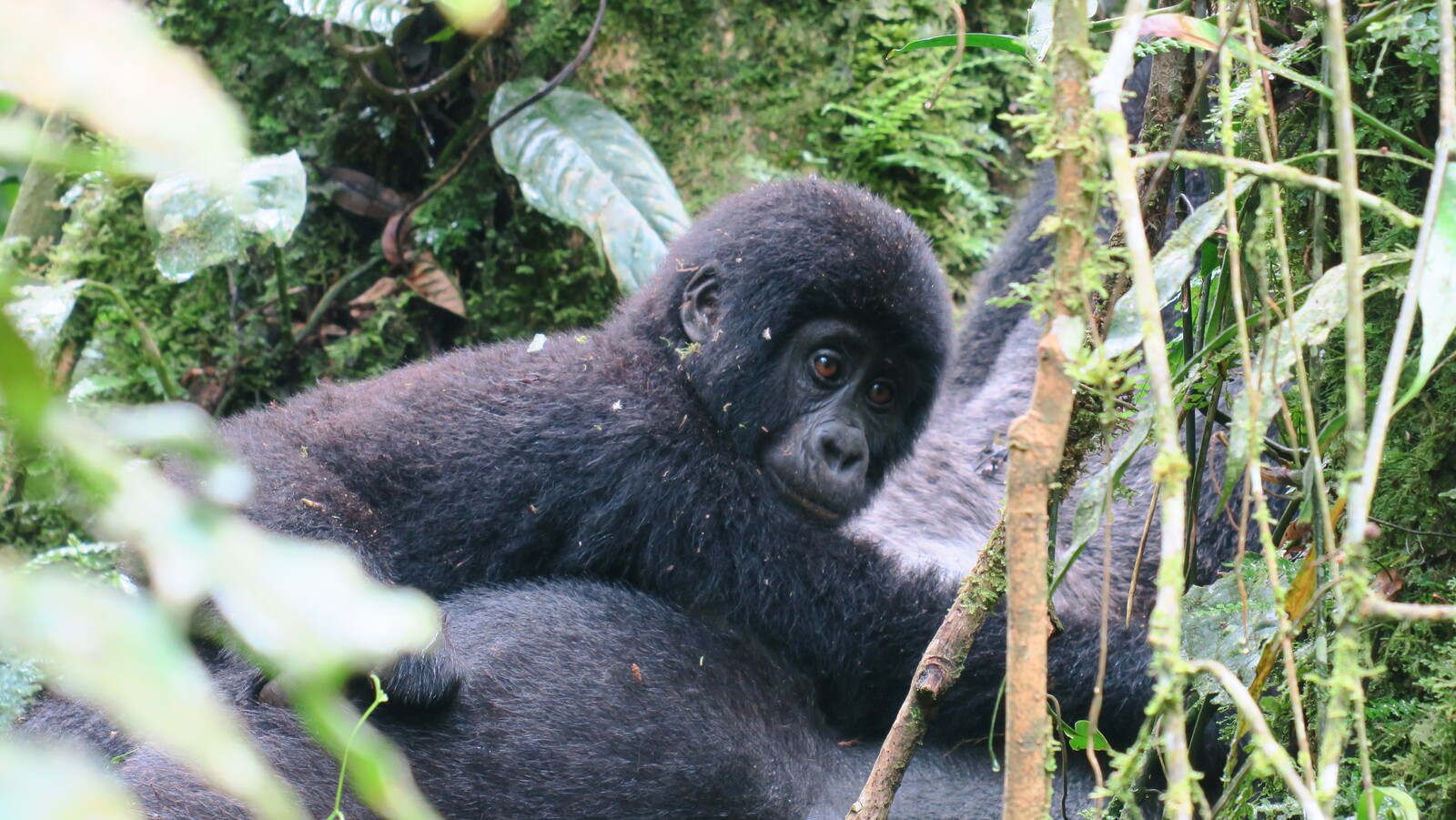
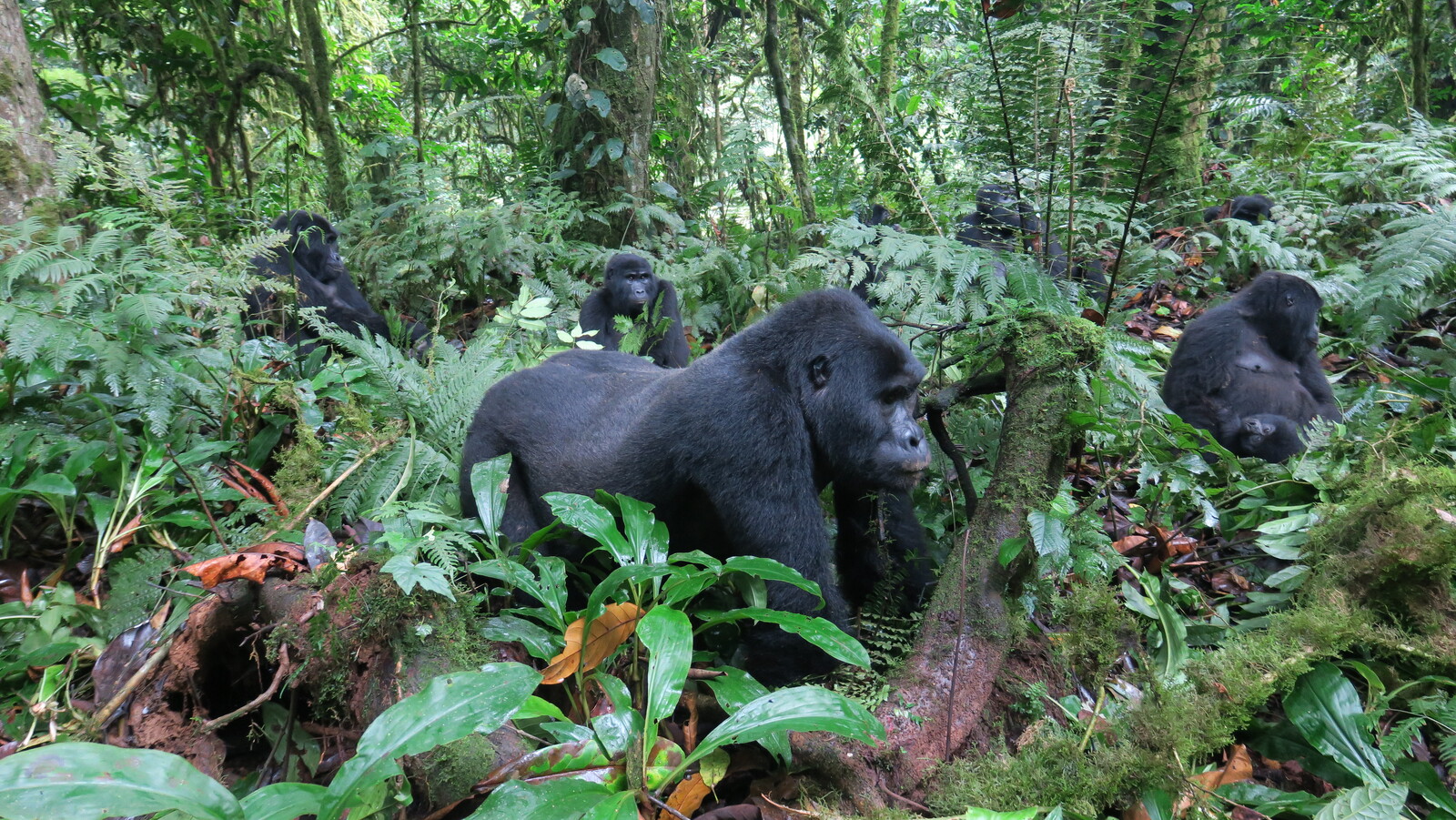
We had a family of mountain gorillas in front of us and could observe their behavior as they moved through the forest.
But there was a situation we didn’t expect.
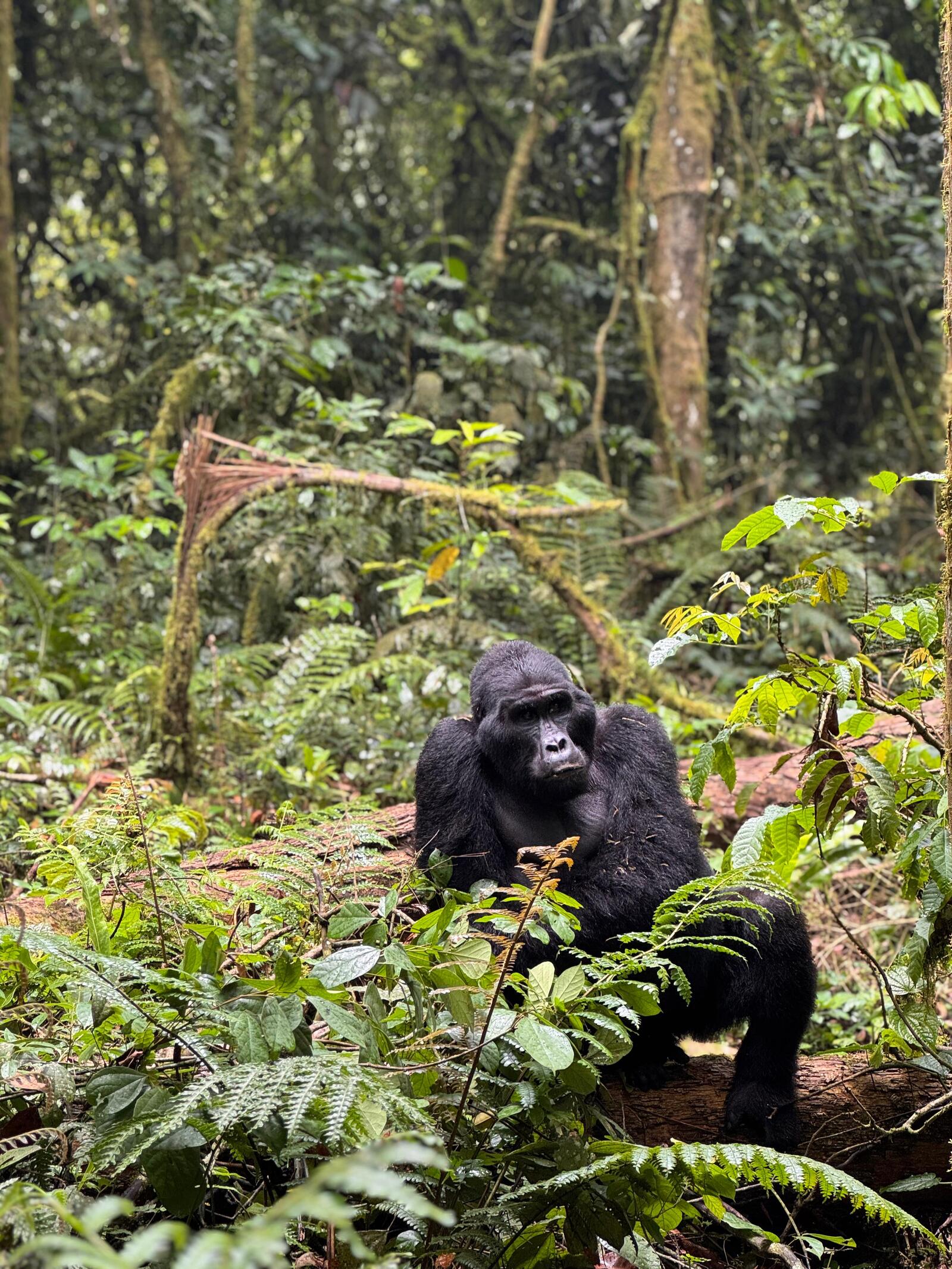
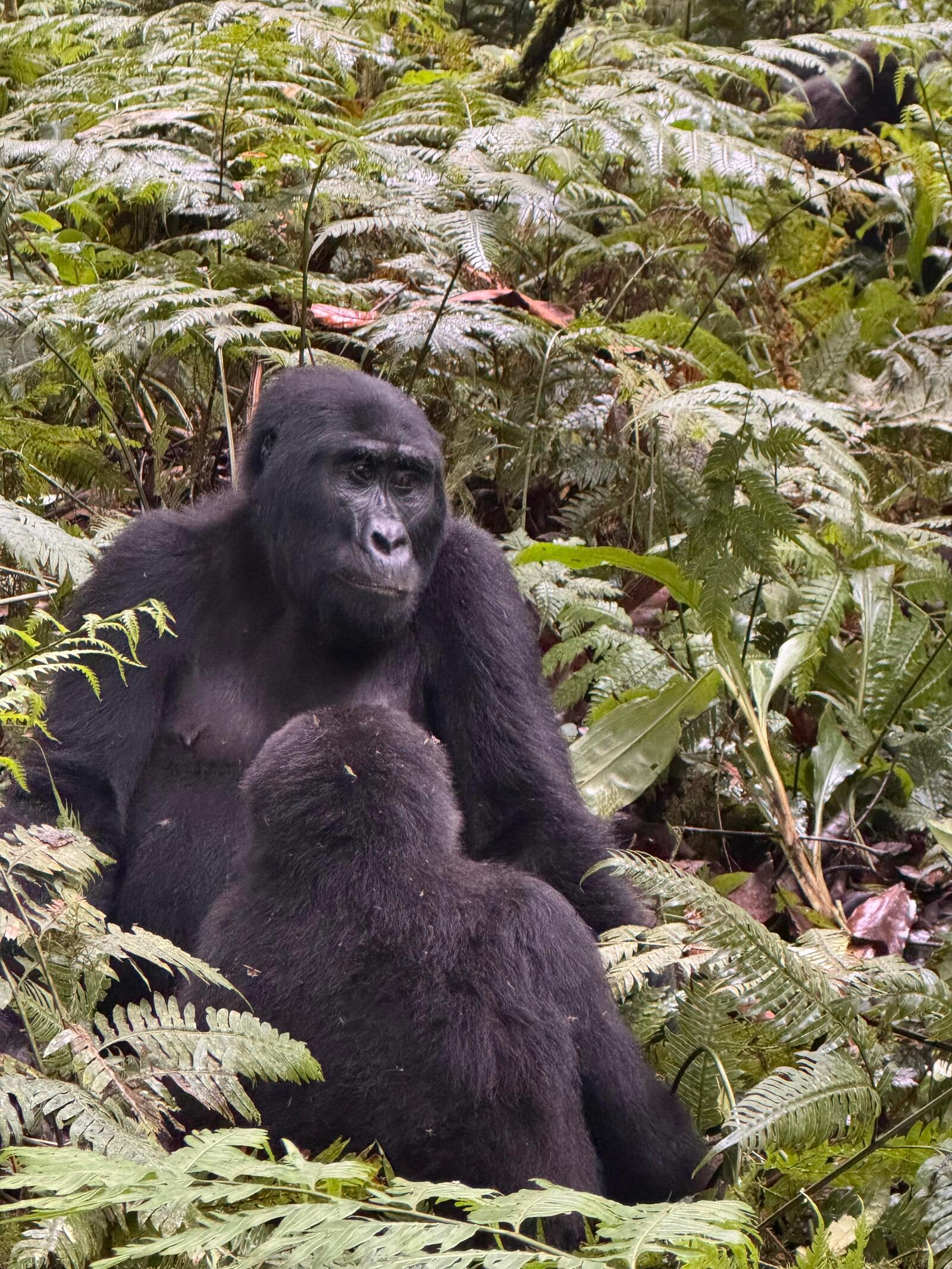
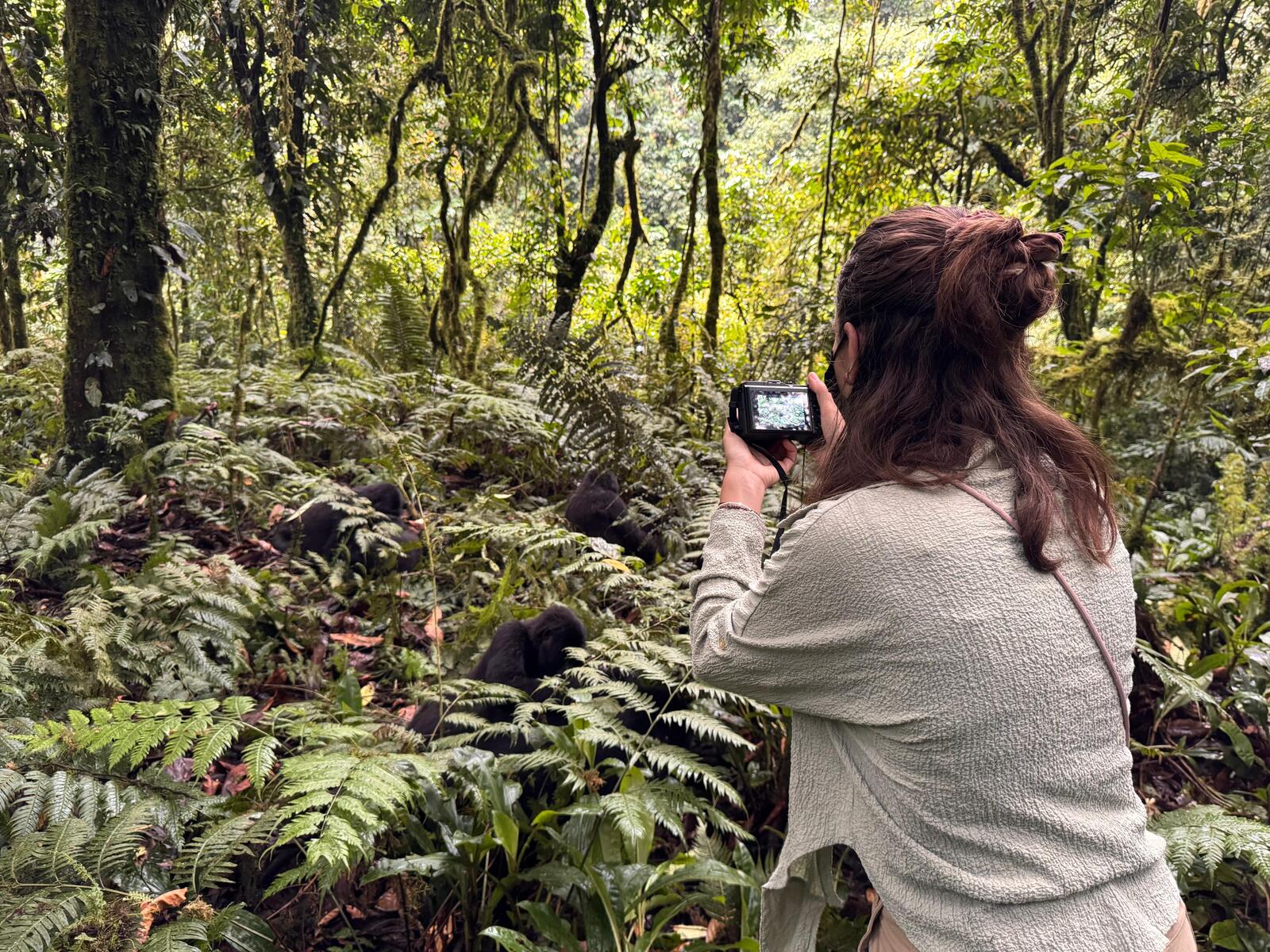
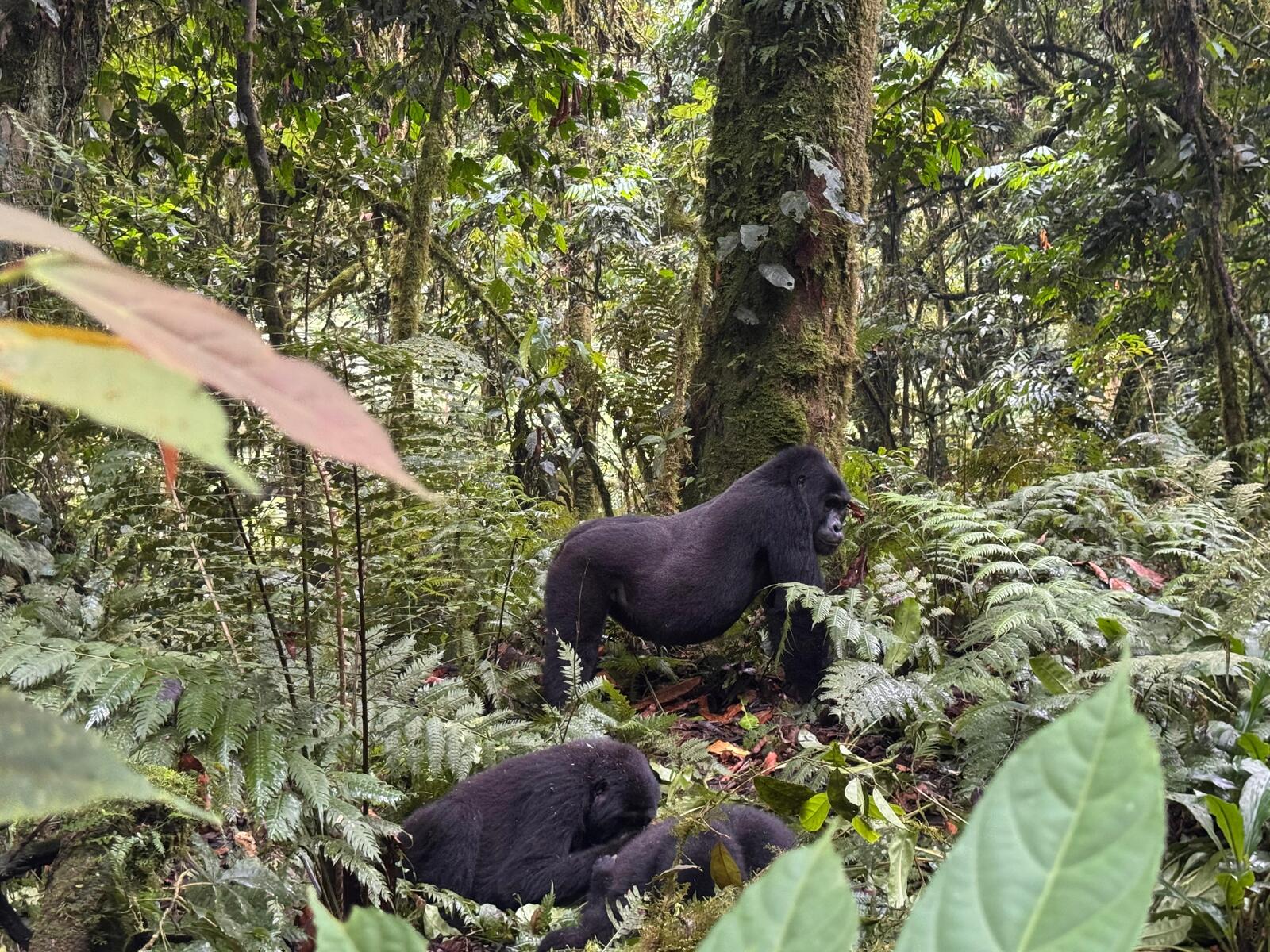
Two male gorillas marked their territory in front of us
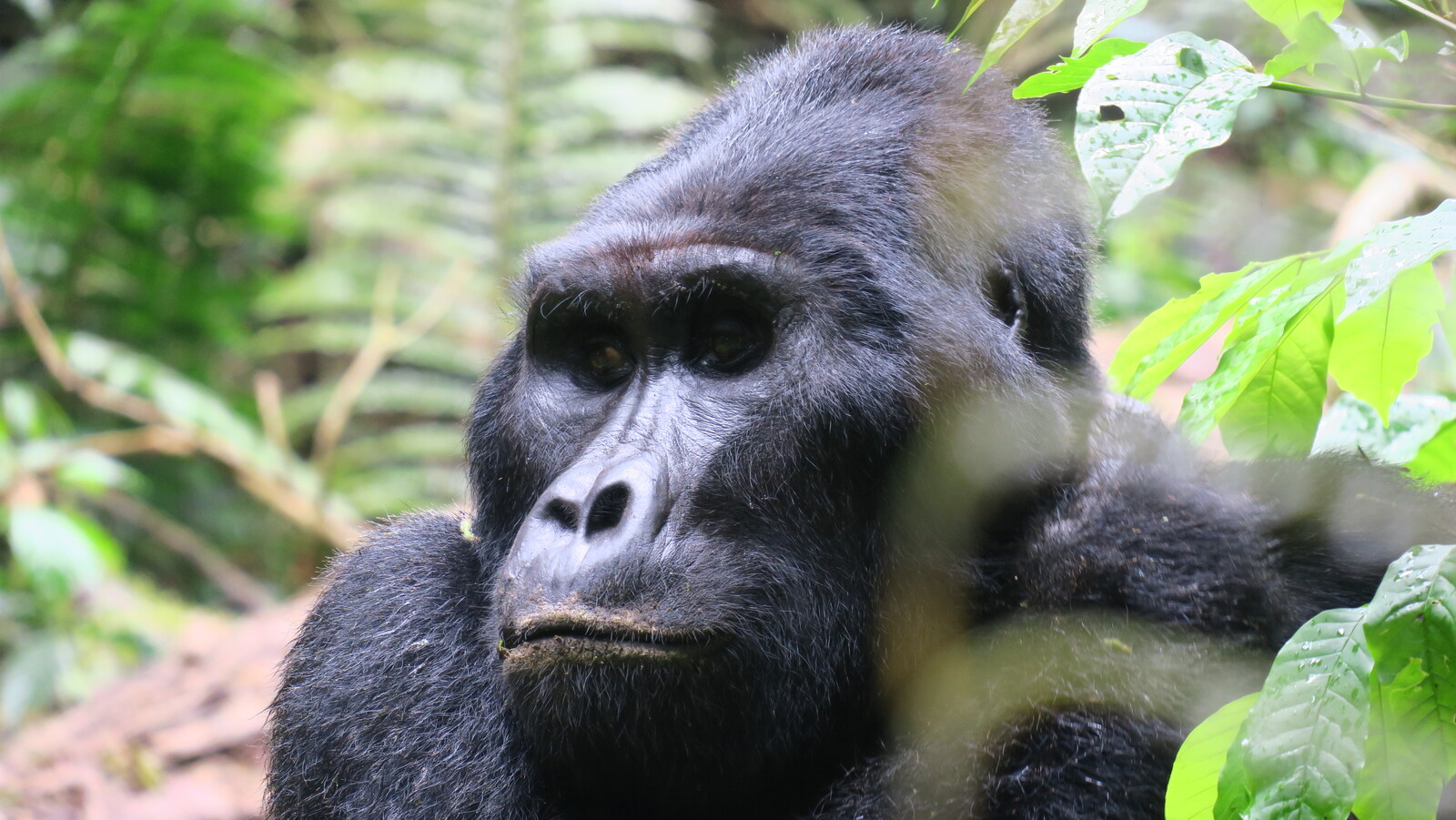
During the encounter, two dominant males approached our group to mark their territory. First, one came running towards us from behind the bushes; obviously, I was scared then, but I couldn’t move. The young dominant male stopped right in front of us so we could see his strength, his back, and his size. At no point did he look directly into our faces, nor did we look at him. Making eye contact would have been a challenge that could have ended badly. Luckily, neither he nor we felt the need.
It was a surprising situation because no one had previously explained that we might witness such behavior so closely.
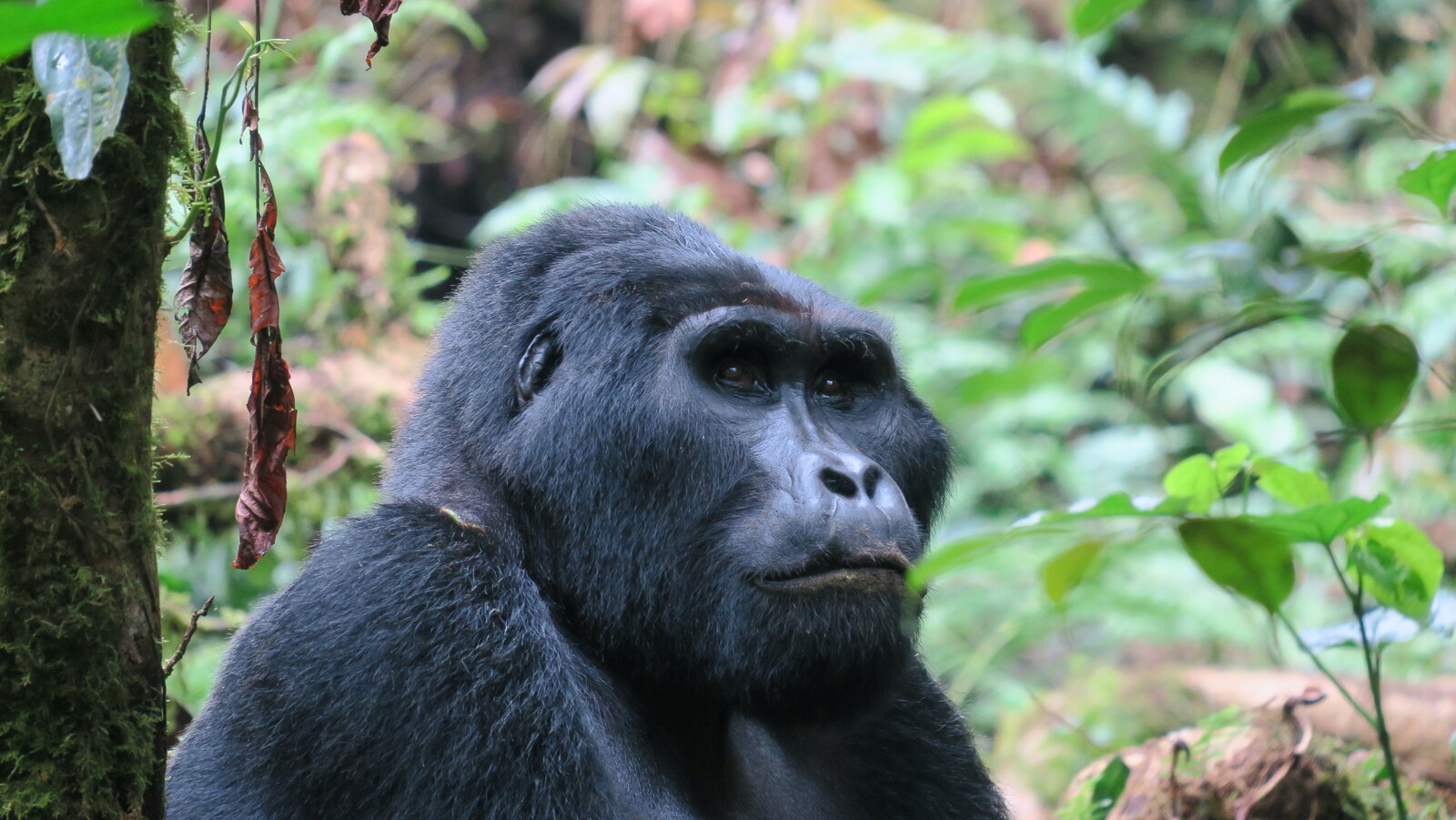
The gorillas were calm, and the main dominant male did nothing at that moment. After a few minutes, the silverback left. The truth is, we saw him less than 2 meters away, in his full splendor.
What we didn’t imagine was that a few minutes later, another silverback gorilla would do the same. Suddenly, he stood up and came running towards us. I thought of everything then, but above all, I was surprised because the rangers hadn’t warned us that gorillas sometimes come to mark their territory. When you see it, and you haven’t been warned, it’s even more astonishing. And when you see the Ranger make a noise to calm him down… well, honestly… at that moment, I didn’t know if it was normal, if it was dangerous, or what.
This episode reminded us that, although gorillas are accustomed to human presence during regulated visits, they are still wild animals, and their behavior cannot be taken for granted.
How the gorilla group reacted
One of the things that struck us most was being able to observe the gorillas as they continued with their activities.
They weren’t there for us. We were visitors who had arrived in their habitat and had the opportunity to observe them for a limited time.
The main dominant male remained calm during the episode we experienced; after a while, the dominant male started making some noises, the other gorillas stood up and left the area.
We followed the gorillas as they moved through the forest
After spending some time with the group, the gorillas decided to move to another area, and we followed them according to the instructions of the staff accompanying us.
The forest vegetation means that the animals’ movements are not always easy to follow with your eyes. Sometimes they appear among the leaves, and other times they move to more open areas.
During the trek, this combination of searching, observing, and moving is part of the experience.
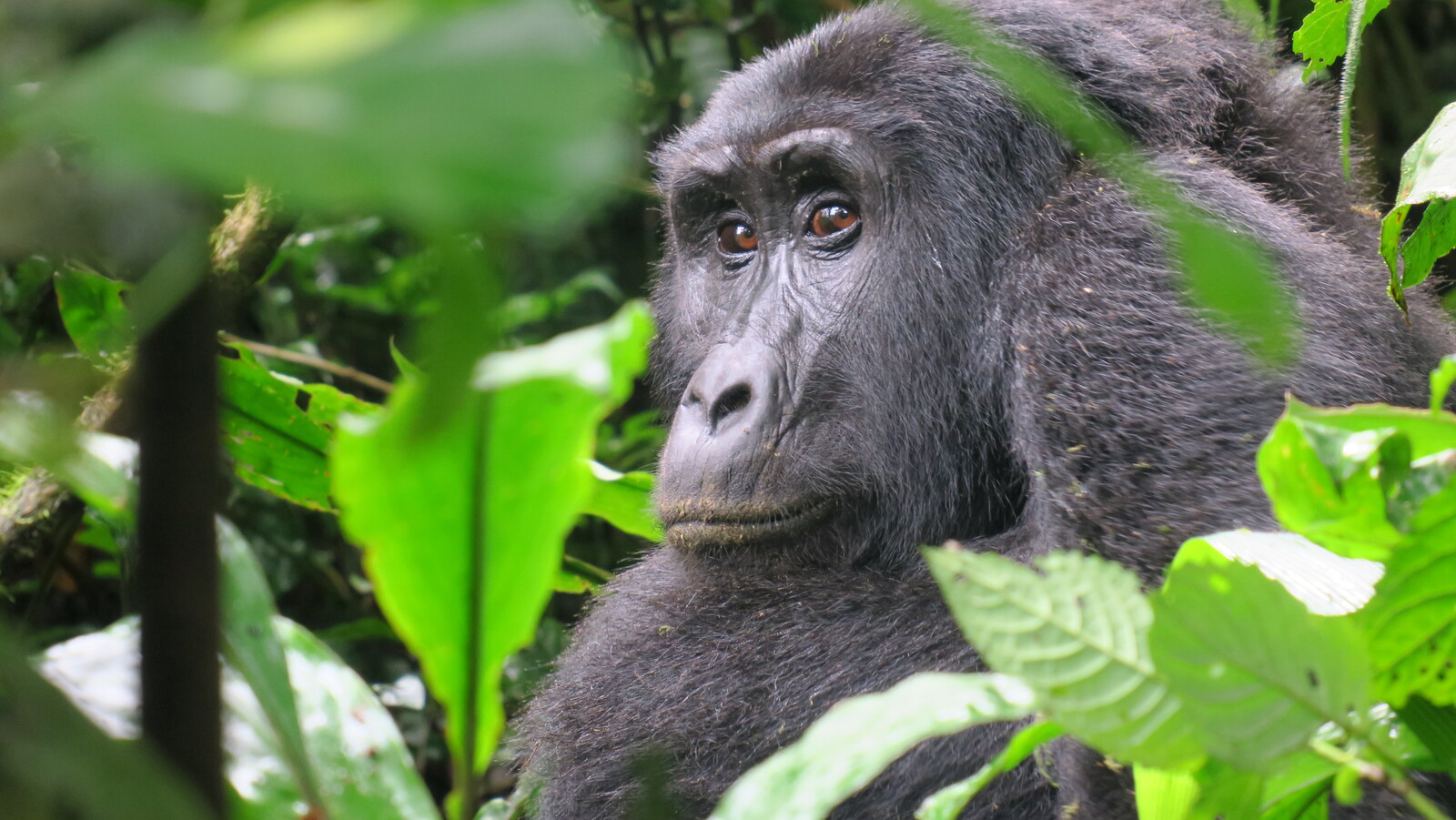
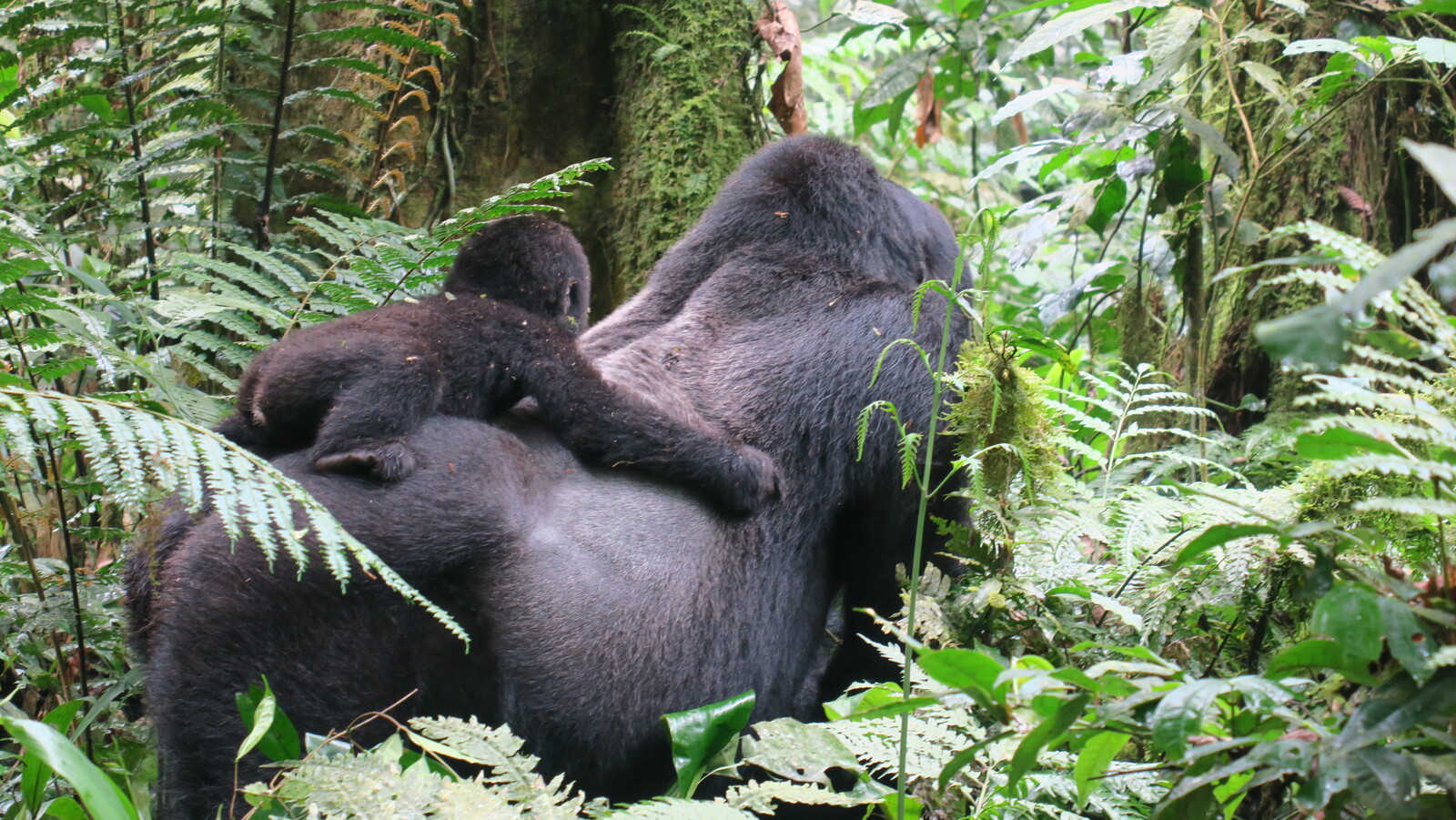
The dominant male and his daughter climbed the trees
Another moment we remember was when the dominant male and his daughter climbed the trees.
Watching the gorillas move through the vegetation and observing their interactions allowed us to better appreciate how they use the environment they live in.
In the end, we didn’t just take away the memory of having seen mountain gorillas. We also observed different behaviors during a single visit.
When it was time to leave, exactly 1 hour after first seeing them, Raquel left emotional from what she had witnessed.


The Batwa of Bwindi: the other side of conservation
Bwindi forest is not only home to mountain gorillas. It was also the ancestral territory of the Batwa people, an indigenous community that was expelled from the forest after its declaration as a protected area, losing their traditional way of life.
If you visit Uganda, we believe it’s important to also learn this history and reflect on the impact of conservation and tourism on local communities.
Discover the history of the Batwa of Uganda and the challenges of responsible tourism.
Nature conservation and indigenous community rights
The conservation of Bwindi is fundamental to protecting mountain gorillas and the forest’s biodiversity. However, it is also important to recognize the social consequences that some protection measures have had.
Tourism can contribute to funding conservation activities and generating income for local communities. For this contribution to be positive, it is important to pay attention to how benefits are distributed and the participation of people living in the region.
Learning about the history of the Batwa adds an important perspective to the visit: protecting nature and respecting community rights are issues that must be addressed jointly.
Tips for trekking and seeing gorillas in Uganda
If you are thinking of having this experience, there are several aspects to consider before traveling.
How long does the trek last and what is its difficulty?
The duration of the trek depends on the gorillas’ location and the trail conditions.
In our case, the excursion lasted five hours, and we spent over three hours searching for the animals.
The forest terrain can be steep, uneven, wet, and slippery. Therefore, it is advisable to have a physical condition that allows you to walk for several hours and adapt to a demanding natural environment.
Not all treks are the same. The distance and difficulty can vary depending on the assigned gorilla group and the conditions of each day.
What clothes and footwear to wear for walking in Bwindi
For trekking in Bwindi, it’s advisable to wear comfortable and durable clothing, preferably long-sleeved shirts and long trousers.
It’s also recommended to use hiking boots with good grip, as the terrain can be muddy or slippery.
A waterproof jacket is useful because the weather can change quickly in the tropical forest. Sturdy gloves can also be practical for protecting your hands when pushing aside vegetation or holding on during some sections.
Complete your gear with water, a light backpack, food, and a medical mask (mandatory for seeing gorillas in Uganda).
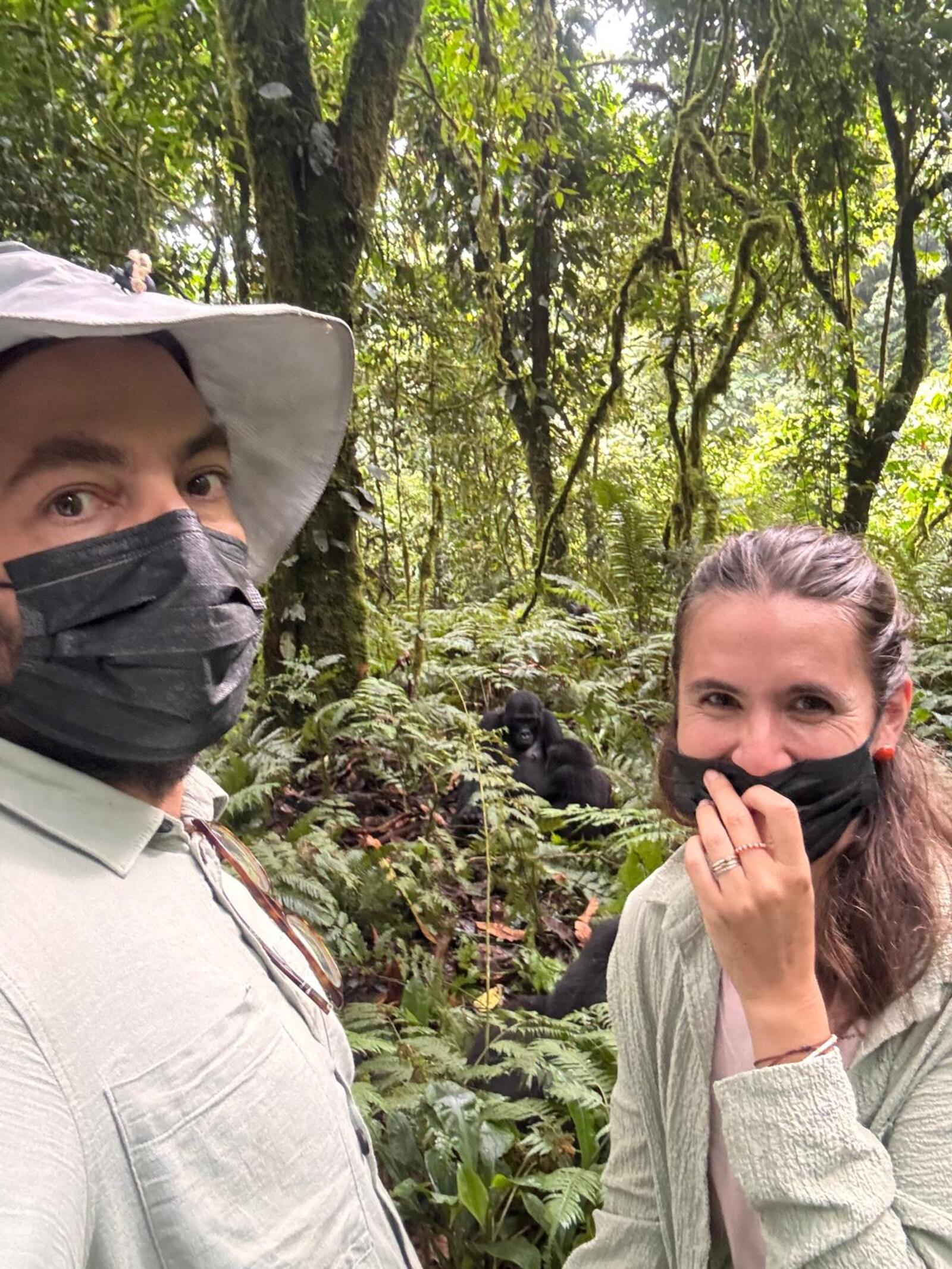
What you should know about gorilla behavior
During the encounter, it is essential to follow the rangers’ instructions and respect the park’s current rules.
Gorillas are wild animals, and we must not approach them on our own initiative, try to touch them, block their path, or stare directly into their eyes (especially the males).
If one approaches, the most important thing is to remain calm, not move, and follow the instructions of the staff accompanying the group. Do not try to attract their attention or make sudden movements.
The minimum authorized distance is 6 meters, but the reality is different, and sometimes they approach you themselves.
Is seeing gorillas in Uganda worth it?
From our experience, trekking to see gorillas in Uganda was one of the most special experiences of the trip.
Not only for the fact of finding them, but for everything that happened during the day: the hours of searching, the excitement of the first sighting, the behavior of the two silverback males, and the opportunity to observe the group as they moved through the forest.
We also believe that visiting Bwindi is an opportunity to better understand the relationship between conservation, territory, and local communities.
If you decide to do this activity, we recommend preparing for it in advance, informing yourself about the trekking conditions, and approaching the experience with respect for the animals and the people who live in the region.
Seeing mountain gorillas in the wild is an extraordinary opportunity, but also a responsibility: the visit must be carried out following the rules that protect these animals and their habitat.
What to consider before organizing your trip
Permits sell out in summer, and people under 15 cannot enter Bwindi except for exceptions (parents with children aged 13-14 can request a special permit).
Frequently asked questions about seeing gorillas in Uganda
How much does it cost to see gorillas in Uganda?
The cost depends on the permit, accommodation, transport, and other travel services. We paid $800 USD per person for the permit. Before booking, check the current official rate and calculate the full budget for the visit.
How many hours does gorilla trekking last?
The duration depends on where the gorilla group is located and the terrain conditions. In our experience, the trek lasted five hours, with over three of those dedicated to searching for the animals.
Is trekking in Bwindi difficult?
It can be demanding because the terrain is uneven, there are slopes, and the vegetation is dense. The difficulty varies depending on the route and the gorillas’ location. It is advisable to wear good footwear and be prepared to walk for several hours. In general, a person who is physically fit and enjoys mountain excursions is prepared for trekking in Bwindi Impenetrable Forest.
What is the best time to see gorillas in Uganda?
Trekking can be done during different times of the year. The usually drier periods tend to make travel easier, although weather conditions can vary in a tropical mountain forest area.
How long can you spend with the gorillas?
Regulated visits usually allow a limited observation time, typically one hour from the encounter with the assigned group. Confirm the current rules when booking your permit and follow the park staff’s instructions.
Is gorilla trekking safe?
The activity is regulated and carried out with authorized personnel who explain the rules of behavior and safety. Even so, gorillas are wild animals, and their behavior can vary. It is essential to respect the established distances and always follow the rangers’ instructions.
Can you visit the Batwa after trekking?
In the Bwindi region, there are cultural experiences related to Batwa communities. The possibility of visiting on the same day will depend on the schedules, location, and duration of the trek. If you are interested, it is best to organize it in advance.
Key Takeaways
- Seeing gorillas in Uganda is an unforgettable experience in Bwindi Impenetrable National Park, known for its biodiversity.
- The trek lasts approximately five hours, and a permit costing around $800 per person is required.
- Encounters with gorillas can include surprising moments, such as silverback males approaching the group.
- It is essential to follow park rules to ensure the safety and well-being of the gorillas during the visit.
- Visiting Bwindi also offers the opportunity to learn about the culture of the Batwa, the indigenous inhabitants of the region.