
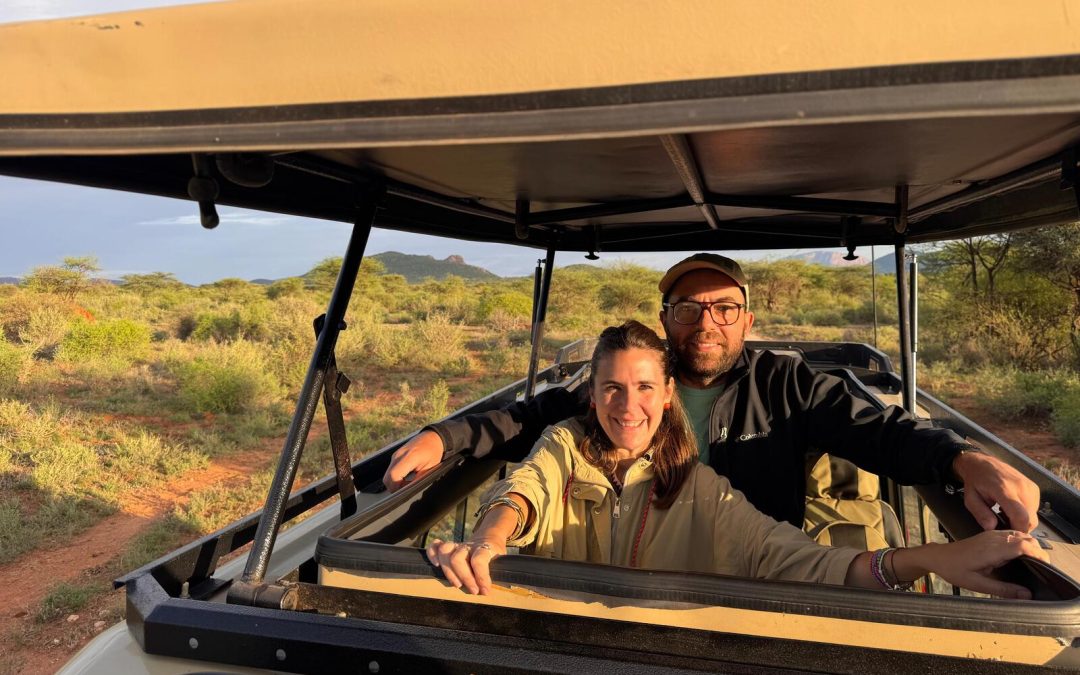
Why go on a safari in Samburu?
Samburu National Reserve is ideal if you want to go on safari in a reserve with very little tourism. Its location, far from the Masai Mara, means many people choose not to go. That keeps visitor numbers low, and it’s also a place where you can see animal species you won’t see in other parks in Kenya, such as the Grevy’s zebra or the reticulated giraffe. If you’re a giraffe lover, you can’t miss the reticulated giraffes—possibly the most elegant and beautiful in the world.
What makes Samburu different
Samburu is different and well worth a visit. From our point of view, Samburu is far more interesting than Lake Nakuru. The thing is, Nakuru is on the way to the Masai Mara, and you can do a circular route without much of a detour. That’s why most safaris pass through Nakuru or Naivasha, and very few detour up to Samburu.
But if you’re a traveler, you already know that what gets the most visitors isn’t always the best. In fact, tourism and an excessive number of visitors often take the charm away from very beautiful places. If you’re the kind of person who prefers to go off-route to see something more authentic, Samburu is a must.
Our first impression on arrival
We arrived around 5:30 PM, a bit late because one entrance to the reserve was closed and we had to use another. That delayed us a little. Our accommodation was inside the reserve, so we had to drive in to get there, which meant we enjoyed a first sunset game drive—which never disappoints.
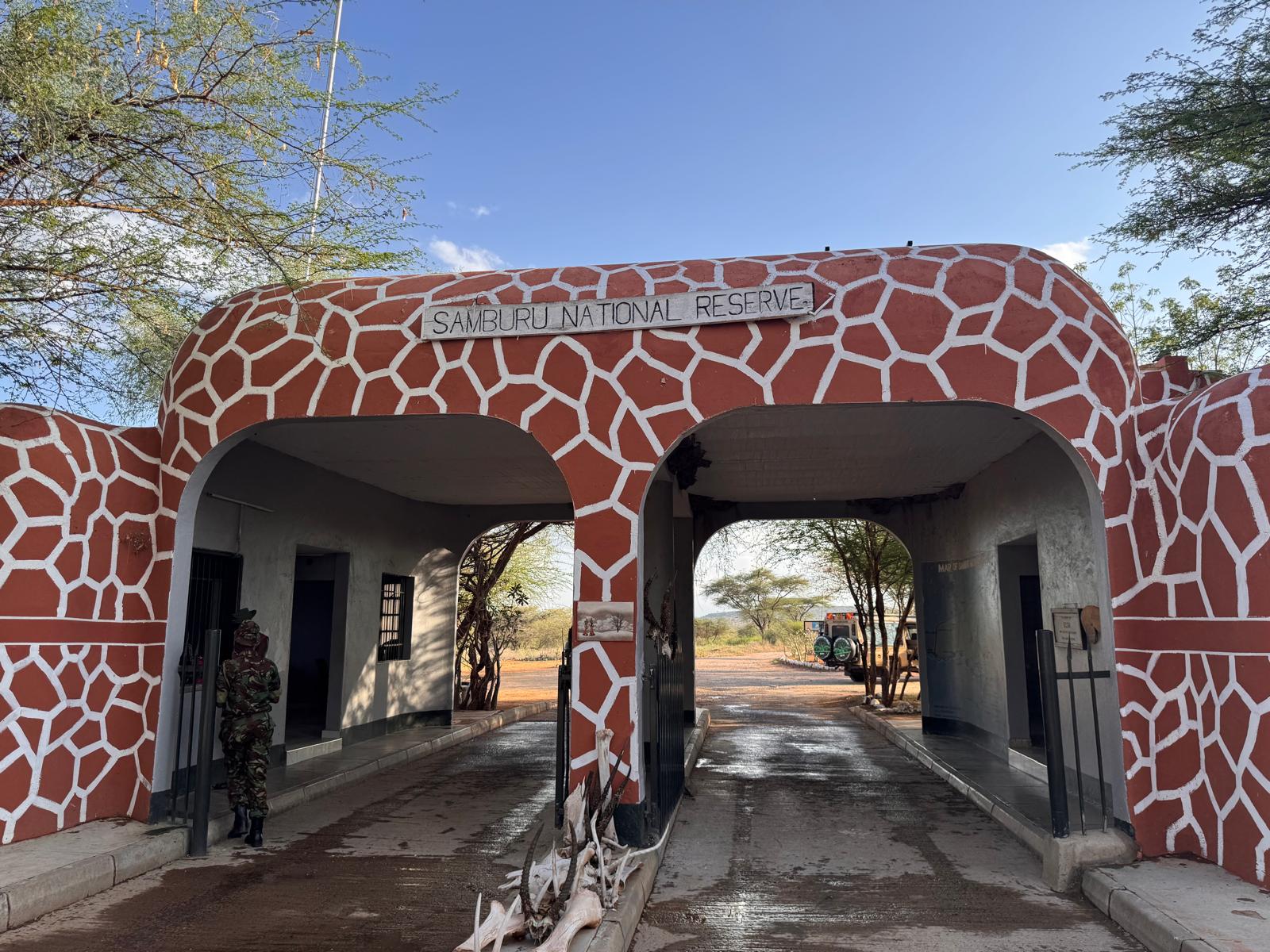
When the sun goes down, the light is always beautiful and the big predators start moving to find food. Would we be lucky and spot a lion or a leopard on the way to the hotel?
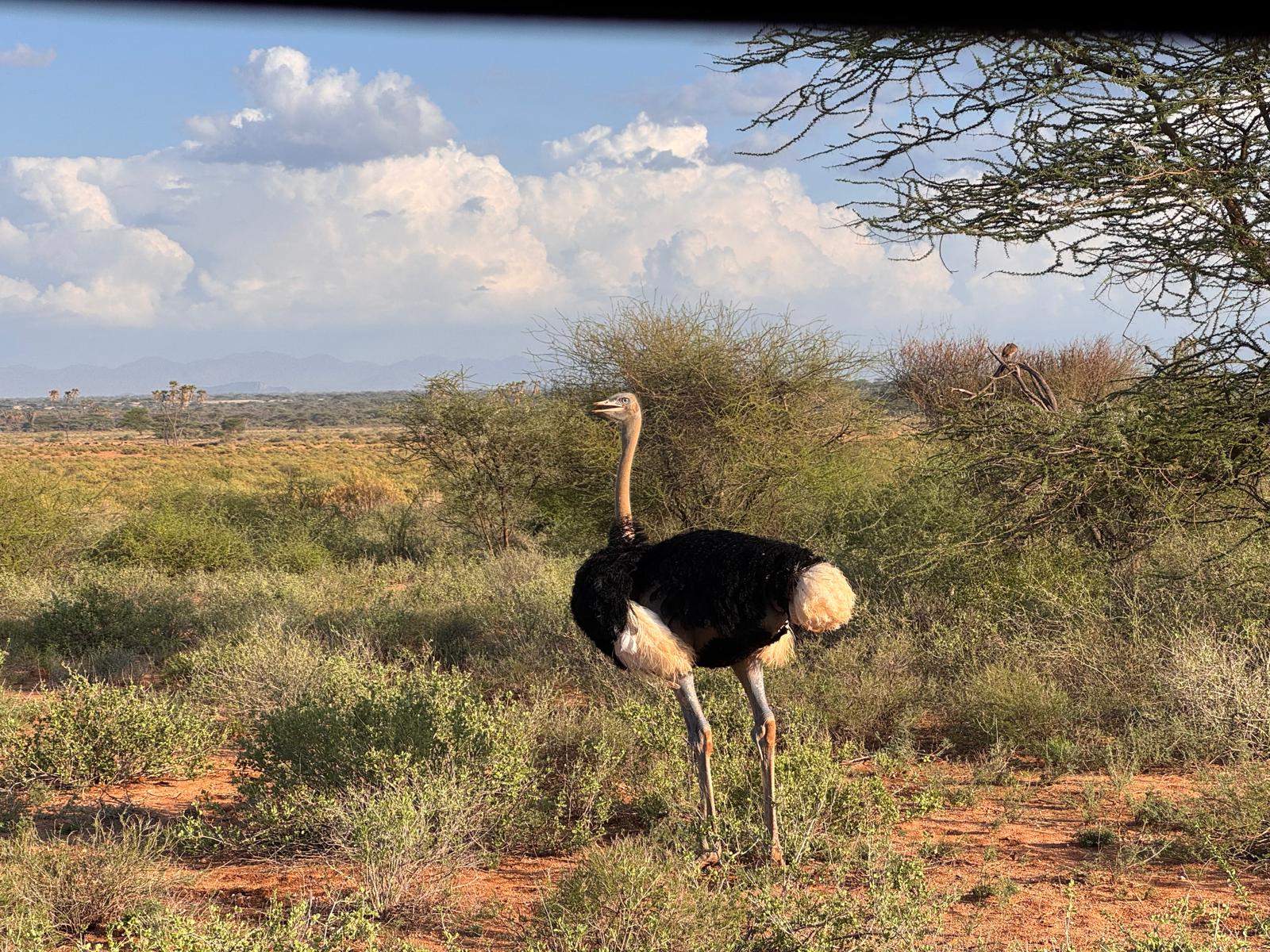
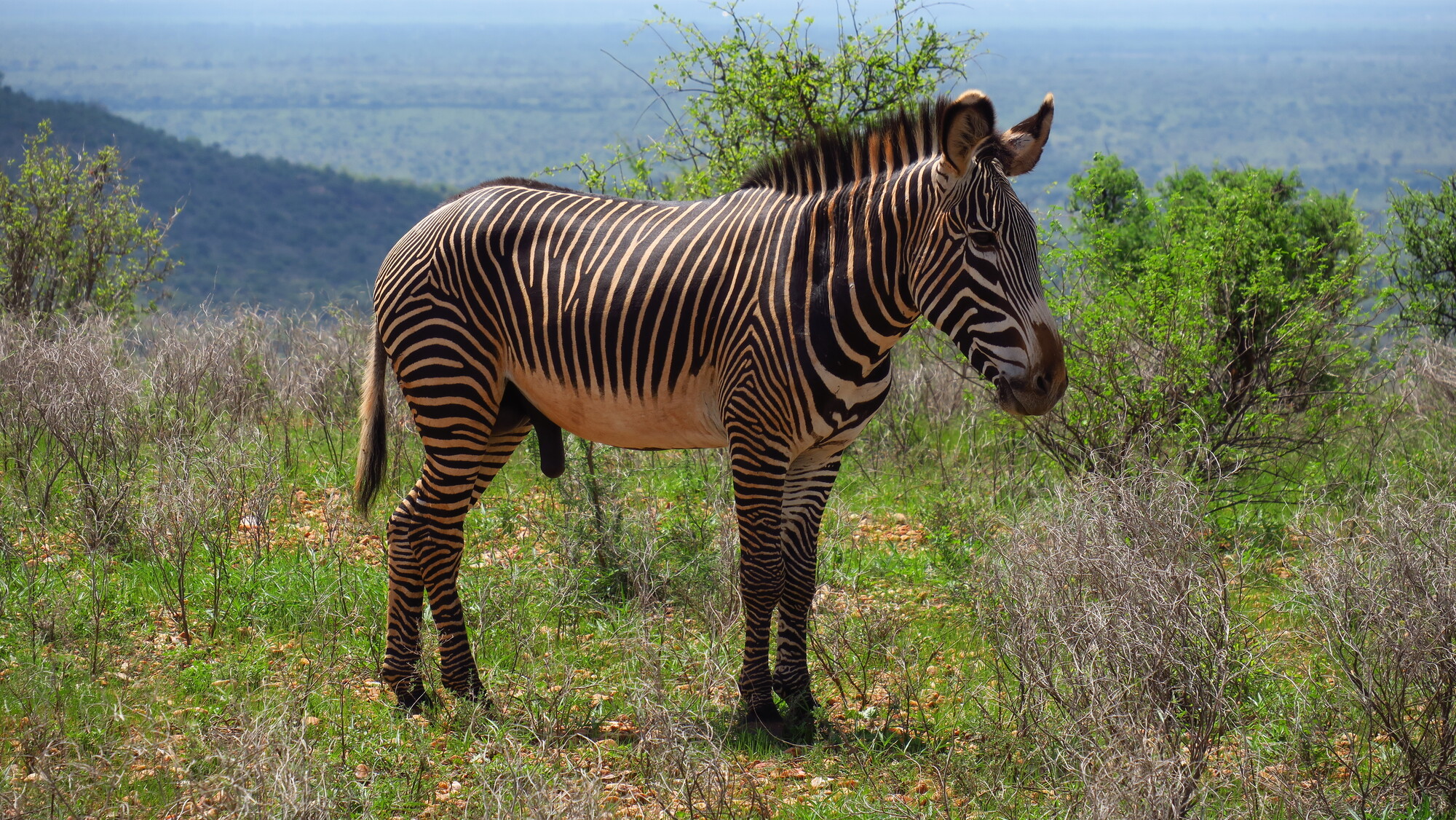
As soon as we entered, we started seeing the first birds, like the Somali ostrich—one of the Samburu Big Five you can see in the reserve. We also saw our first Grevy’s zebras, stunning, and also unique to that part of Kenya.
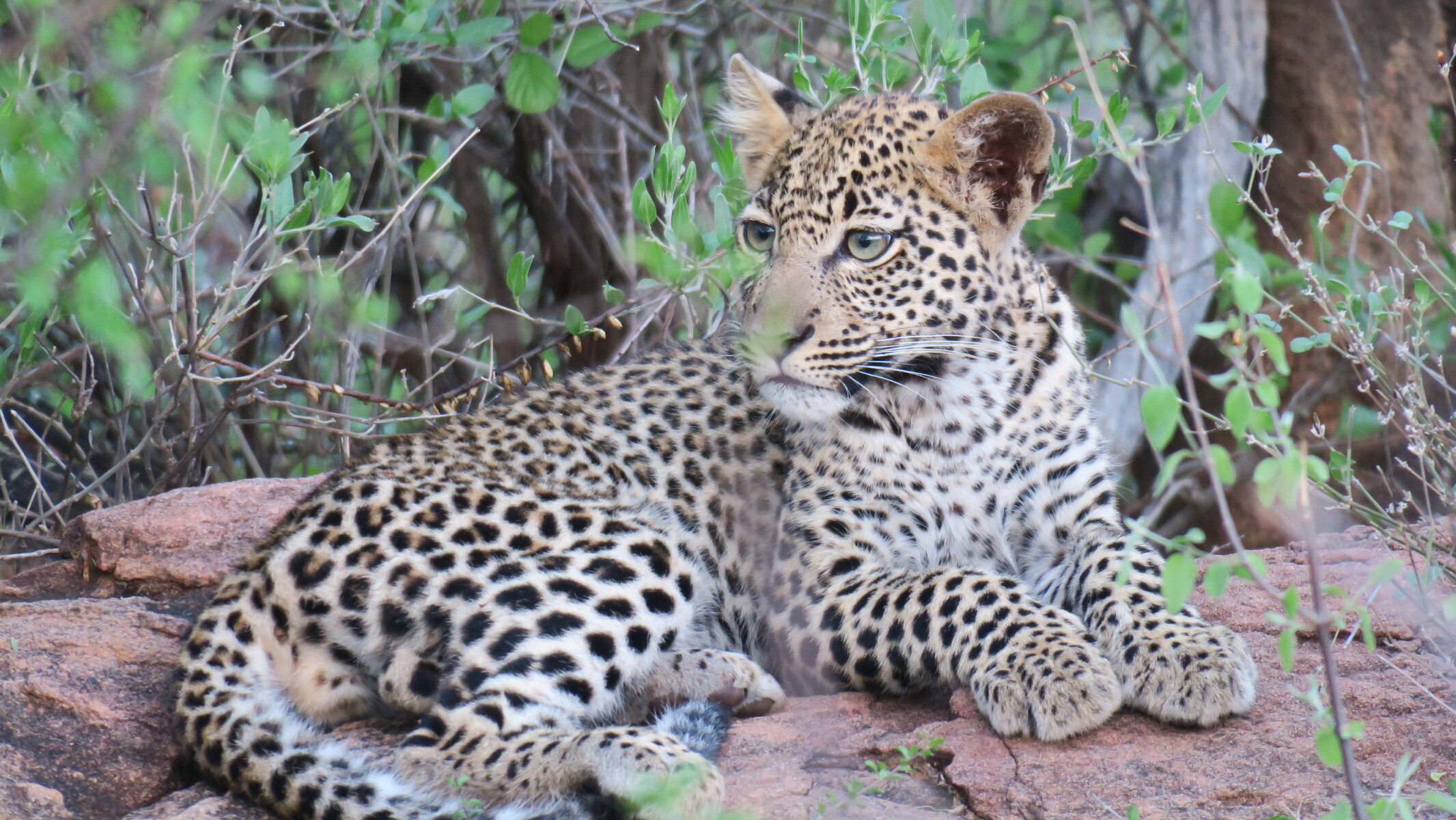
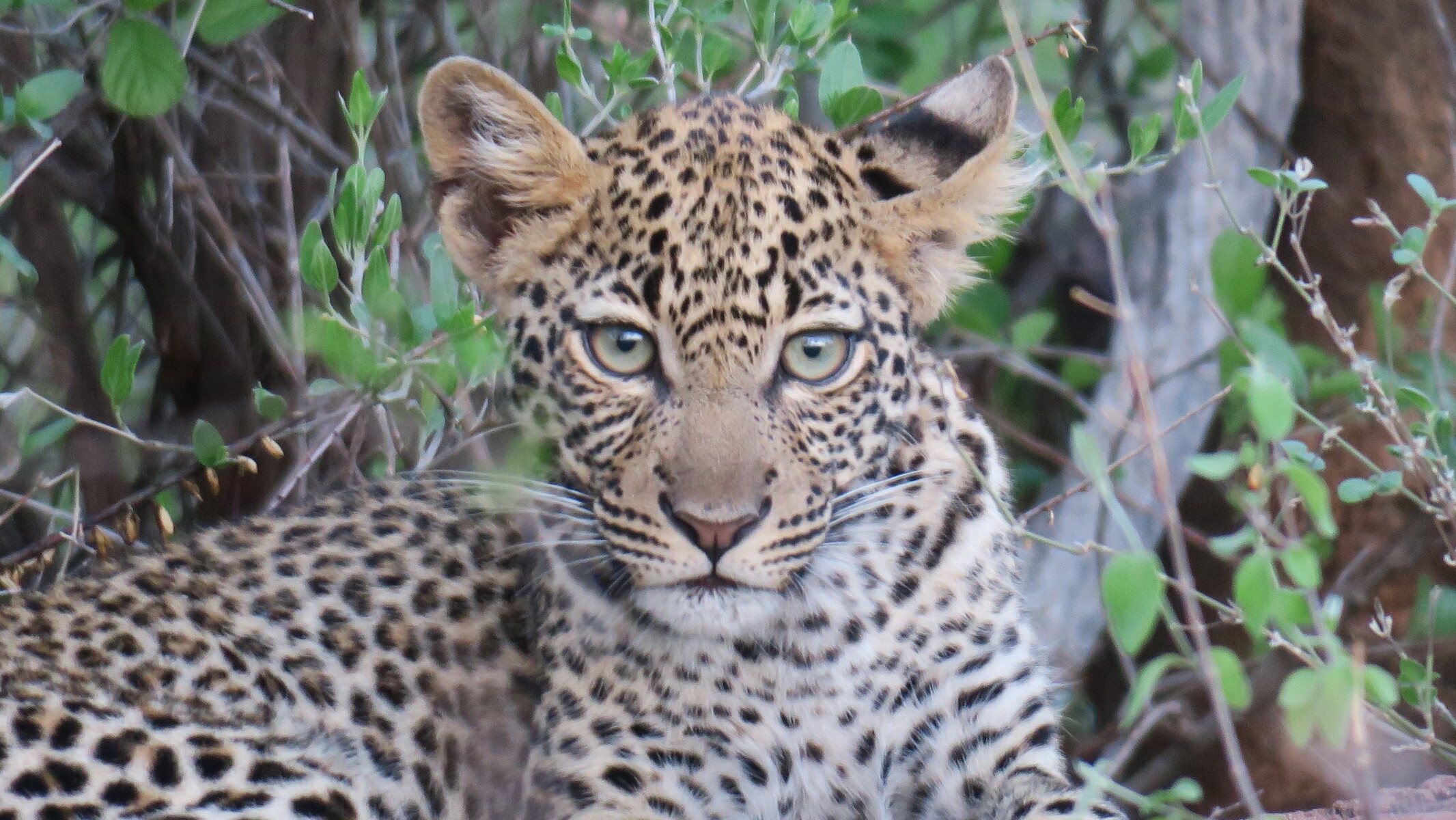
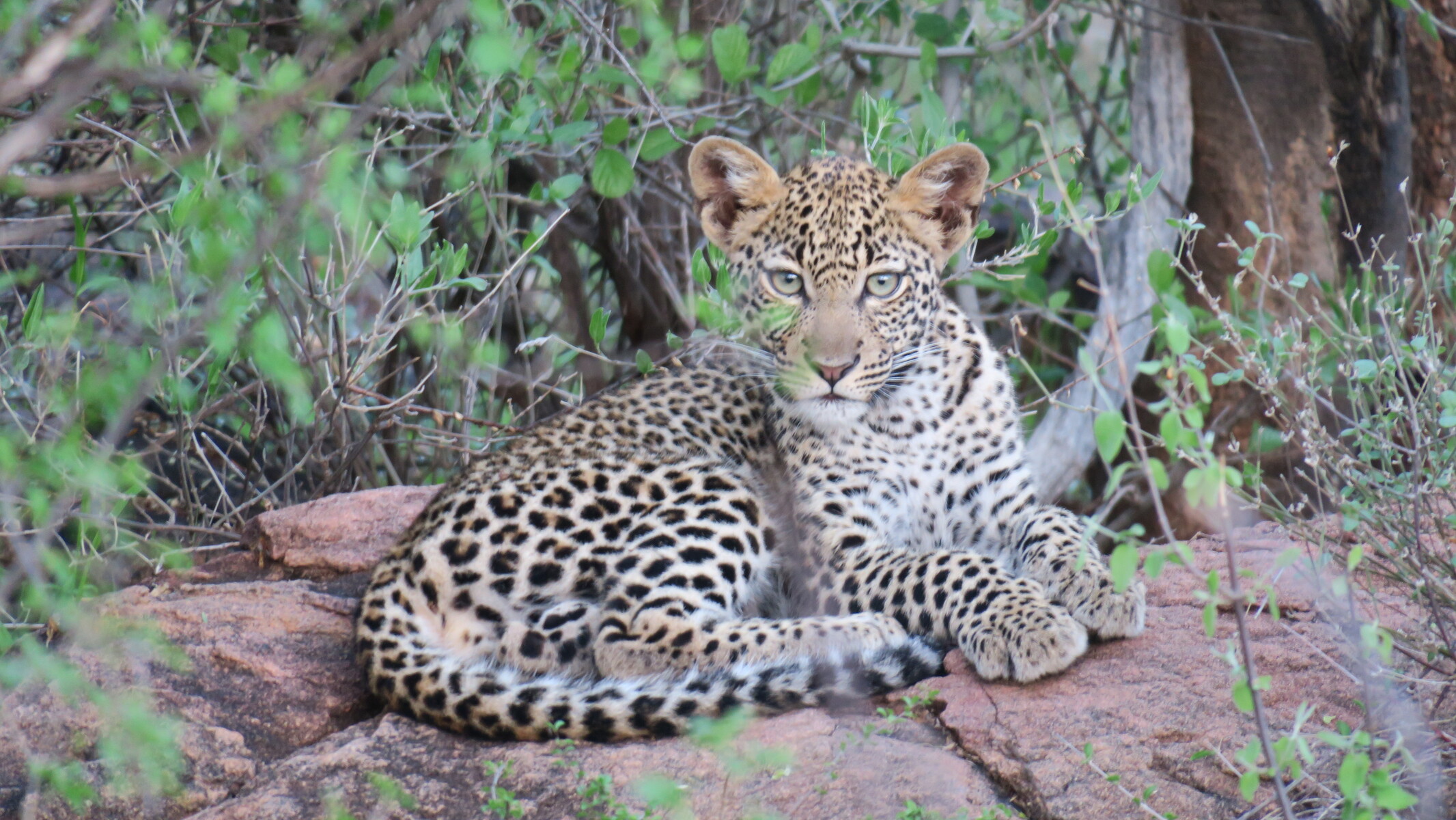
But the big surprise came when we saw a leopard cub hidden in the vegetation. That’s when full safari mode kicks in: absolute silence, and finding a good spot to enjoy an animal that’s so beautiful and at the same time so hard to see—one that loves to hide and rarely shows itself.
Is it worth including a Samburu safari in your trip to Kenya?
Yes—provided you have enough days, it’s absolutely worth it. For me, after the Masai Mara (counting the whole ecosystem and its conservancy areas), Samburu is one of the best parks for a safari. In fact, Amboseli and Samburu are, in our view, the two parks that pair best with the Masai Mara. The only small drawback with both is the distance from the Masai Mara.
Where Samburu National Reserve is
Samburu National Reserve is in northern Kenya, in Samburu County, about 350 kilometers from Nairobi. Although the distance doesn’t look too great on the map, the road journey usually takes between 5 and 7 hours depending on traffic and road conditions.
Unlike other more popular safari destinations such as the Masai Mara or Amboseli, Samburu sits in a much more arid and remote region. In fact, on the drive from Nairobi you can clearly see how the landscape gradually changes. The farming areas of the central highlands fade away, giving way to a dry savannah dominated by thorny shrubs, acacias, and stretches of reddish earth.
This location—away from the usual tourist circuits—is precisely one of the reasons Samburu retains a much calmer, more authentic atmosphere than other reserves in Kenya.
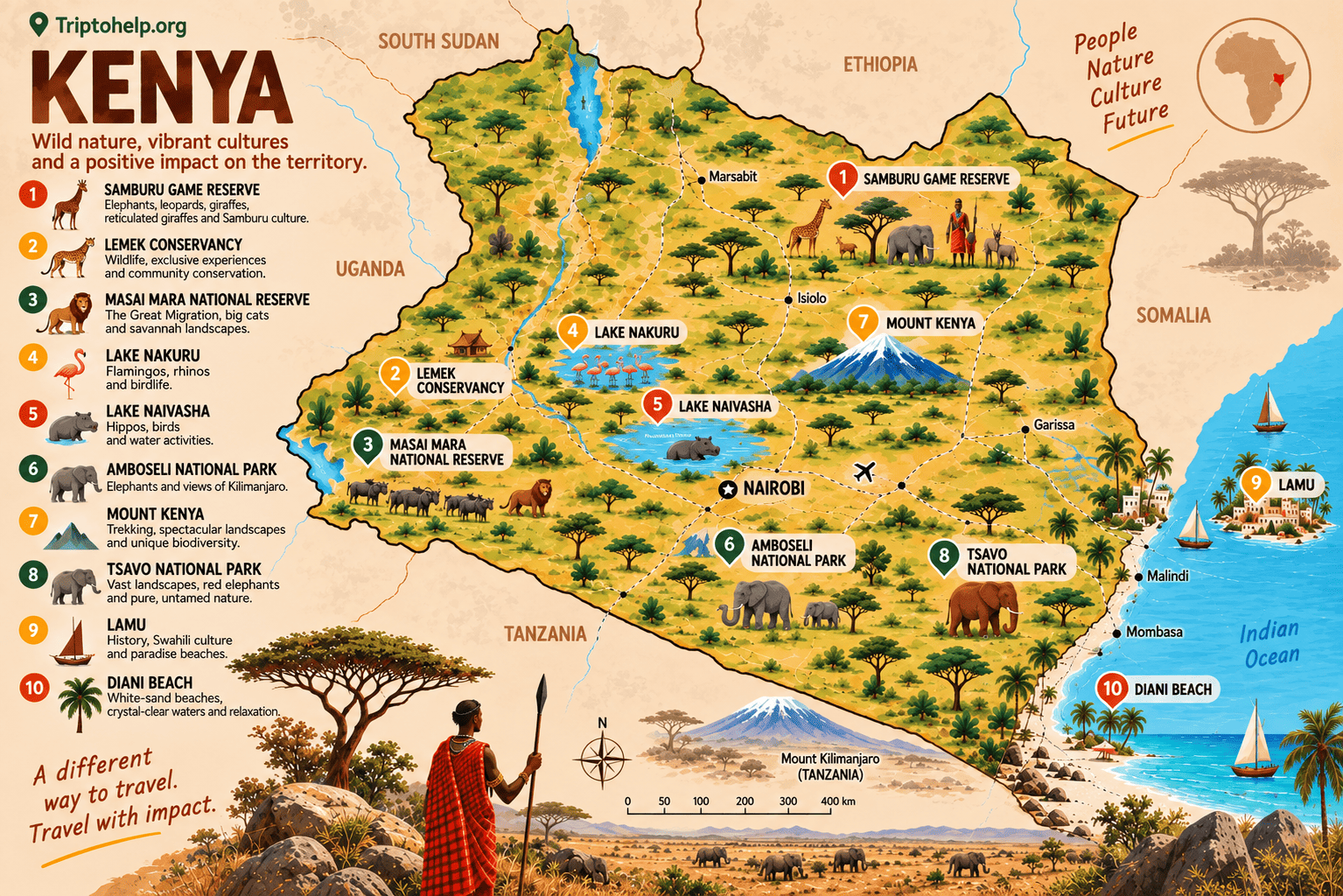
Location and map
Samburu National Reserve covers roughly 165 km² and is part of a much larger ecosystem on both sides of the Ewaso Ng’iro River.
The main access gate is Archer’s Gate, near the town of Archer’s Post. Most travelers get here by road from Nairobi, although there are also small airstrips with domestic flights from different parts of the country.
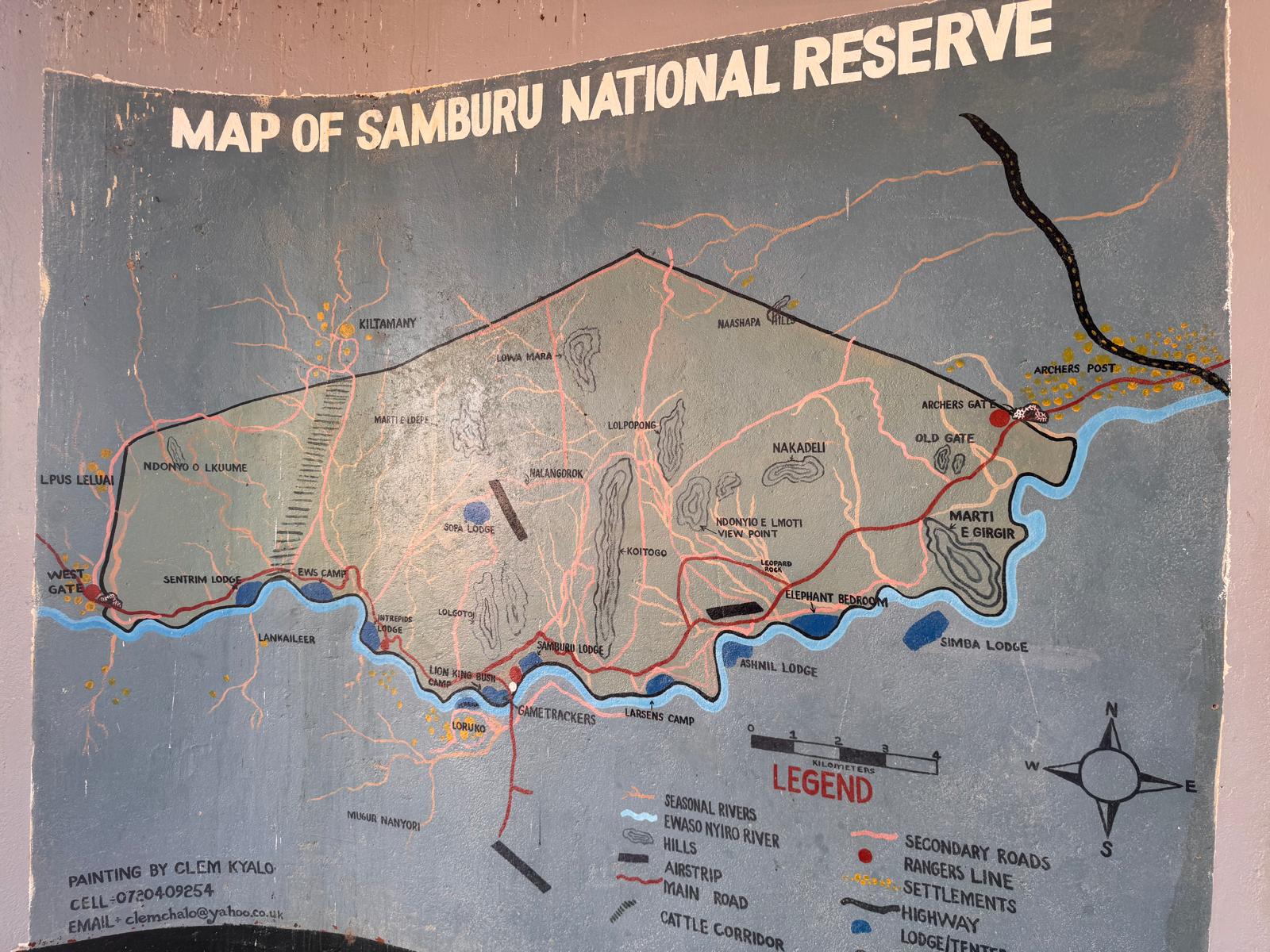
Geographically, Samburu lies north of Mount Kenya and very close to the ecological boundary that separates the savannahs of central Kenya from the semi-arid regions of the north. This explains why the wildlife and landscapes are so different from what we find in the Masai Mara or other national parks in the country.
The Ewaso Ng’iro River
If there’s one element that defines life in Samburu, it’s the Ewaso Ng’iro River.
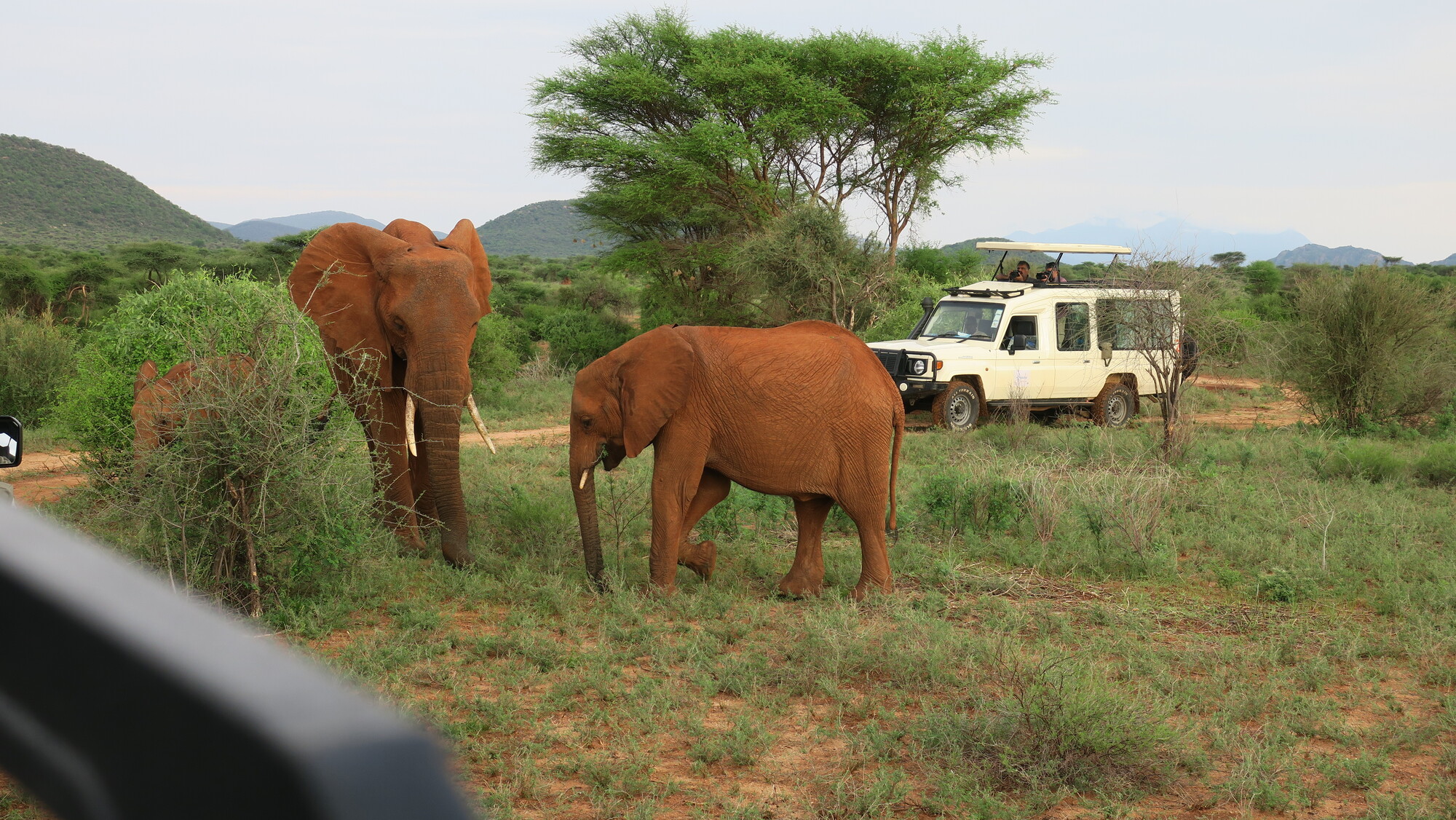
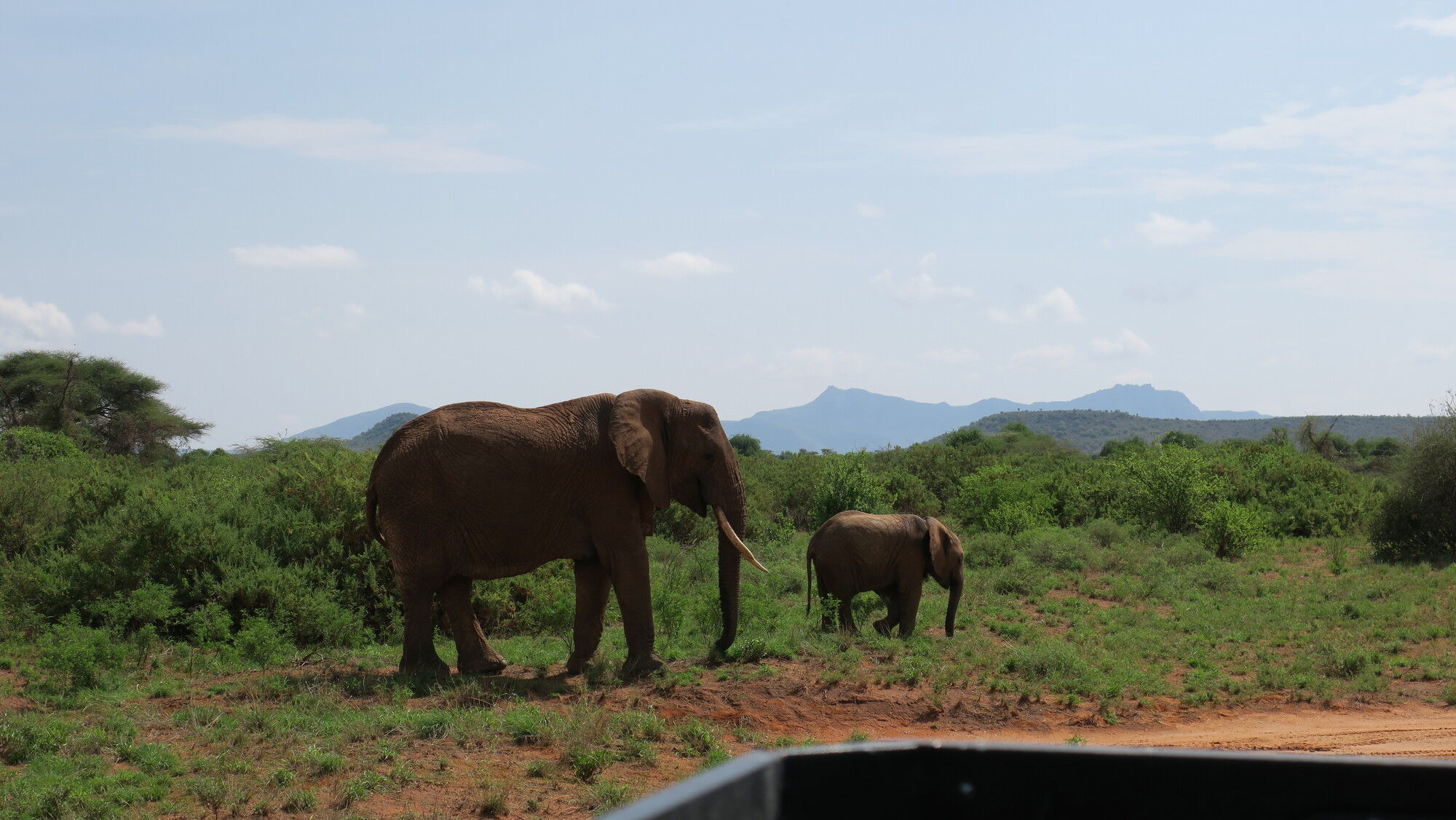
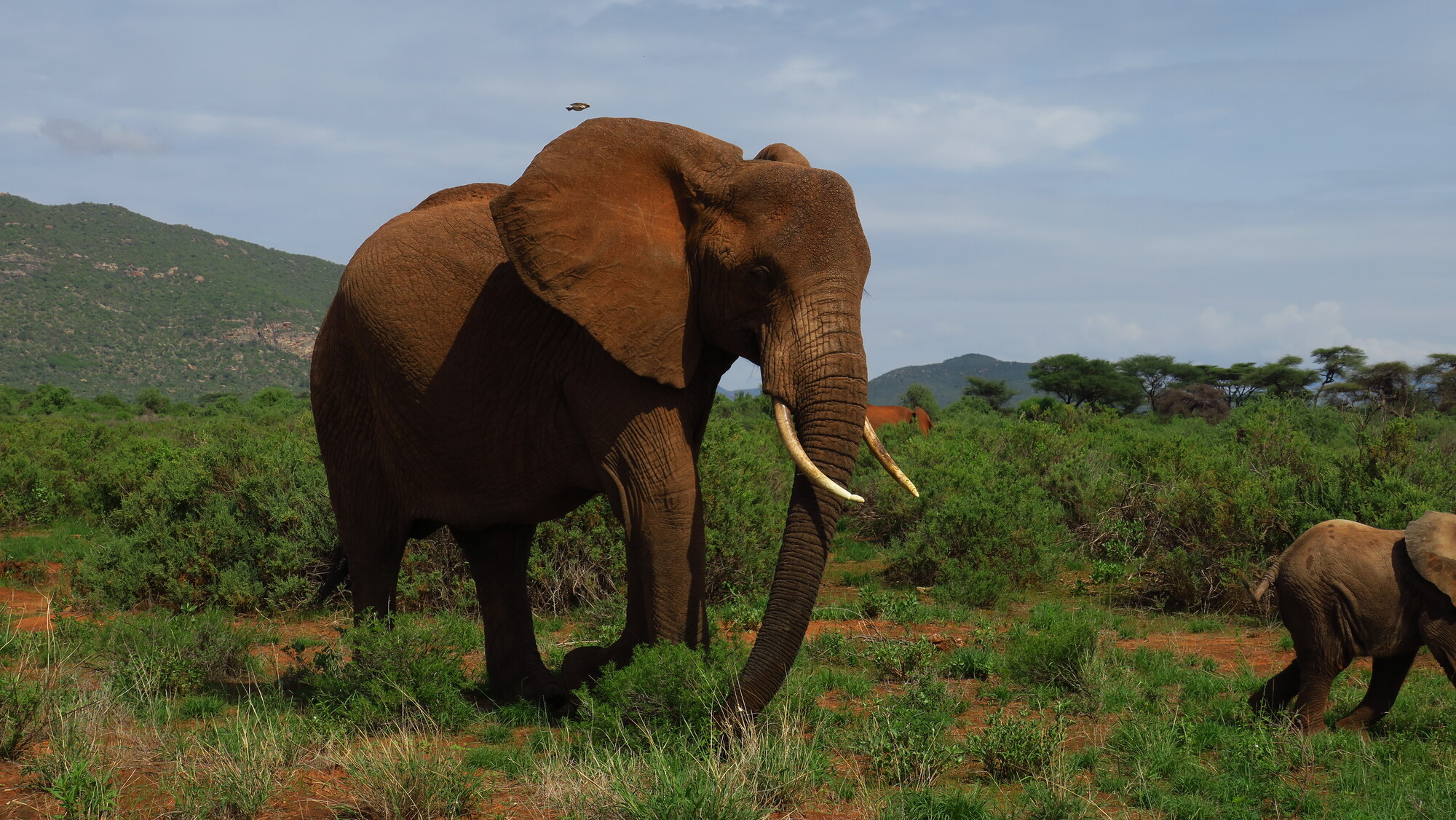
This river crosses the reserve from west to east and is the main water source for wildlife across the region. In an environment where rainfall is scarce and temperatures are high for much of the year, the river acts as a true oasis for elephants, giraffes, zebras, antelopes, and predators.
During our visit the river was dry. There we found some of the characteristic doum palms, as well as many trees that provide shelter for birds and mammals.
During the most intense drought periods, some sections of the river can shrink dramatically. At those times, elephants play a key role by digging wells in sandy riverbeds to reach groundwater. These small water points are then used by many other species in the ecosystem.
Samburu, Buffalo Springs, and Shaba
One of the things we found hardest to understand when planning the trip was the difference between Samburu, Buffalo Springs, and Shaba. Many articles present them as separate reserves, when in reality they’re part of the same ecosystem.
Samburu National Reserve is the best known and the one with most of the accommodation and visitors. Just across the Ewaso Ng’iro River is Buffalo Springs National Reserve, separated only by the riverbed but with very similar landscapes and wildlife.
Further east you’ll find Shaba National Reserve, probably the least visited of the three. Although it tends to have a lower density of animals, it offers spectacular scenery and an even stronger sense of isolation.
From a wildlife perspective, administrative borders matter little. Animals move constantly between the three reserves, following water and food availability. So when we talk about a safari in Samburu, we’re really talking about a much larger ecosystem that also includes Buffalo Springs and Shaba.
If you have two or more days in the area, it’s worth exploring all three reserves. Although they share many features, each one has different corners and landscapes that really enrich the safari experience.
What animals to see on a safari in Samburu
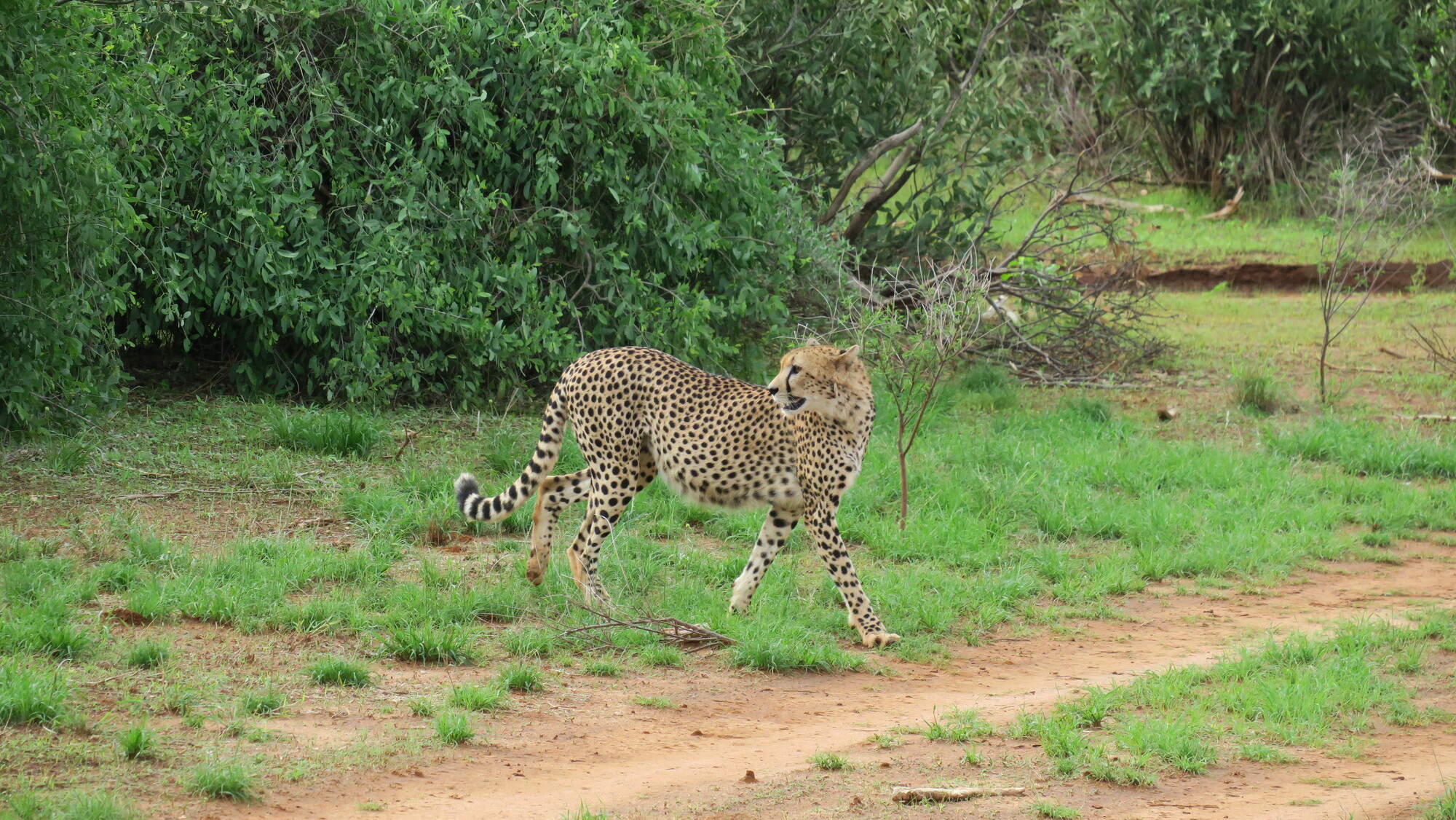
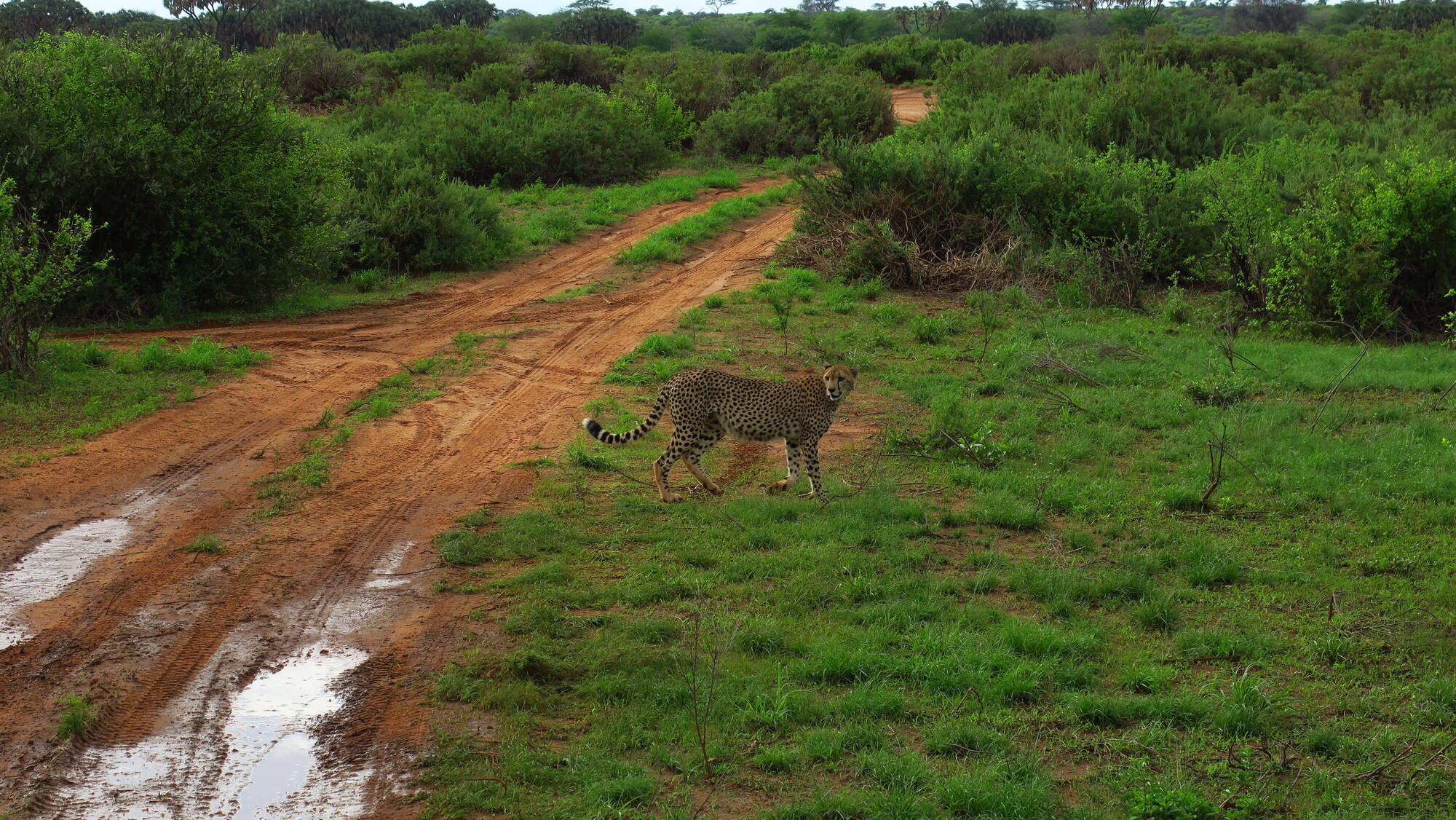
During our safari in Samburu Reserve, we managed to see some of the animals people most want to see: the leopard, the lion, and the cheetah.
We saw all three big cats, and we spent a long time enjoying a wonderful lion family.
Not to mention a pregnant cheetah searching for food early in the morning, or a leopard cub we saw hidden in the vegetation while it waited for its mother.
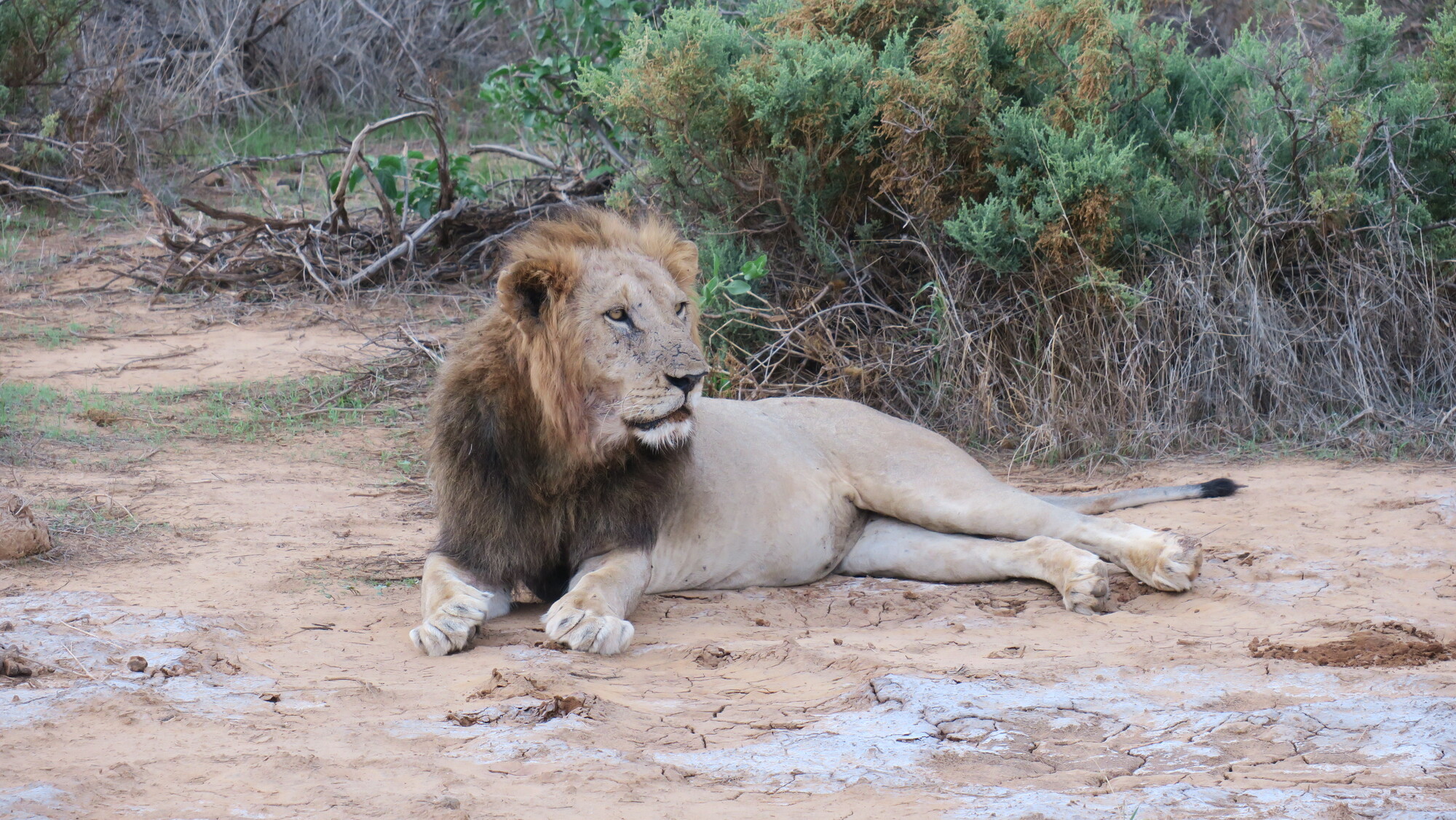
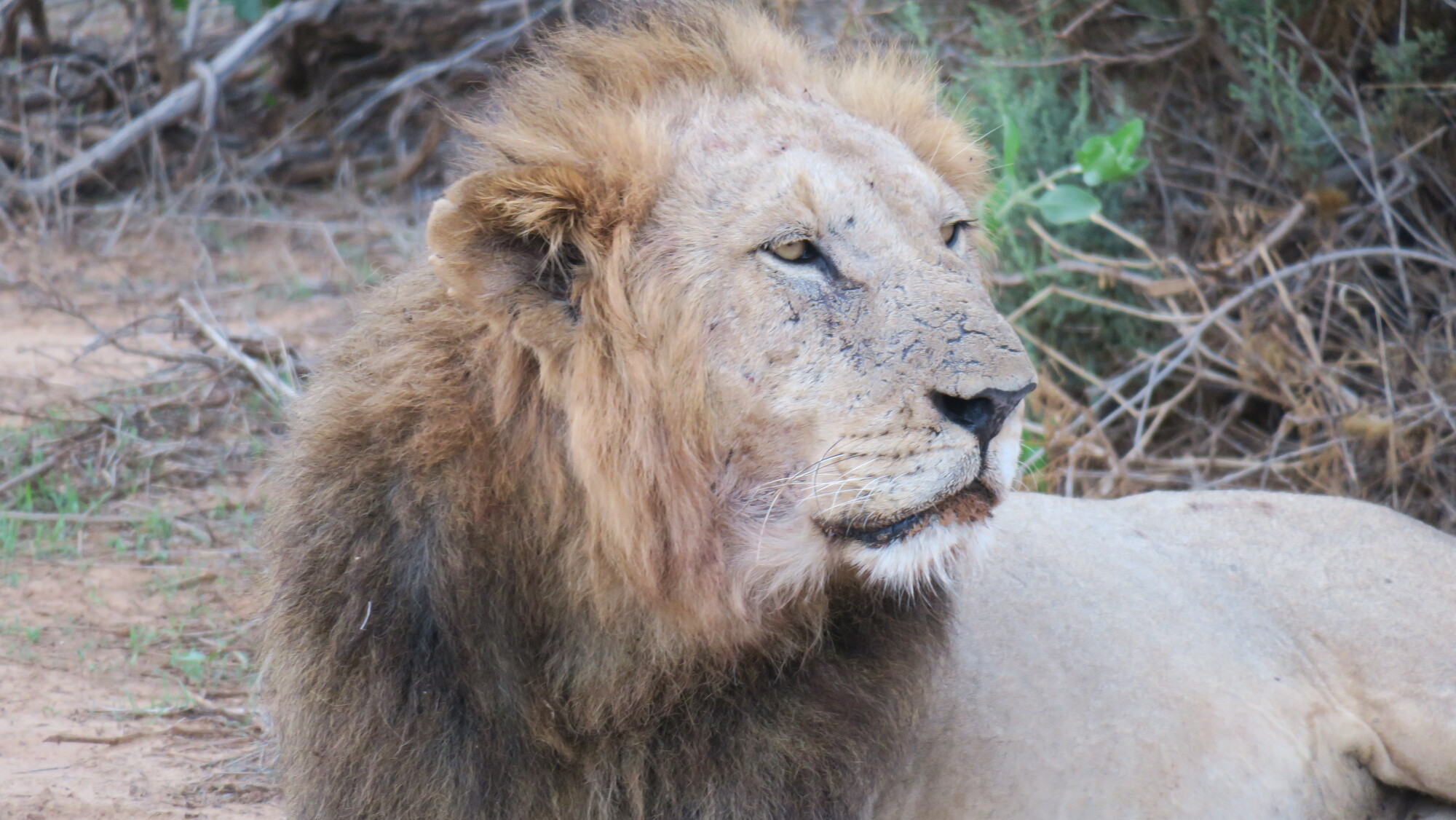
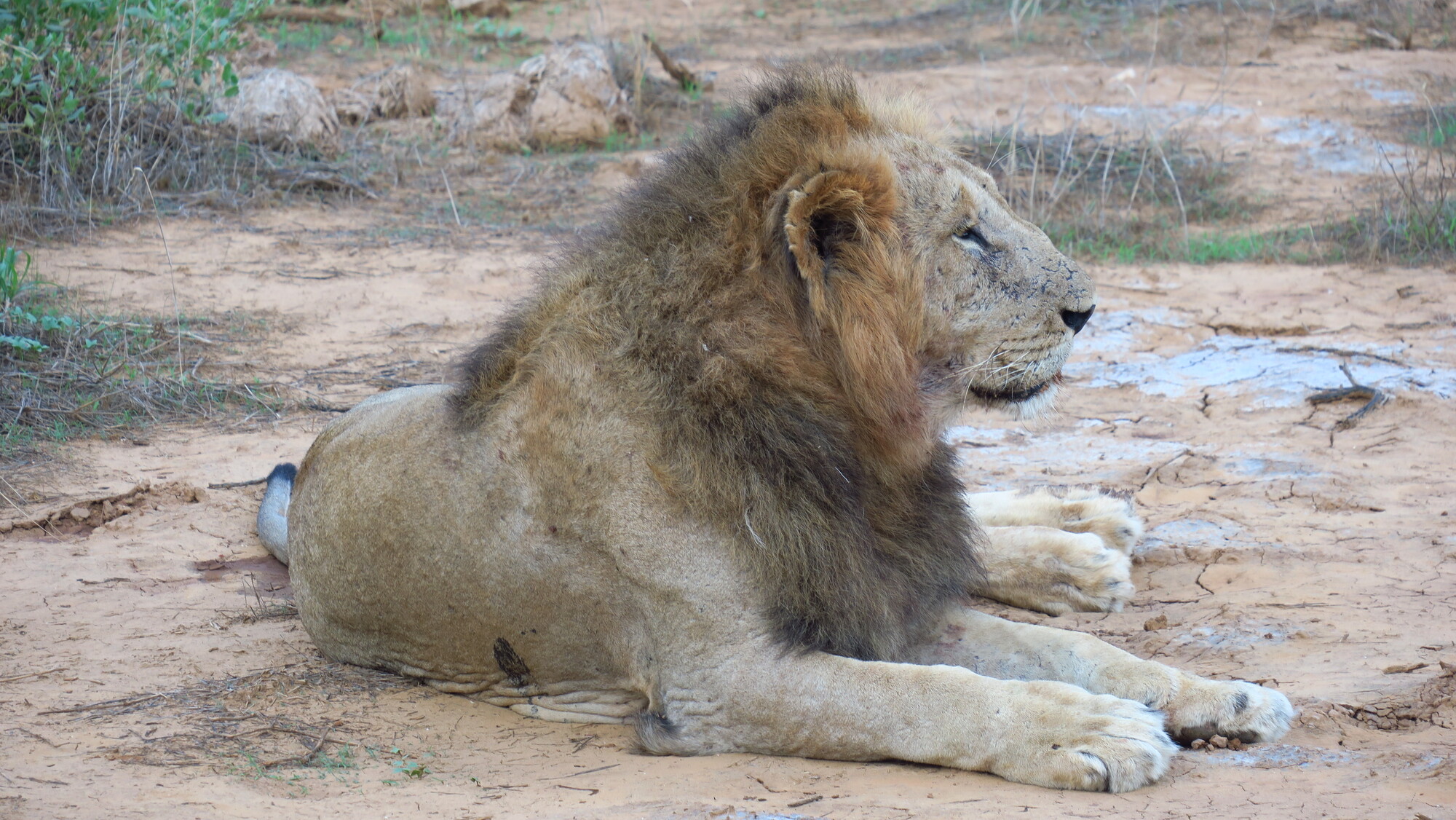
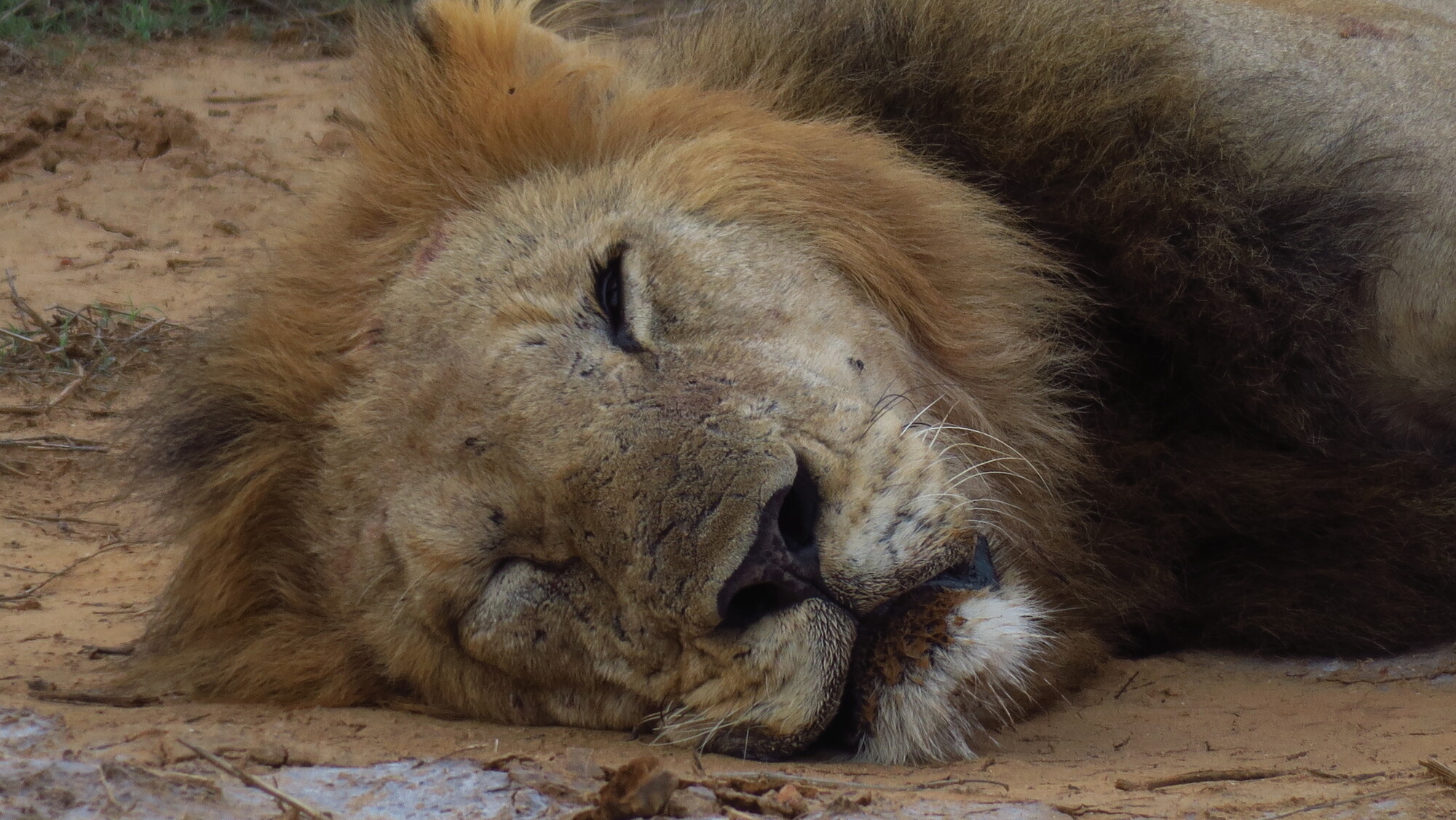
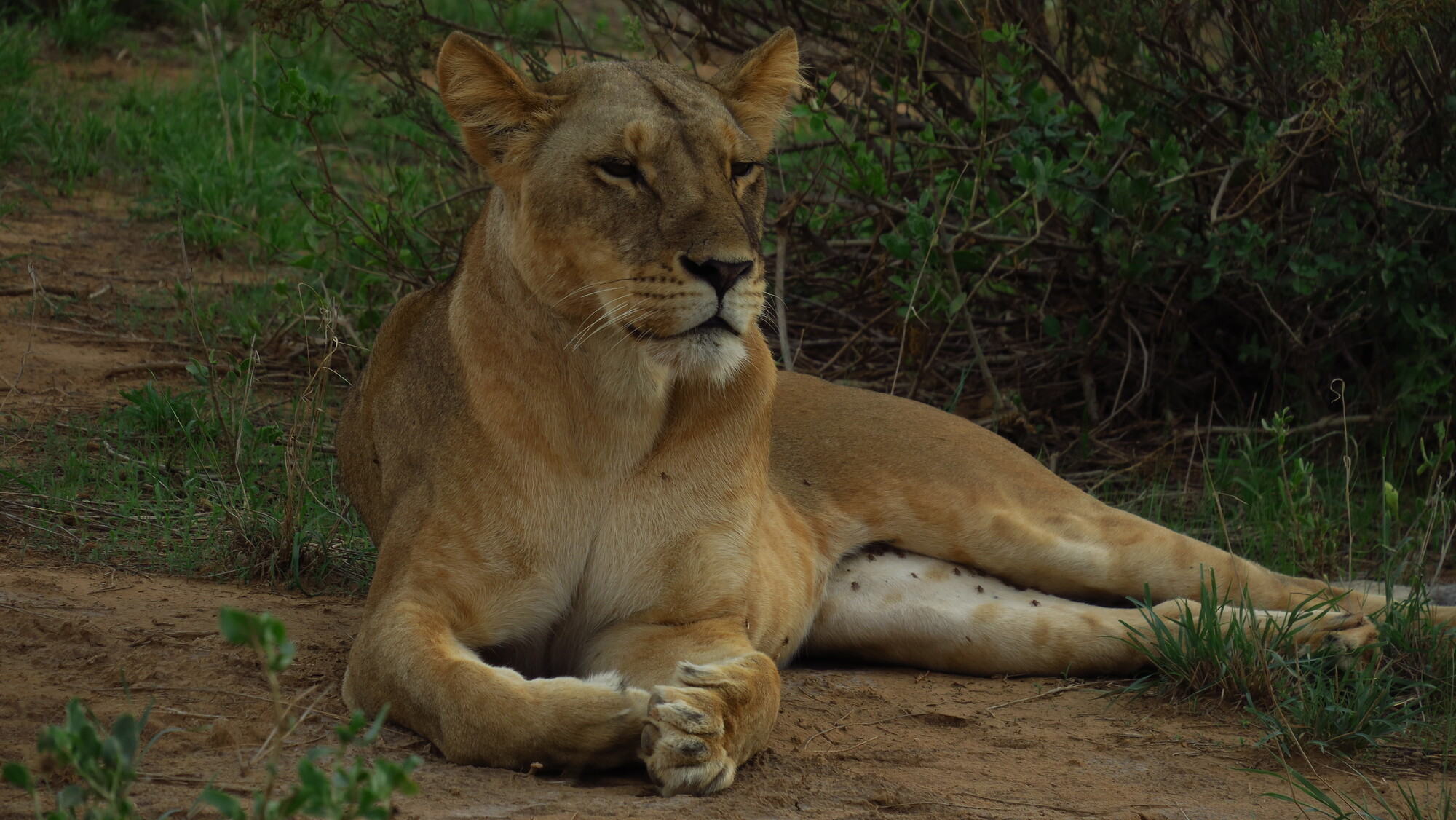
But what we were really looking for when we decided to do a safari in Samburu were the Samburu Special Five.
The Samburu Special Five: the unique wildlife of northern Kenya you’ll see on safari
If safaris in southern Kenya are famous for the Big Five, Samburu has its own stars: the Samburu Special Five.
These are five species adapted to the arid conditions of the north of the country, and they’re much harder to spot in other regions of Kenya.
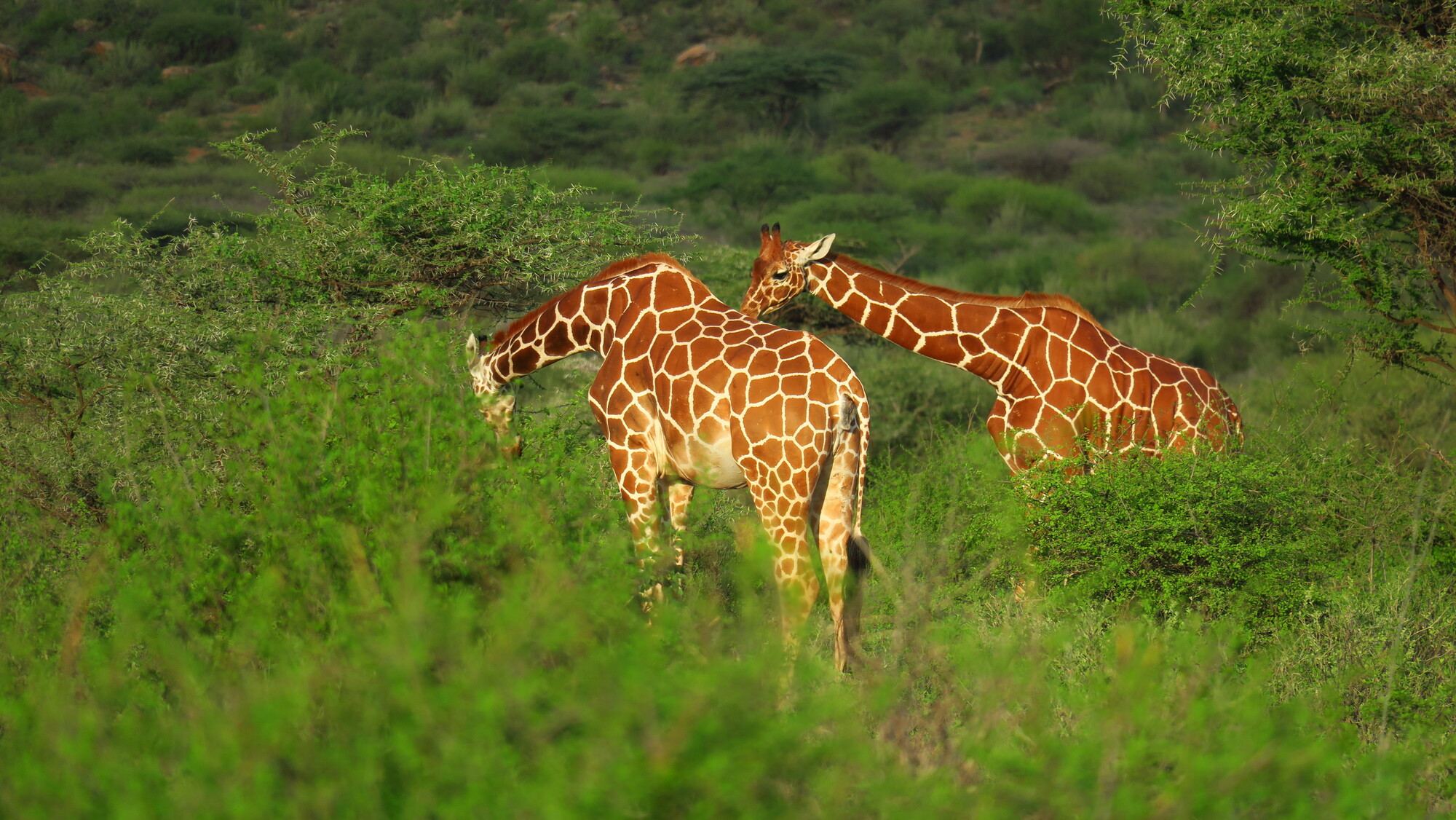
Reticulated giraffe
For us, it’s one of the most beautiful giraffes in Africa. Its distinctive geometric pattern looks hand-drawn and is very different from the giraffes you can see in other parts of Kenya. You’ll see many throughout the safari and, for us, they’re the most beautiful in the world.
Grevy’s zebra
It’s the largest zebra in the world and one of Africa’s most threatened species. It’s easy to recognize by its thinner, more numerous stripes, and its completely white belly.
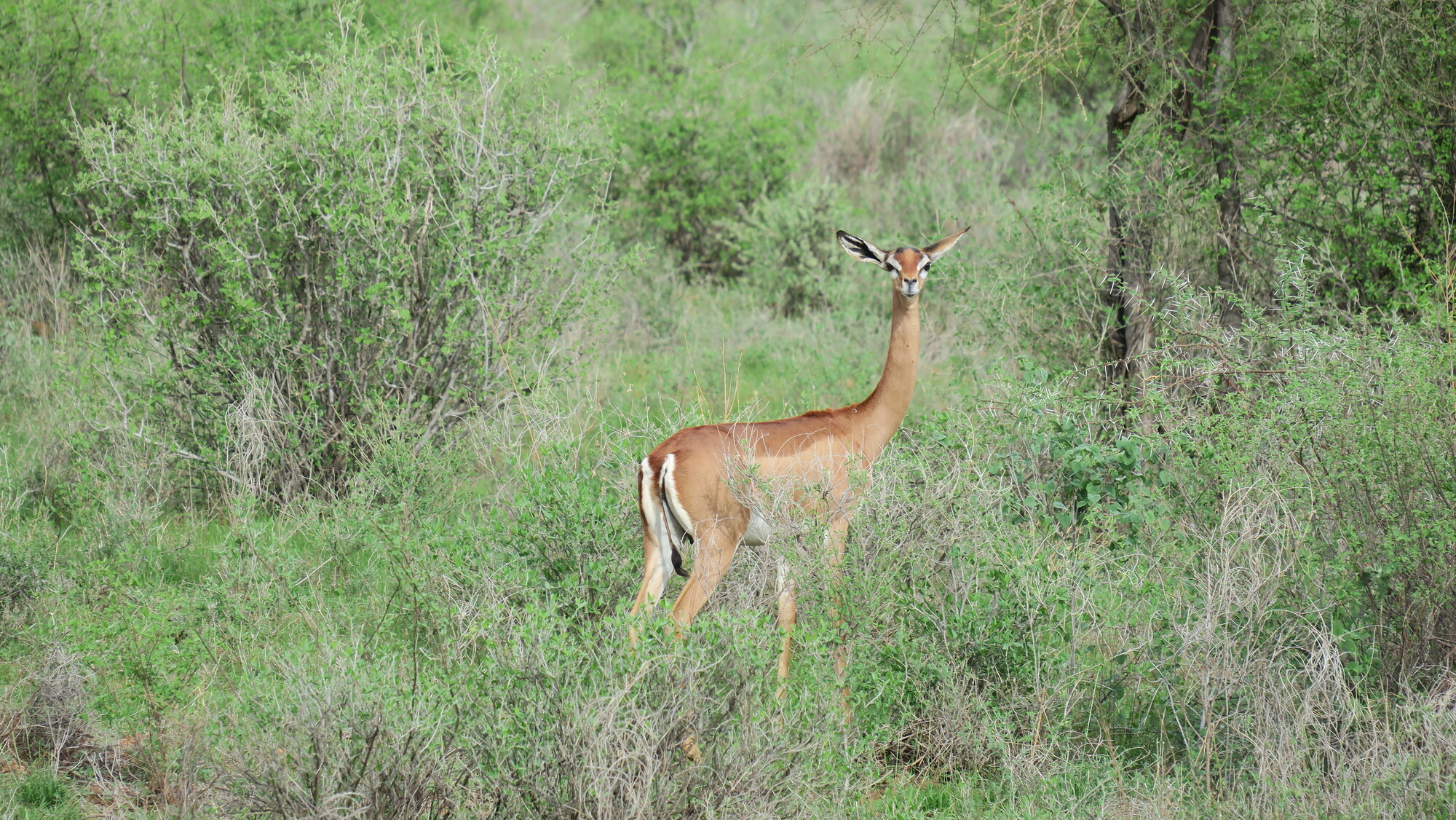
Gerenuk, or giraffe gazelle
Probably Samburu’s most curious animal. It has an extremely long neck and often feeds by standing only on its hind legs to reach the highest leaves on shrubs.
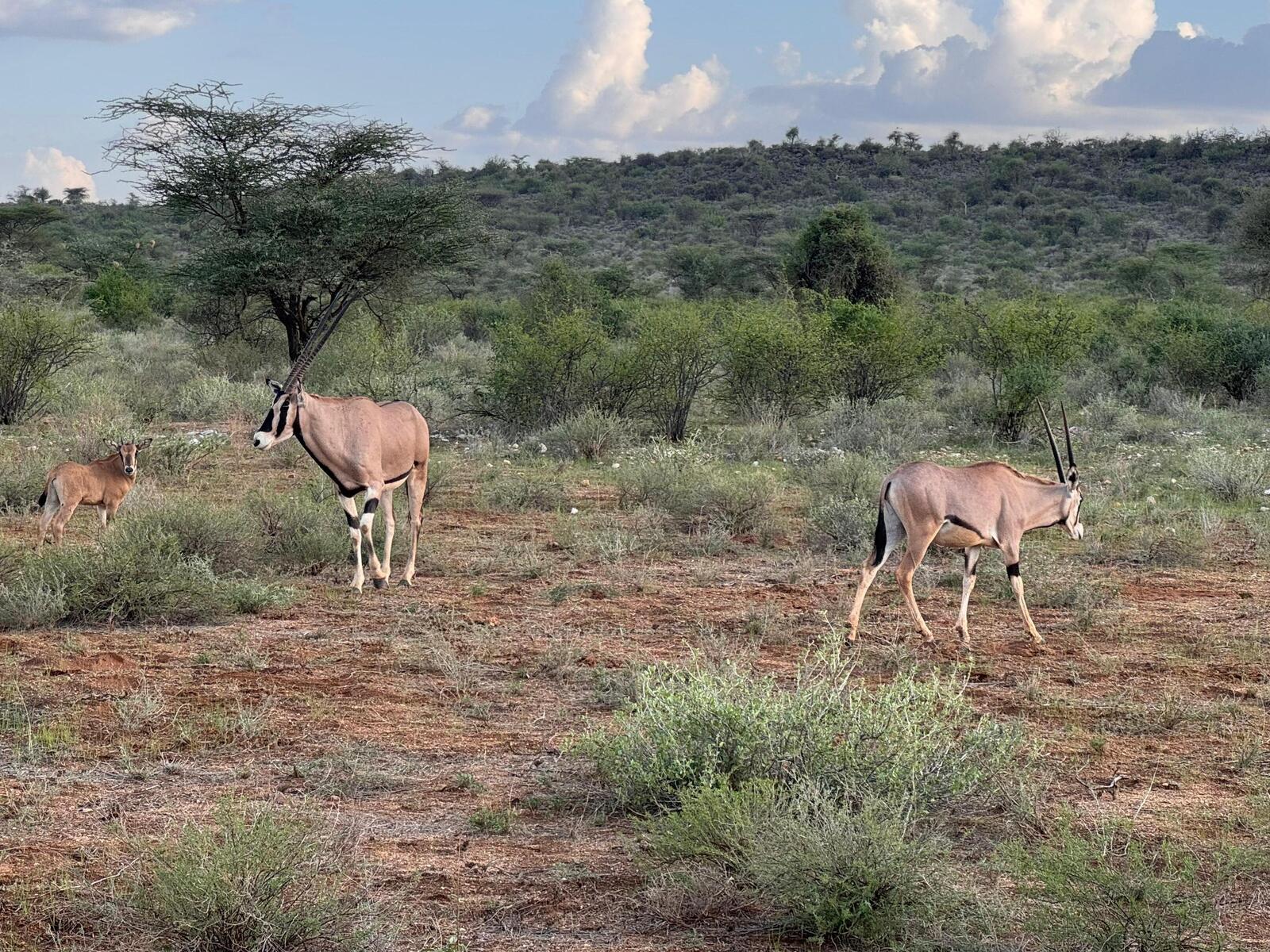
Beisa oryx
Perfectly adapted to life in dry environments, this elegant antelope can go long periods without drinking water thanks to its extraordinary ability to adapt.
Somali ostrich
Unlike the common ostrich, it has bluish tones on its neck and legs. It’s a typical species of the arid regions of the Horn of Africa and one of Samburu’s most iconic symbols.
One of the biggest draws of a safari in this region is trying to spot all five during the same visit. We managed to see every one of these species on our safari, which shows just how different Samburu is from any other reserve in Kenya.
Our experience on safari in Samburu National Reserve
Samburu safari with kids
We did the safari with our daughter, who had just turned 3. She’s very used to traveling, so it was a smooth trip without too many stops. We always say safari vehicles are great for kids because once you’re inside the park or reserve, they can move around in the car (stand up, look through binoculars, or switch seats).
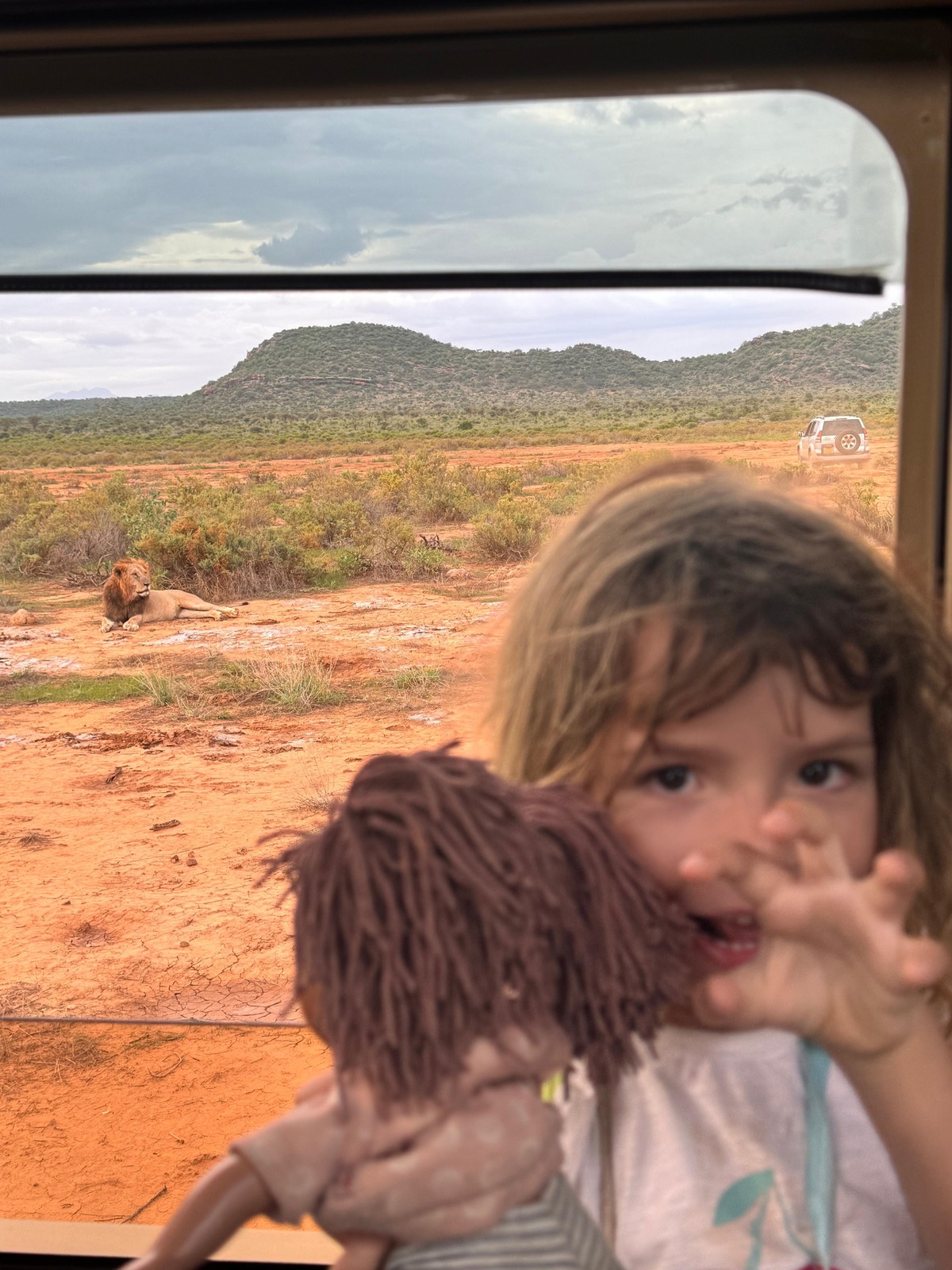
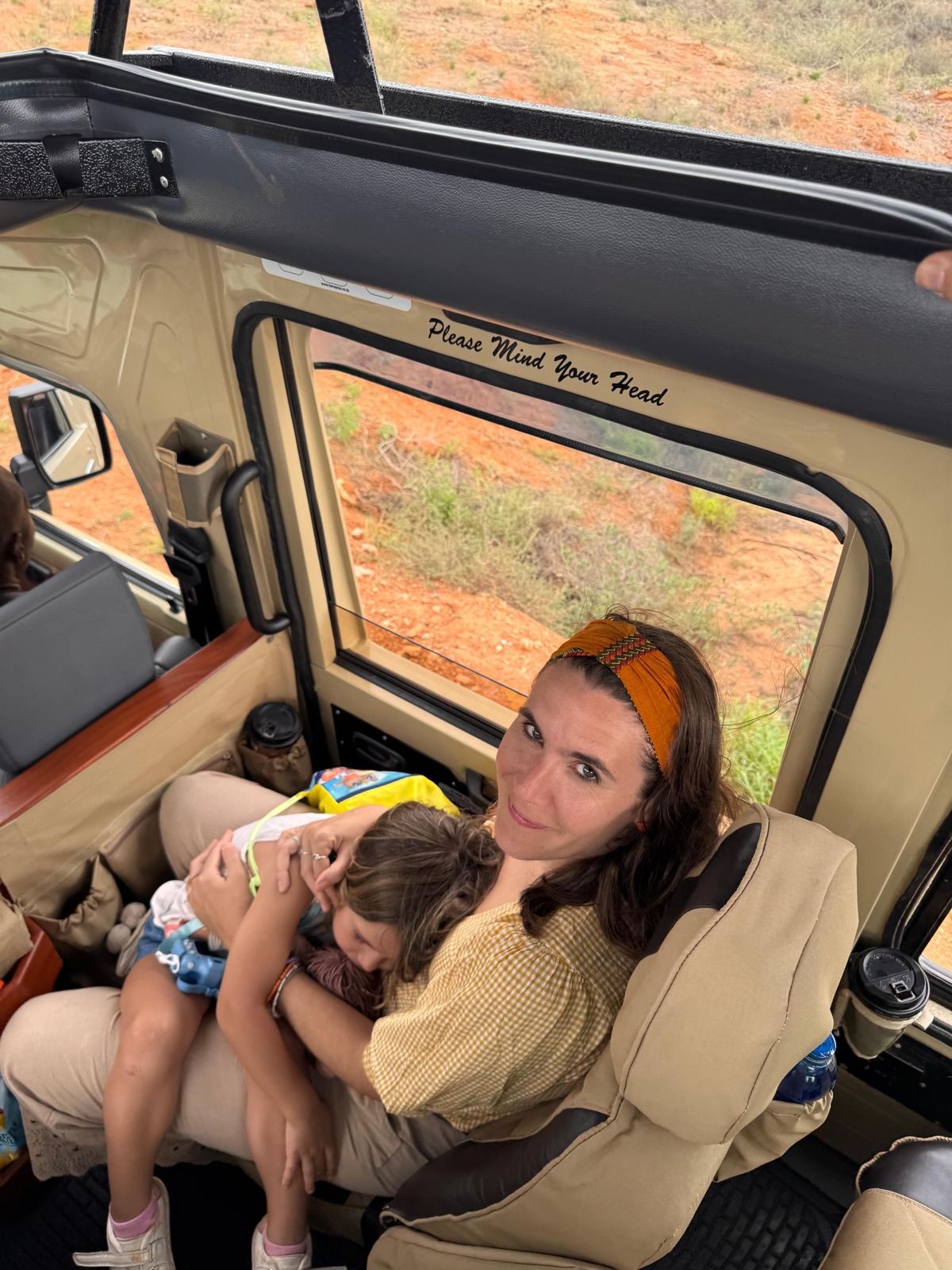
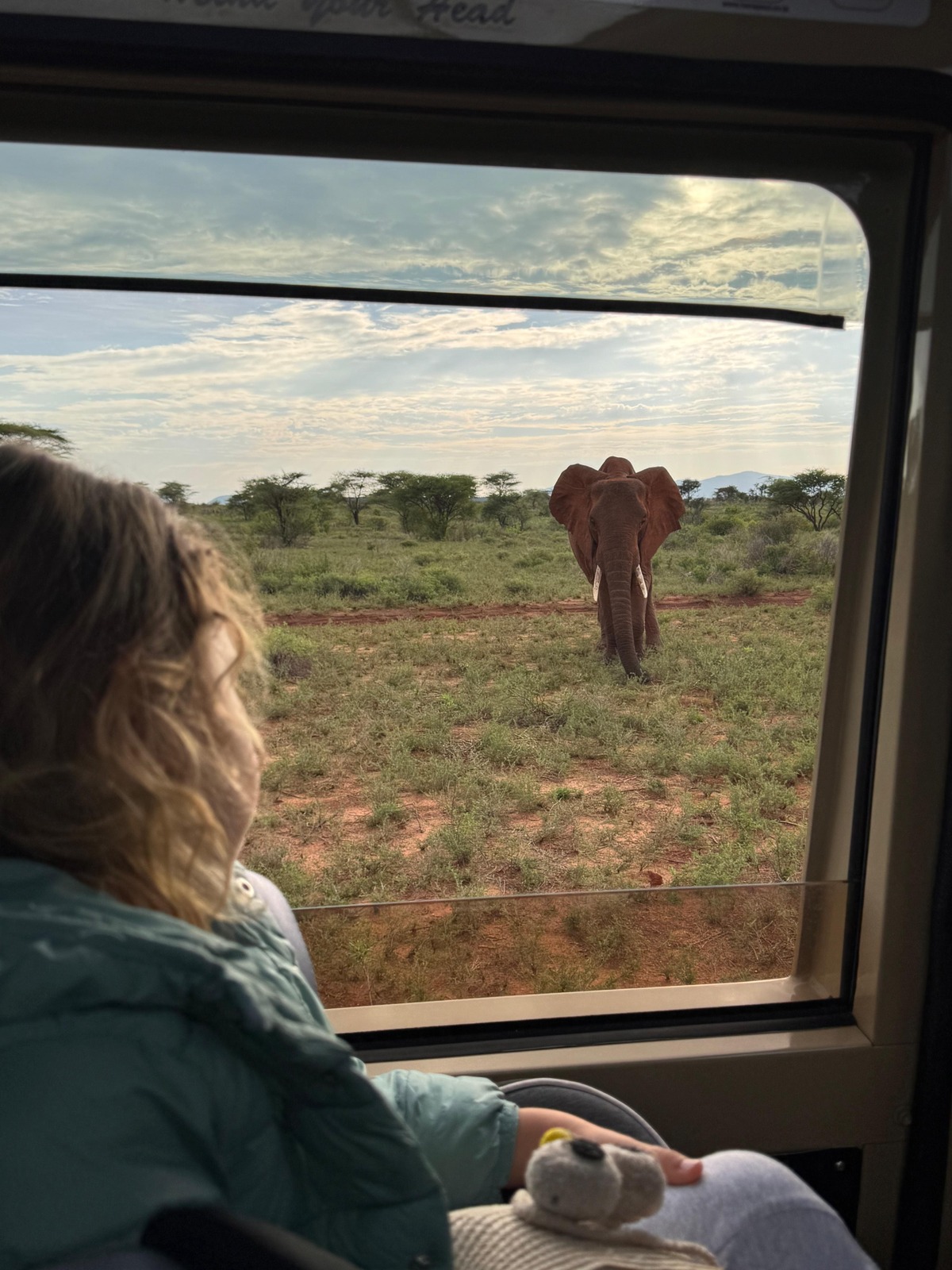
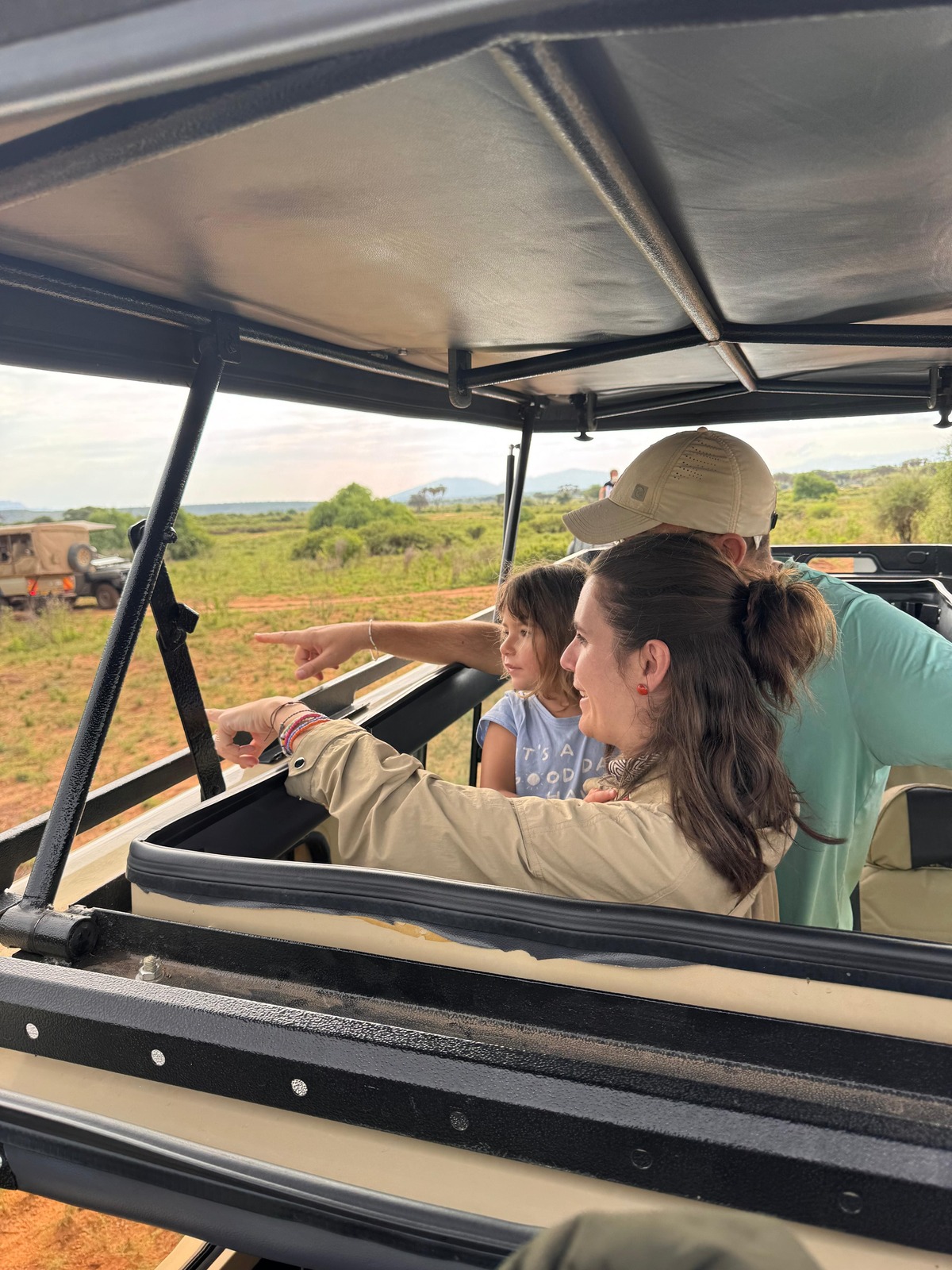
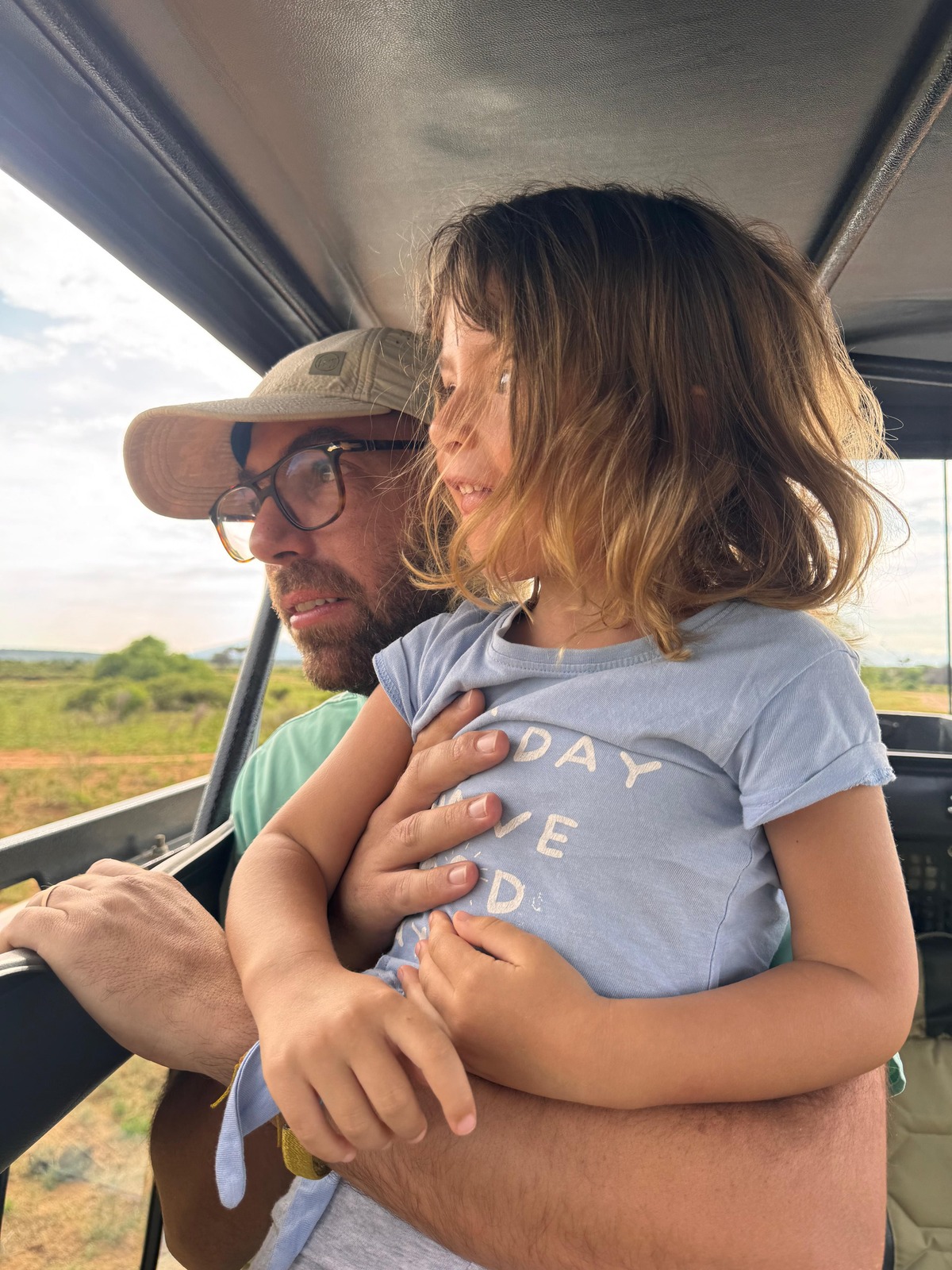
It’s true that at 3 years old, they get distracted by anything. I still remember our boat ride on Lake Naivasha—it was beautiful and we saw hippos, birds, and giraffes (on Crescent Island)—but when we got back to land, she saw a kitten and forgot about everything else. She didn’t want to leave it alone and kept following it around.
What I liked most about Samburu compared to other parks in Kenya
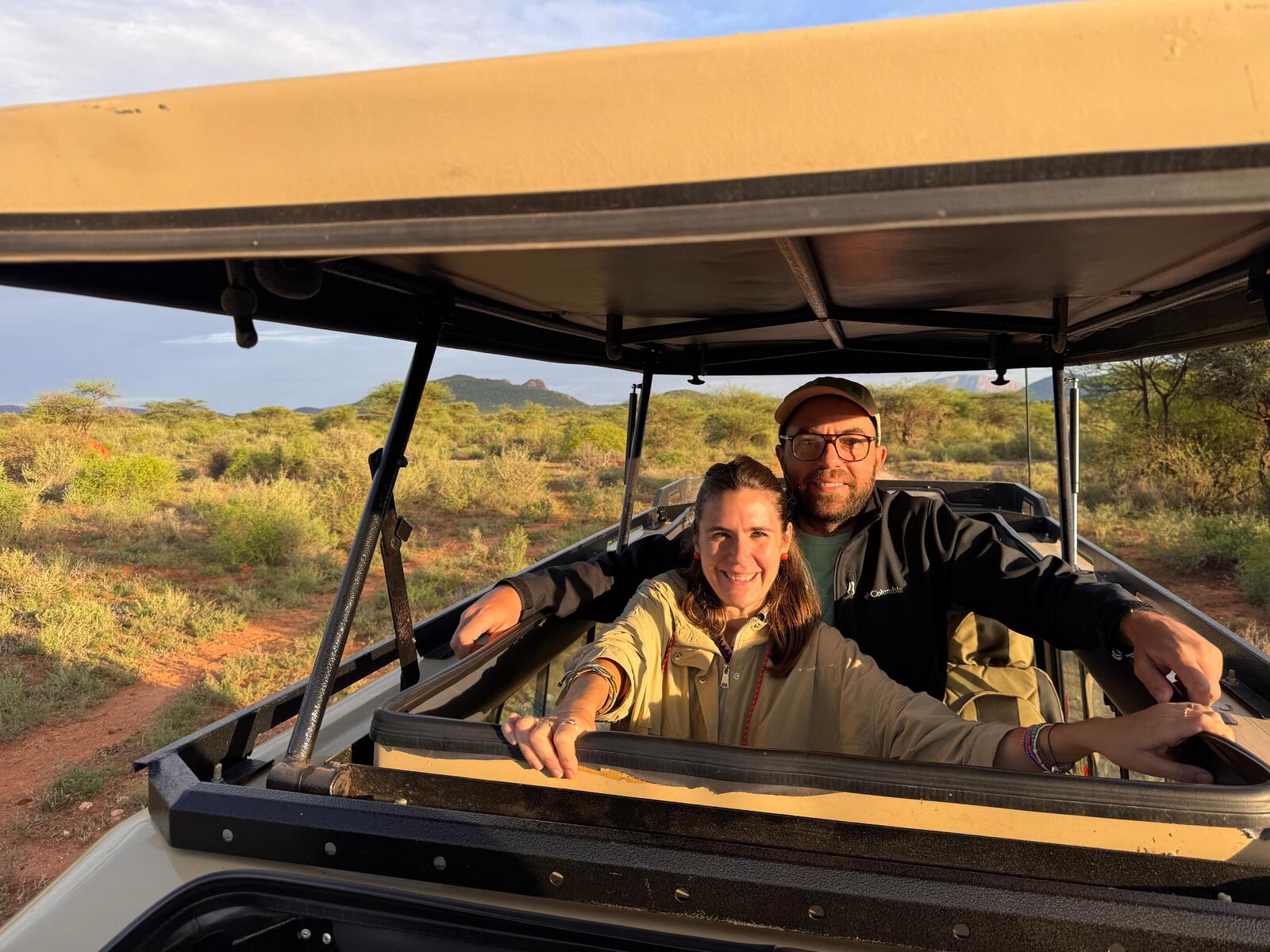
What I liked most about Samburu was the feeling of being on safari almost alone, without constantly seeing other vehicles. On top of that, we saw all the animals we wanted to see, so the combination of a park (reserve) that isn’t crowded and the chance to see lots of animals—some unique to Kenya—made it a truly special safari.
Also, because it’s a quieter park, guides sometimes dare to go a little off the marked track if they spot a predator, which means you can see animals closer than in other parks in Kenya, like the Mara Reserve or Lake Nakuru.
The scenery, with mountains in the background, also adds a lot of beauty to the experience.
Photography safari in Samburu
Best times to photograph animals on safari
The best times to see animals are early in the morning and late in the day. In fact, that’s when we saw a leopard cub, a cheetah, and some lionesses trying to eat a Maasai cow. That’s why it’s important to arrive one afternoon and spend two nights in Samburu—so you’re sure to catch the early mornings and the last hours of the day out in the vehicle.
What gear I brought
Personally, since I’m not a photographer, we brought a Canon Powershot G3X on safari, with a good 25x optical zoom and 100x digital. No matter how new your phone is, when an animal is far away, nothing beats a good zoom.
We had good weather all day, so we packed light. Overall, it felt like a hotter place than the Masai Mara.
Best time to visit Samburu
One advantage Samburu has over other safari destinations in Kenya is that you can visit almost year-round. Resident wildlife stays in the area regardless of the season and, thanks to the Ewaso Ng’iro River, there’s always a high concentration of animals in certain parts of the reserve.
We went in March (rainy season) and saw everything green, and the rain wasn’t a problem at any point. In fact, we loved it.
Dry season (June to October and January to February)
Rainfall is scarce, vegetation is less dense, and animals tend to gather near water sources. This makes sightings much easier, especially elephants, reticulated giraffes, Grevy’s zebras, and other herbivores typical of the region.
Also, the tracks are usually in better condition, making it easier to cover the whole reserve. If your main goal is to maximize your chances of seeing wildlife, this would be our recommendation.
During our visit we found an extremely dry landscape. The Ewaso Ng’iro River completely shaped where animals were, and many species gathered around it. That lack of water is precisely one of the reasons Samburu often delivers such productive safaris during the dry season.
Rainy season (March to May and November)
During the rains, the landscape changes completely. Shrubs regain some of their green, flowers appear, and the reserve takes on a much more lively, colorful look.
The main advantage of this time of year is that there are usually fewer visitors and prices at some lodges can be lower. Also, for landscape photography lovers, skies are often much more dramatic thanks to the formation of large storm clouds over the savannah.
On the other hand, wildlife is more spread out and some sightings may require a bit more patience. Depending on how heavy the rains are, some tracks can also become harder to drive.
When it’s easiest to see wildlife
If safari is your priority, the dry-season months usually deliver better results.
However, Samburu has one feature that sets it apart from other national parks in Kenya: many of its most iconic species are resident and stay in the area all year round. That means animals like Grevy’s zebra, the reticulated giraffe, the gerenuk, or the Beisa oryx can be seen in any season.
So rather than asking what the best time to visit Samburu is, the better question is probably what kind of experience we’re looking for. If we want to maximize sightings, the dry season is the best option. If we prefer greener landscapes, fewer visitors, and a calmer atmosphere, the rainy season can also be an excellent alternative.
How to get to Samburu from Nairobi
By car
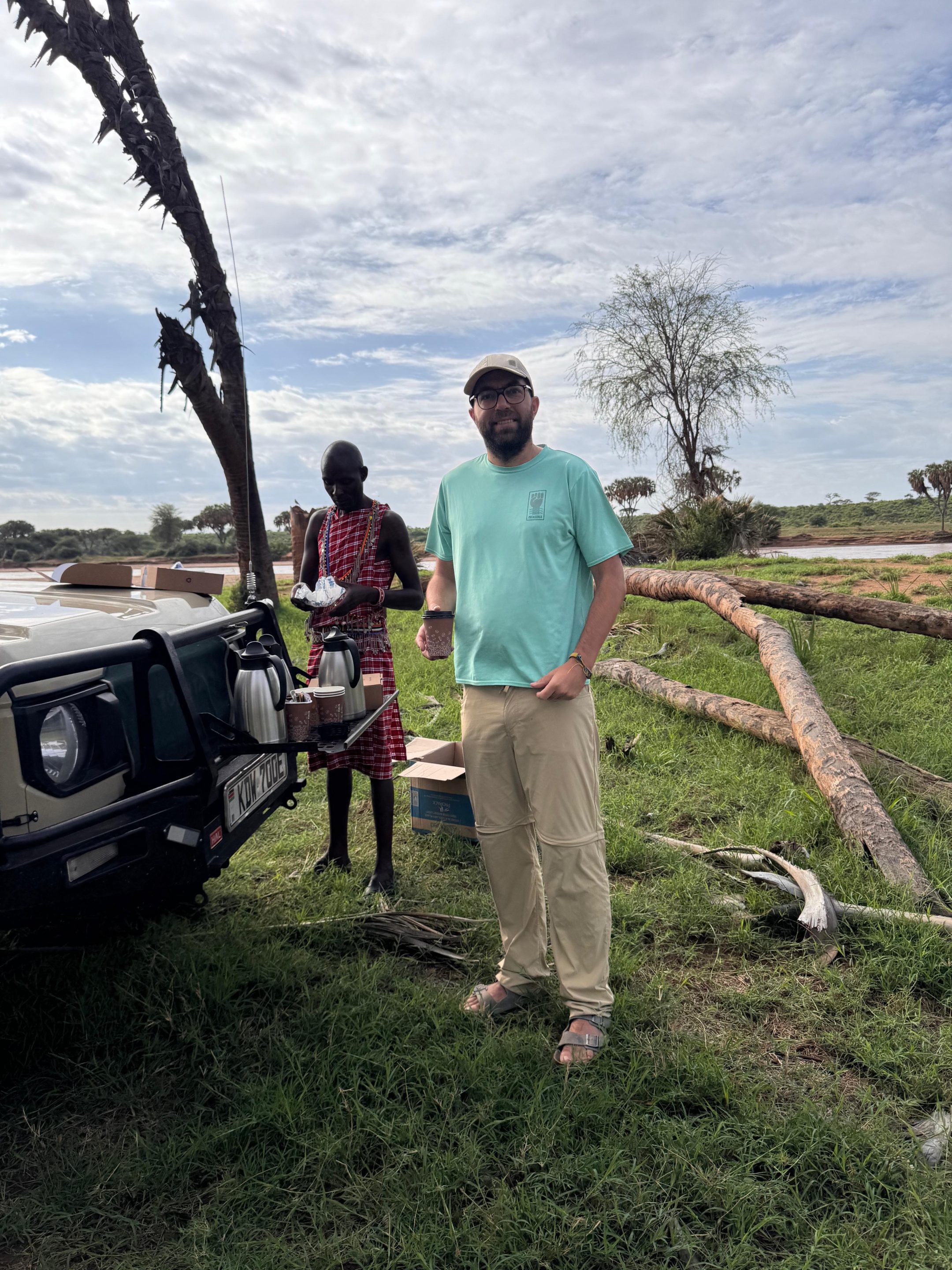
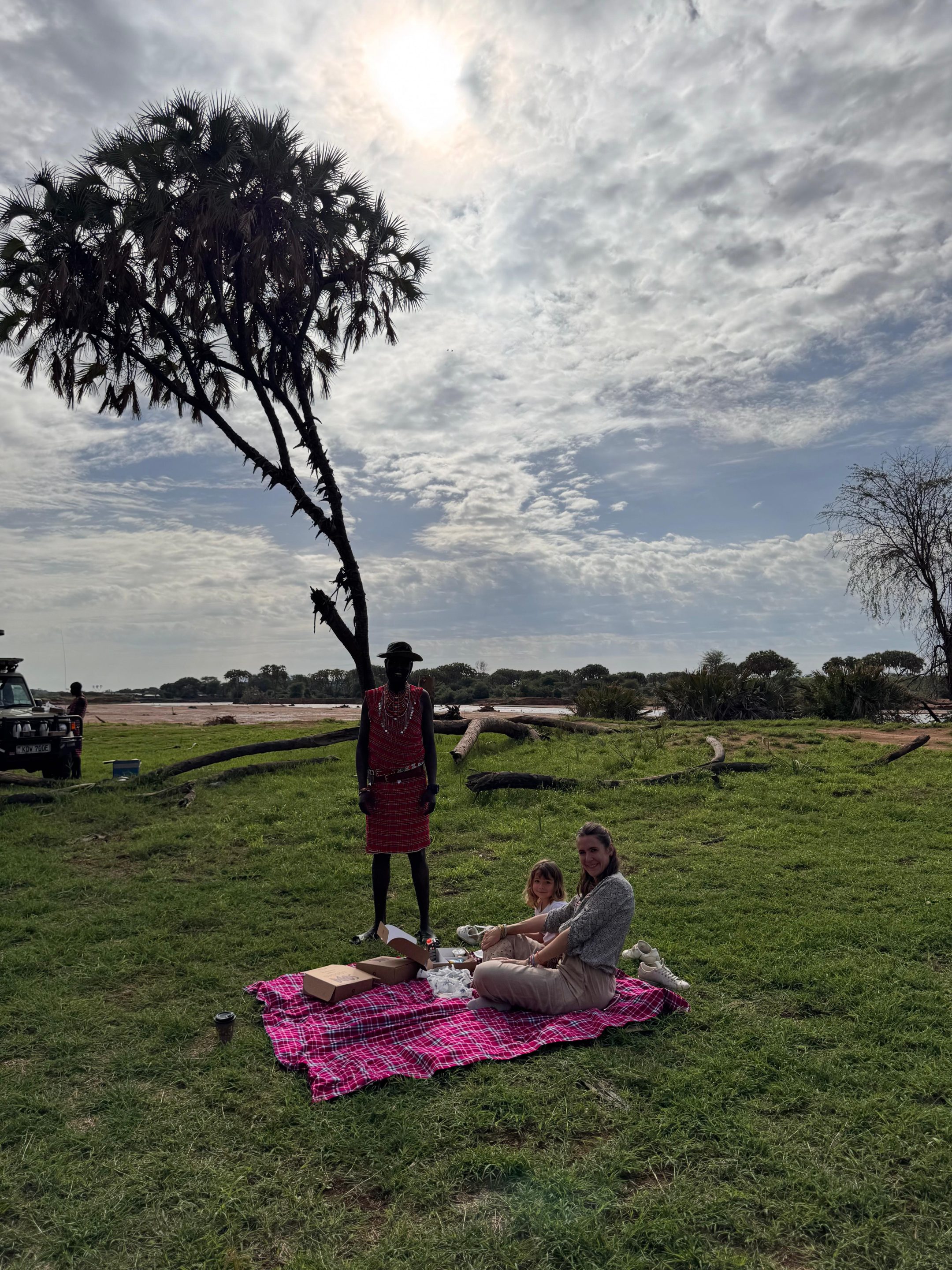
We went with our guides by car from Nairobi. The drive was a bit long, with a stop to eat and stretch our legs. We arrived at the lodge in the afternoon, a bit late because we stayed at Sopa Lodge inside the park and had to drive a bit further. But that allowed us to do a mini safari as the sun went down, and we were lucky enough to see a leopard cub and other animals in the wild.
Planning the safari for Samburu
Triptohelp, as a travel agency, we always go with local guides and 4×4 vehicles with pop-up roofs. It’s true that in Samburu we saw some 4x4s driving without guides. In Kenya there are companies that rent 4x4s for self-drive safaris.
There’s an issue here: good guides don’t just drive—they’re also very quick at spotting animals and reading their behavior. I remember in Samburu we stopped in a spot just because our Maasai guides heard birds calling in a slightly nervous way. They told us that kind of sound is a warning that a predator is hidden nearby. Or the time one of our Maasai guides studied a giraffe and, just by watching the giraffe and other animals, knew there was a predator in a specific area. And he was right—there was a pride of lions in the bushes. Those are two of a thousand examples that show how, if you go without a guide, you can miss a lot of safari details—on top of the stress of driving. A few weeks ago we organized a Masai Mara safari for the traveling family “Los Mundo”; during the video they uploaded to YOUTUBE, Dani talks about the pleasure of not having to drive and being able to focus only on watching and taking photos. It was obviously the best safari they did in all of Africa (that’s what they say in the video), and part of that was because they went with a very good local guide we introduced them to.
By domestic flight
Kenya’s main parks usually have a small airport where light aircraft fly daily from Nairobi Wilson. At Samburu Airport you can take a light aircraft with companies like Safarilink.
It can be useful if you’re then flying to another park, but once you’re there you’ll need to arrange a vehicle and a guide, which the hotel can usually provide. Flying in by light aircraft is very much aimed at higher budgets and shorter trips.
How many days to spend in Samburu
We stayed 2 nights and paid fees for both days. Since it’s far away, the usual plan is two nights: the first is when you arrive, the next day you do a full-day safari, sleep in Samburu, and then continue your trip to other parks.
Where to stay in Samburu
Accommodation inside the park
Inside the reserve is Sopa Lodge Samburu, where we stayed. Sleeping inside a reserve or park is always special and different. They treated us really well. The only thing we didn’t love was that they used a diesel generator to produce electricity (instead of solar panels and batteries), and they turned it off at night—so you couldn’t charge phones or cameras. That was one of the comments we left at the lodge as feedback to improve.
For example, some people need sleep apnea machines. If that’s the case, that hotel isn’t the right place to stay. Outside the reserve there are hotels with electricity all night.
Accommodation outside the reserve
Almost all accommodation in Samburu is outside the reserve. That lets you save on the reserve entry fee when you arrive and only pay a ticket if you’re doing just one day of safari. In any case, our travelers prefer to enter the reserve on the day they arrive and do a sunset game drive until the park closes. So, both options work.
My recommendation
On the latest safaris we’ve been organizing in Samburu, we’ve been offering another hotel outside the reserve to save on entry costs and to have electricity all night. Get in touch if you’d like to go on safari in Samburu National Reserve!
What to do after your Samburu safari
Samburu culture – Village for abused women
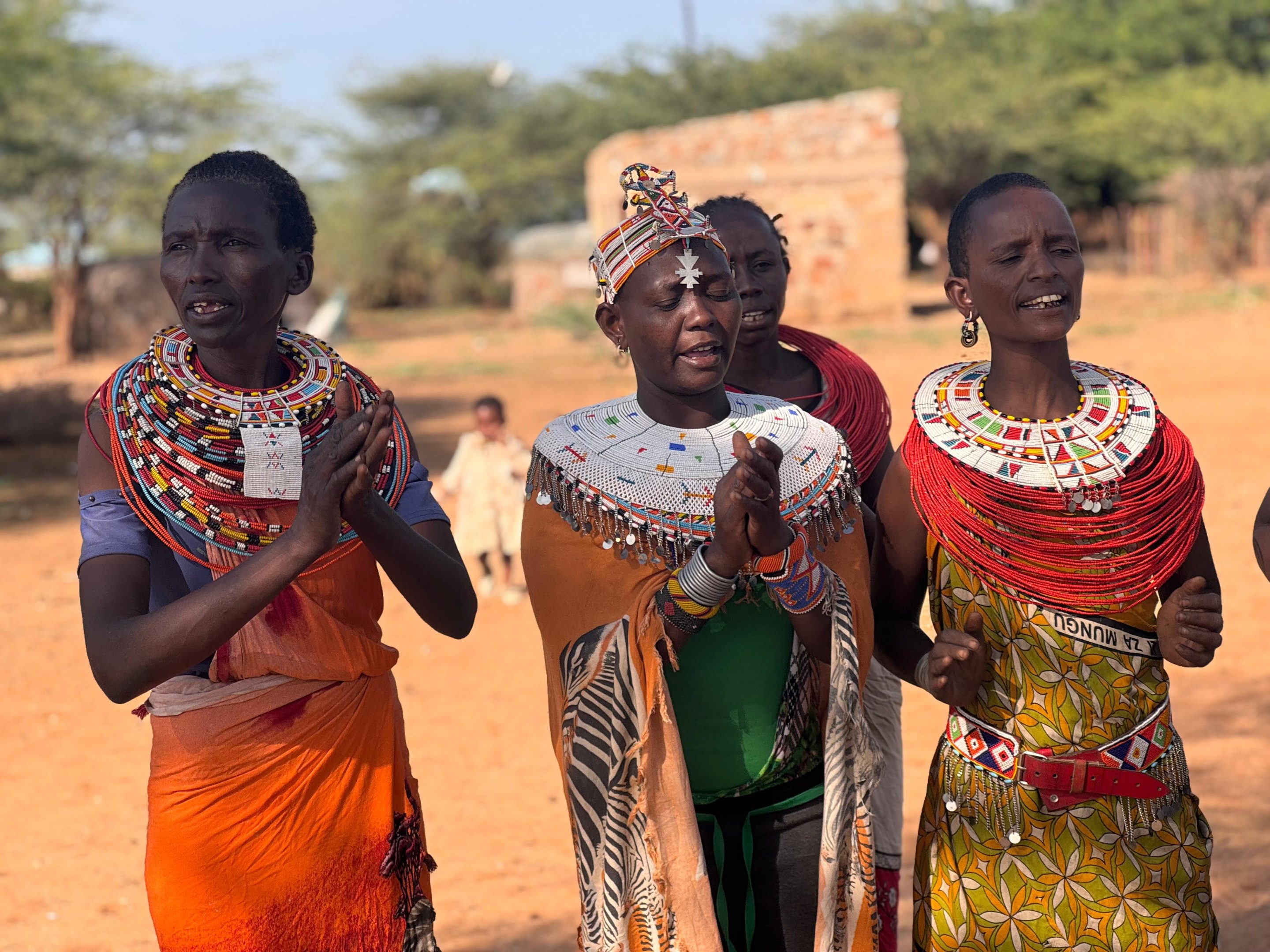
Very close to Samburu there’s a self-managed village for women called Umoja Town. You can visit it after your safari, and the entry fee is paid directly to the women. The visit is about seeing how women organized themselves to live together safely after suffering abuse from former partners.
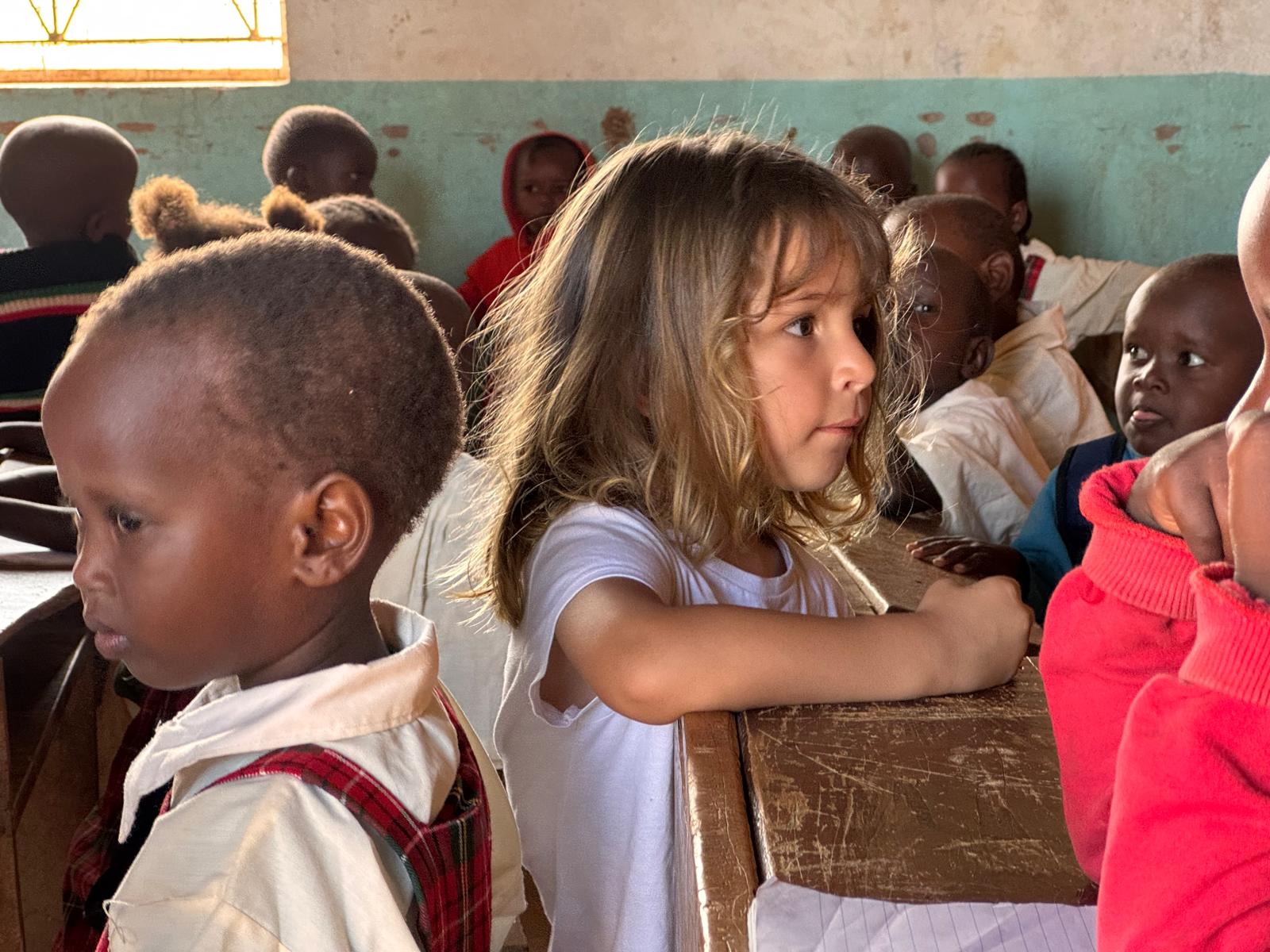
During our visit we toured the village, heard first-hand about the lives of some of the women, and saw the school they have for children (by the way, the entry fee you pay goes directly toward paying the school’s teachers).
I think it’s a really interesting stop.
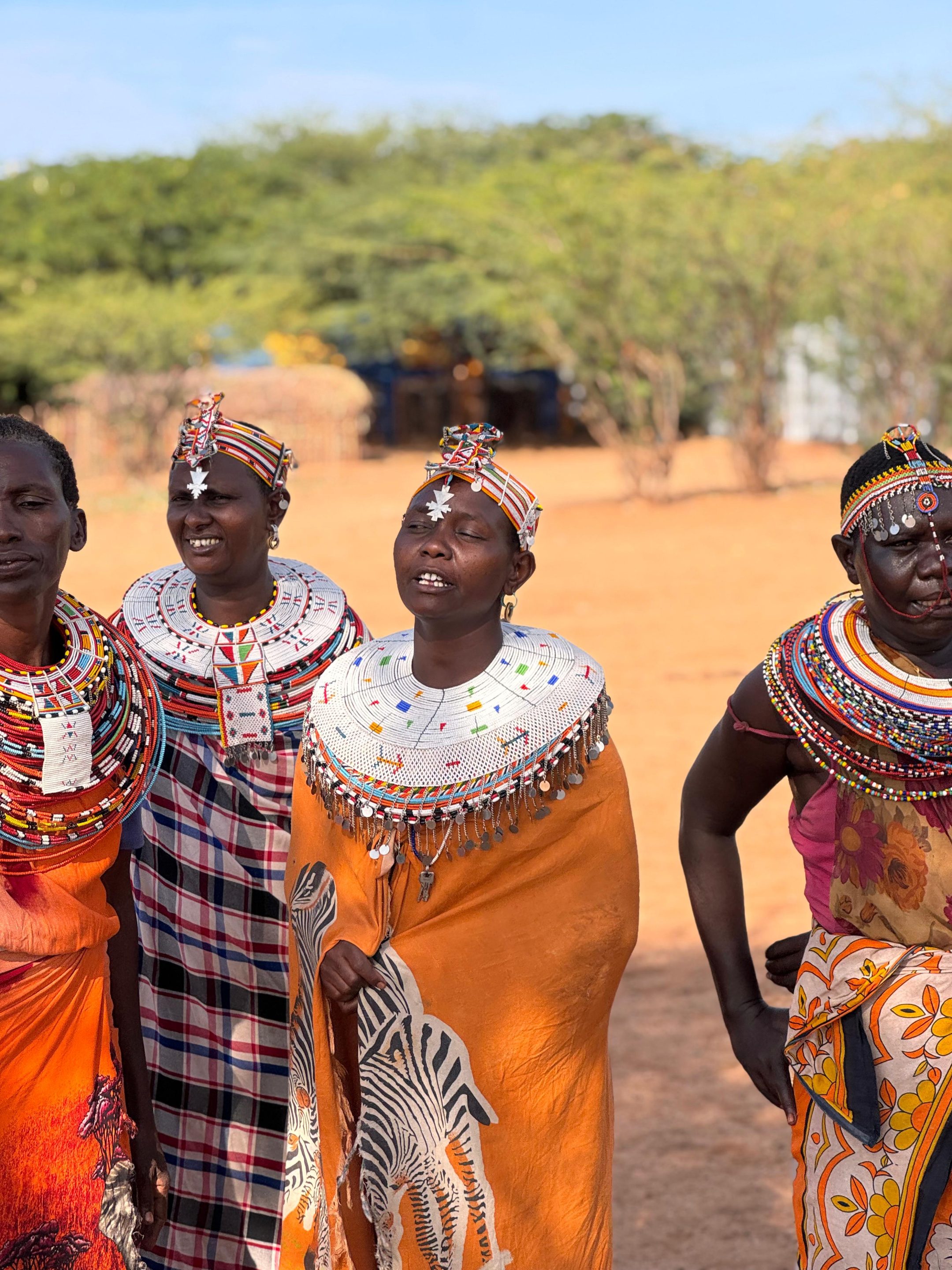
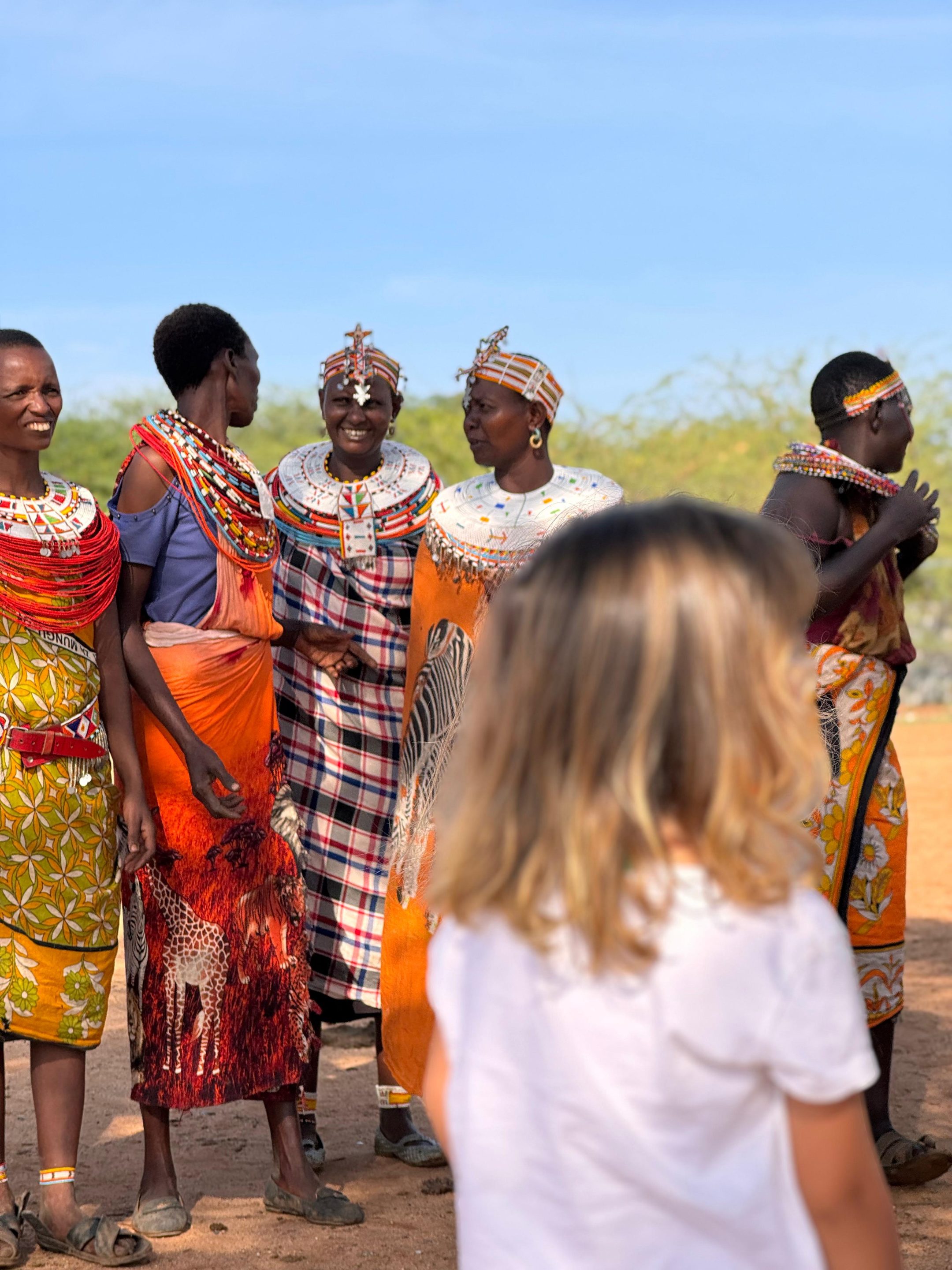
Here’s a short Instagram video we made of our visit -> https://www.instagram.com/reel/DVnUMYsgqXl/?stkn=N3Noemw4c2lqYXFw