At Trip to Help, we believe in conscious, sustainable and fair travel. Our Great Migration Kenya Safari, taking place between July and October, offers a front-row seat to the awe-inspiring wildebeest crossing at the Mara River. This isn’t just a natural spectacle—it’s an opportunity to contribute positively to the Maasai community and local ecosystem conservation.
Guided by William and his team of Maasai, who run a local NGO that educates hundreds of Maasai children, your journey goes beyond mere tourism. Our safari ensures that the Maasai, with their deep ancestral connection to the land, are not only your guides but also key decision-makers in the activities offered. The benefits of your trip directly support the NGO’s projects in the Maasai Mara, making a tangible difference in the community.
Are all guides the same? In our point of view, no. There are better and worse ones that can change the trip for the better or for the worse in a substantial way. In Trip to Help, it is the Maasai, with their knowledge and deep connection to the land that goes back centuries, who will take you to see the famous wildebeest crossing.
Every step of this journey will not only connect you with the majesty of nature, but will also contribute directly to the well-being and future of the Maasai community.

Safari in Kenya’s Maasai Mara
Our journey begins with a scenic 5-hour drive from Nairobi to the Masai Mara, crossing the stunning Rift Valley. If we depart early in the morning, we’ll arrive at the lodge around noon, just in time to start our first safari after lunch.
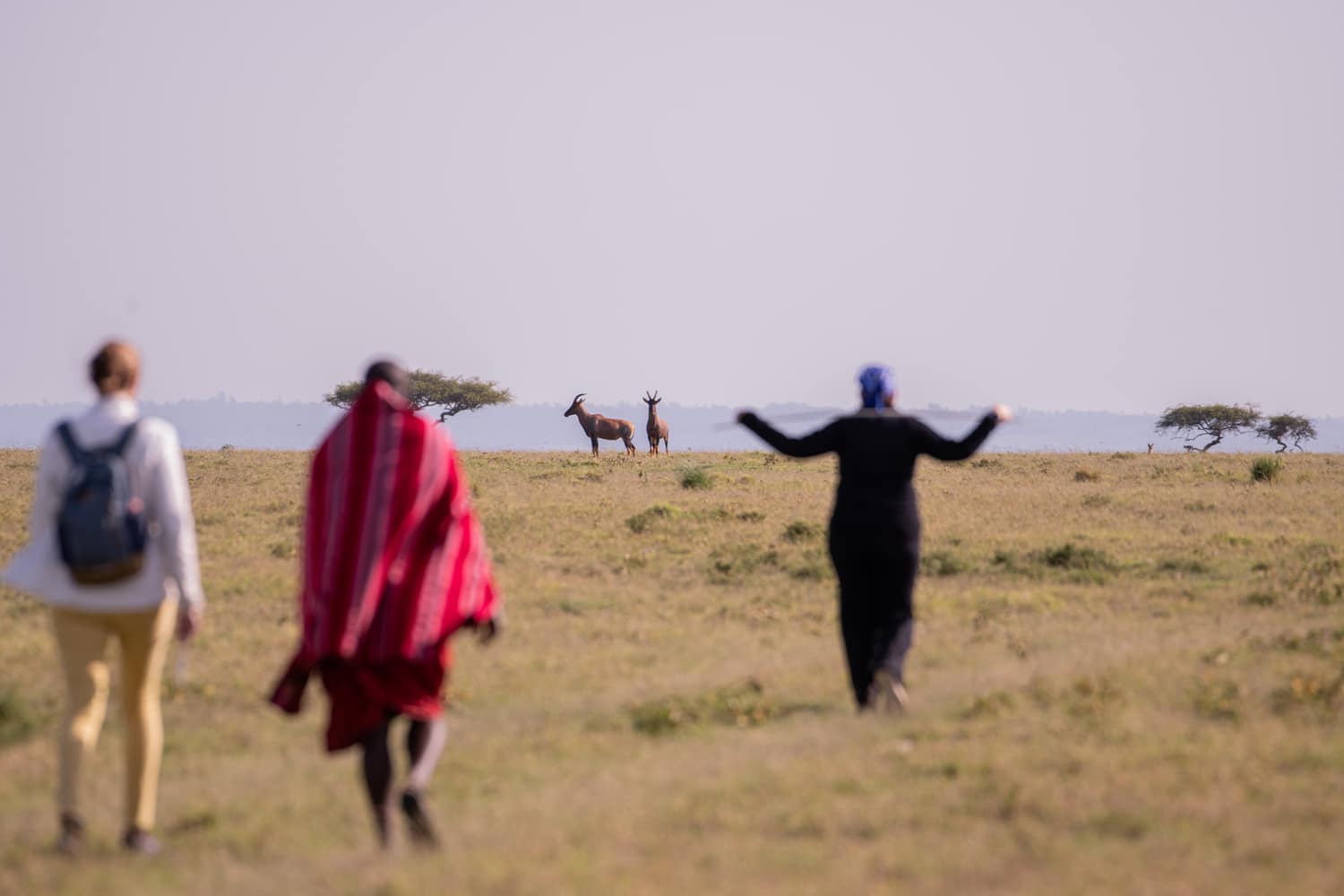
That afternoon, we’ll be immersed in a breathtaking landscape, surrounded by wildlife. As the day ends, we’ll experience one of Kenya’s most beautiful sunsets in a secluded spot, where only our Maasai guides are allowed, watching the sun dip behind the trees and zebras.


Kenya Safari to Witness the Great Migration and the Famous Wildebeest Crossing.
To do the Great Migration Safari and see the great migration and the famous wildebeest crossing, we have to move a little inside the Masai Mara to enter the National Reserve, which is a small part of the entire Masai Mara and is where most of the hotels are and, therefore, more tourists visiting the park.
The journey to the National Reserve is in itself a safari as we move inside the Masai Mara and therefore the possibility of seeing spectacular scenery and animals is assured.

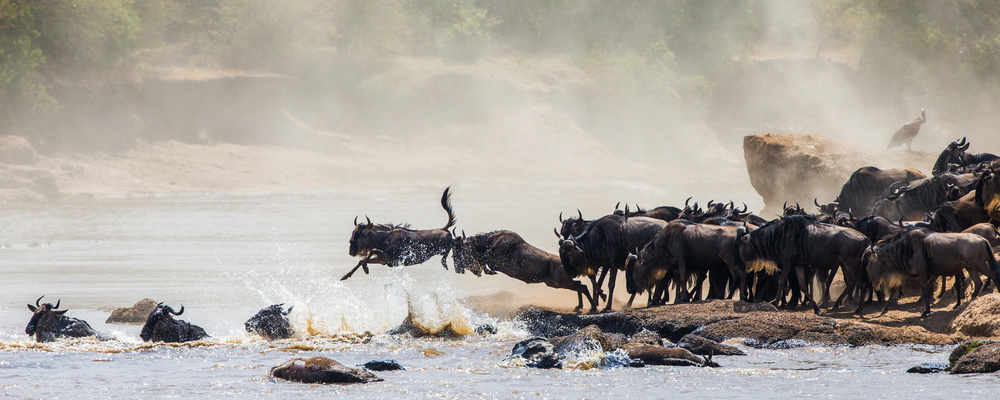
Once we arrive at the National Reserve, we’ll head directly to witness the famous wildebeest crossing. Here, you’ll experience the iconic scenes of the Great Migration, where thousands of wildebeest bravely cross the Mara River.
Accommodation during the Great Migration safari
In the Mara national reserve, where we’ll witness the Great Migration, we will stay in a mobile camp—a temporary camp set up in a special location INSIDE the Mara National Reserve. Once we leave, our guides will dismantle it, ensuring no trace of human presence remains. The mobile camp is situated between Mara river and Talek river, offering an excellent chance to observe the river crossings.
Our team, including cooks and support staff, will ensure maximum comfort during our stay. While in the Lemek Conservation Area, we’ll sleep in traditional safari tents equipped with private bathrooms and hot water, combining the adventure of the wild with the convenience of modern amenities.

How to book the Kenya Migration Safari
The Great Migration Safari in Kenya is offered exclusively from July to October, during which you have the best opportunity to witness the renowned wildebeest crossing of the Mara River. To book, please choose the number of people and your preferred date, then provide your contact information. We will get in touch with you promptly to confirm availability.
If you want to travel outside the Great Migration period, you can book one of our other safaris in Kenya, which also include the Mara National Reserve.